Category Archives: Will Power

Can Your Yoga Practice Feel Good & Still Wreck Your Body?

Standard

IMG_3910

Does your yoga practice keep you free from tension between classes or do you go back to yoga because your tension builds up again somehow? Or maybe you are addicted to yoga thinking it can free you from tension and prevent injury? It can, but does it? Is the stress of life creating your daily tension or how you manage stress does? And is the stress of life the only reason why you may experience tension or pain in the first place? Read on to find out!

Did you know that Lady Gaga, the famous singer and Bikram Yoga enthusiast, cancelled a music tour with hip pain so severe she could barely move and was unable to perform for over two years after hip surgery at age 27?

   img_5943

No, I am not claiming that yoga can wreck your body.  However, how you use your body while you do yoga (or any other daily activity) can absolutely wreck your body over time. I am not referring to how well you know each poses because if that was the case, yoga teachers would never get hurt and it is not the case, as you will see in the video below. Of course form matters up to a certain point. And anatomy matters up to a certain point as well. Yet, if anatomy knowledge was enough, doctors would be safe from injuries, which is not the case either.

By clicking on the picture below, listen and watch this teacher who is sharing her experience as a seasoned Ashtanga teacher. Listen to what happened to her, how it happened and what she learned from it.

screen-shot-2016-10-30-at-8-32-51-pm

As Diane Bruni learned, even highly skilled teachers don’t always know what is right for your body despite their knowledge of anatomy or their mastery of yoga poses form. The thing is education is key because you can only be mindful of what you are aware of. So who to learn from if the blinds are leading the blinds? How did this even happen? It is partly to explain this that I am writing my book on “The Yoga of the Future”.

In short, yoga teaching has been influenced since the 19th century and even conditioned by the ideals of the Industrial Revolution. That is when modern fitness began and the love for machines gave birth to bodybuilding and a focus on fitness viewing the body as a machine made up of parts to exercise. Bodybuilding and Yoga influenced each other as more people had the financial means to travel.

screen-shot-2016-10-31-at-2-16-44-pm

In the department stores of that time, the customer was always right to promote business. In the yoga world, the teacher was always right because he came from a patriarchal culture. Yet not all yoga masters were equal. Besides, lots got lost in translation or reinvented and additions were made over the years. Your inheritance has been to focus on body parts, and to muscle your way through both strengthening and stretching. Mainly, you have been led to trust your educated mind more than your innate body intelligence.

screen-shot-2016-10-31-at-2-22-45-pm screen-shot-2016-10-31-at-2-30-27-pmscreen-shot-2016-10-31-at-2-19-56-pm
Lahiri Mahasaya (One of Yogananda’s Gurus) versus Ascetic Yogis
All yogis were not made equal!

The truth is that you need to go inside to activate your inner teacher’s guidance available to you 24/7. It is never wrong.

This is the goal of the Body Intelligence Activation Process or B.I.A. Process; it teaches you how to instantly connect with your whole-body intelligence which is way more than just listening to your stretch edge or your pain edge as Diane was doing which led her slowly but surely towards injury. The B.I.A. Process on the other end empowers you to work with your whole-body intelligence hand in hand every step of the way. Notice the dash between whole and body. It is key to this process.

Without knowing how to activate your inner teacher, it is difficult to unlearn already established patterns that create excess muscle and joint tension. When you do know how to do it, you won’t even need to use a body braid as Diane does and recommends to keep your body properly toned and have great organic good posture.

If you want to learn more about this, join my blog site, attend my online or local events and learn about the B.I.A. Process. You won’t regret it!

1) Free Email Seminar 2) Free Webinar 3)  90 Day Virtual & Interactive Pilot Launch.

Cecile Raynor has been teaching the Alexander Technique for over 25 years out of which came her B.I.A. Process to assist yogis enhance their practice bypassing the intellect. She is also a Thai Yoga Massage Therapist and a Reiki Practitioner. Faculty at Akasha Yoga Teacher Training, she runs a 12 months Mastermind for Yoga Teachers with a Vision, and a 90 Day Virtual Program for trainees, new teachers and committed yoga practitioners interested in using their body better on and off the mat. Her blog read by over 19 000 people and her webinar have an international audience. She is currently writing her book on “The Yoga of the Future and the B.I.A. Process: the Missing Link to Drop the Strain and Keep the Gain.” with BlissLife Press, San Diego California.
Self-Consciousness, Self- Awareness & Straining!

Standard

Do you know what really motivates you to exercise deep down?

IMG_4925

On the surface, it is easy to assume that you do it because exercise is good for you as doctors and scientists keep telling us. Could it be that it is not all that black and white? Not that I am discouraging you from exercising at all. You’ll always gain some benefits from exercising, but do you always get only benefits? And do you get the best out of your practice regardless of how or why you do it?

When I used to exercise out of being self-conscious about my weight or the way I looked, I was totally overdoing it. I was exercising with all the uptight energy coming from efforting to control my body, shape it, trim it, make it thinner. And although exercising was still beneficial to me in some ways, the problem was that it was motivated by a sense that I was not good enough, I was not lovable or attractive enough as I was and would not be till I reach this unrealistic ideal (for most of us) imposed by the media to all of us, especially women.

IMG_4923

Why is it a problem? It is a problem because when the underground reason for exercising is fear-based self-consciousness, you are actually stressing the body in a way that stems from and activates your “reptilian brain”. This results in the production of a stress hormone called Cortisol which affects both your mind and body into protective mode favoring holding and contraction. This tends to keep you in the fear based cycle of not feeling good enough unless you are pushing yourself. Exercise becomes an addiction of sorts. How do you truly feel when you reach your goal, do you appreciate it and relax or are you driven to keep going like the hamster on his wheel? Does this sound like a familiar cycle? You are definitely getting some good benefits from the physicality of yoga, but is it worth it to not examine the real reason motivating you to practice when it can actually strengthen your underground stress level in the process? Not to mention that this is what promote straining on and off the mat.

When practicing yoga is really love-based, you are truly nurturing your body in a way that stems from and activates the “pre-frontal cortex”. It creates a feel-good hormone called oxytocin or the “love hormone” which affects both your mind and body into open-mindedness and expansion. It also allows you to function as a fluid coordinated self. This develops flexible strength as one skill instead of focusing on stretching, strengthening or posture organizing as if they were separate from each other. The more you approach movements as a coordinated self, the more your body handles the perfect adjustments necessary for any chosen activity. Your Whole Body Intelligence knows how much to stretch this muscle, or strengthen that muscle and realign your postural balance for you all at once. Straining becomes unnecessary.

IMG_4930 IMG_4929

And in this process, your synergy changes to be more functional without needing to strain or push yourself in the usual sense of the term. You challenge yourself by choosing and staying in a specific pose or activity yet you let go of the strain so your body can step up to the plate and do its magic! The idea is to let your body do its job and trust its innate intelligence. It knows better than your mind and the results are safer.

I once was totally off balance for months. As I got out of my overthinking mind to observe my every movements , I was able to discover and then let go of habitual patterns that were straining my body. While letting go, I was also rebooting my whole body synergy using my Body Intelligence Activation Process (B.I.A. Process), a way to allow the natural way to take over. As a result, my own body reorganized my very twisted posture into perfect balance in a month time when constant visits to chiropractors, acupuncturists and massage therapists had not given any sustainable results for a period of 6 months.

IMG_4924

Acting on and off the mat from a place of “Self-Consciousness” is not serving you because it is rooted in a feeling of inadequacy that you feel you must overcome,  product of your intellect judging your self as not good enough.  I know because I have been there and it is easy to revisit that familiar place when we are not in the now. Instead let’s be rooted in the present moment, accepting of what is. Acting from a place of “Self-Awareness” outside the intellect is the way to blossom into whatever you choose to do on or off the mat.

And learning to activate the Intelligence of your Whole Body is an awesome key to letting go of  self-consciousness and embrace self-awareness, it is a process that allows your mind and your whole-body wisdom to be team partners, living in the same time zone in a way that gives you optimal safety and best performance whether you are on the mat or in daily life. It positively affects your level of self confidence and  self appreciation while you get the most out of your yoga and out of life.

Interested in exploring this further? Then check:

1) My Free Email Seminar 2) My Free Webinar 3) My Pilot 90 Day E-Course Special.

Physicality, Embodiment & Yoga

Standard

Do you feel that unless you strain when you exercise, you are not doing enough?
Are you sure that strain is necessary to get strong in body or mind?

Do you think you are connected to your body because you exercise or practice yoga?
Are you sure that being physical means that you are well connected to your body?

What if strain only added body stiffness to the strength you could build without the strain?
What if being physical was not enough to be fully connected to your innate body wisdom?

IMG_20160203_122745161IMG_20160203_122936107
On the left she tightens and creates body stiffness in her outer muscles,
on the right she allows space to relax and let her core muscles strengthen themselves!
My  journey from physicality to awareness of disembodiment

When I started exercising and decided to eat right, I was motivated by wanting to look the best I could and keep my weight down. I used to exercise 3 hours a day. Half of that time was walking to and from campus for 45 minutes each way and the other 90 minutes were at the gym, running or an aerobic dance class plus using the universal machines of the time.

I thought I was very connected to my body and although I never strained to the point of hurting myself, I did judge the amount of appropriate tension by how much I was pushing myself. Burning calories was high on my list as I have a compact muscular body and always wanted to trim it down.

However, I had a profound realization that changed the course of my life. One day, while finishing grad school and being very pregnant with my first child. I found myself leaning on the table at the library so my belly was totally squished against the edge of the table. Noticing that was like a wake up call. I asked myself ” What am I doing to my baby? And what am I doing to my body?”. I started noticing other such instances. Maybe I was not as connected to my body as I thought? It made me realize that physicality was only part of being fully connected. I became aware that my physicality had been driven by my mind that acted as if it knew better than my body.

My journey towards embodiment of my aware mind
 DSC_0405

That profound realization led me to practice meditation and let go of a promising career teaching French Literature at the college level for which I had just studied several years. Everyone thought I was crazy. But academia was going to keep me in my head so I had to find another more holistic type of teaching, and I did. Although embodiment is a life long evolution, working in a mind/body field with the Alexander Technique has made a huge difference in my life, especially combined with my meditation practice.

Over time, I realized and experienced that my addictive straining was only adding body stiffness to the strength I was building. It was true in the gym or on the yoga mat. I found it to be a mindset that reveals itself throughout all aspect of my life as self-created stress if I let it. And when I am flexible and strong in my mind, I can enjoy flexible strength in my workout or my yoga practice.

It became clear that I wanted flexible strength and that flexible strength starts with an aware and embodied mind. When your mind is embodied, there is no room for strain when you are being physical because you are in harmony with your innate body wisdom. And this is a whole body affair through every movement and every moment of the day. When you focus mainly on physicality, you are missing a dimension and the door to injury is still wide open whether you are at your computer, in your kitchen or on the mat.

When your mind is embodied, there is no room for strain when being physical
because you are in harmony with your innate body wisdom.
IMG_2643

Connecting to your body in a holistic way means that you are not tending separately to the mind and the body. You are aware of both whether you meditate or exercise. It also means that you allow your whole body wisdom to guide you as it is designed rather than controlling your skeleton muscularly according to the dictates of your mind as if it knew better than your innate body intelligence. It means organic good posture takes care of itself in a sustainable way like it does in children.

There is a breakthrough process that can help you access your whole body wisdom with ease whatever type of exercise you enjoy doing. It helps you to be embodied in a way beyond focusing on your stretch edge or your pain edge which represents only a small percentage of your whole body wisdom. It helps you reclaim organic good posture and strain-free living.

Interested in exploring this further? Then check:

1) My Free Email Seminar 2) My Free Webinar 3) My Beta 90 Day E-Course Special.


The Secret to Ultimate Safety and High Performance on the Yoga Mat!

Standard

IMG_3910
“Striving Yogis” by Cecile Raynor

Since 2012 when the New York Times published an article called “Can Yoga Wreck Your Body?”  followed by a Huffpost interview with Glenn Black,  many yoga studios and teachers everywhere have been innovating to increase safety on the mat. Teachers have been learning how to assist yoga students. Practitioners at risk have chosen gentle forms of yoga, while many others shy away from yoga all together.

In the meantime, yoga studios are filled with a big majority of young yogis with forgiving bodies who still handle a lot of strain. For them, “no gain without pain” has been replaced by “no gain without strain”. Pushing to their limit just because they can (whether stretching or strengthening) is seen as a good thing. So they follow their teachers guidance and are satisfied to push and pull to their heart’s content as long as it feels good and they pay attention to not reach their pain threshold.

NO GAIN WITHOUT PAIN has become NO GAIN WITHOUT STRAIN

But is that enough for ultimate safety on the mat and is it even the best way to reach highest performance? Are yoga studios safer than before? Is yoga practice enough to keep yogis bodies strain-free and their minds able to manage stress gracefully between classes? How is it for you? Which part of your yoga practice is sustainable in your daily life and which is not? We all know yoga is not what wrecks people’s body, so why do many people still get hurt on and off the mat even when they exercise in the gym or on the mat?

For one thing,  some of the assisting has been questioned to the point that some studios have created special tokens or cards used on mats to signal teachers whether they are welcome to assist or not.  True, some yoga assists have turned into well received massage moments although some yoga students simply do not care to be touched and always want the option to say so; mostly, students asking for tokens have gotten hurt by teachers assisting hands. Why is this happening?

IMG_3906

There are 3 main reasons for this happening.  Despite the numerous assist workshops given out there, the first reason is a lack in quality touch experience in teachers as well as a lack of awareness of the mind-body foundation of all movements. These happen to be strengths of Alexander Technique teachers who have a 3 year training of 1600 hours before they get certified. Yoga teachers start teaching after 200 hours of certification with little training if any in these two aspects. Secondly, there is the way teachings were passed on through generations of teachers suffering from loss and misinterpretations which led to some asanas created only in the past century to be widely embraced even when not necessarily appropriate for everyone nor always in line with our innate body intelligence.

Last but not least, since the Industrial Revolution of the 19th century, men have been focusing on appearances, money and machines. We have come to think of the body as a machine with parts to exercise and replace when necessary. For all the buzz on holistic health, the norm remains to focus on body part exercising across the fitness world. Do you catch yourself chronically holding your back trying to sit or stand upright to slouch only seconds later? Could it be happening because it is neither comfortable nor natural to being up that way?

IMG_3752
Organic good posture, no conscious efforting involved!

Many are disconnected from their “whole body” wisdom as they are exercising their “body parts”. Do you go to yoga to improve your posture, strengthen and stretch? Yet do you still experience neck or back tension, or strained knees on or off the mat? As it were, there are more gadgets than ever on the market to address “bad posture” and its consequences: neck, back, shoulder or joint discomfort or pain. However, are they only band-aid solutions or do they produce sustainable results?

Much of the teachings on posture tend to equate alignment with good posture which results in a static expression of aligned posture.  Like posture gadgets, they also imply that muscularly correcting posture is the ultimate solution. The reality is that there is more  to good posture than alignment. “Good Posture” is a dynamic and organic happening like in children!

Learning to activate your postural mechanism is the secret breakthrough skill that can lead you to improved posture with no neck, back or joint straining on or off the mat. It is a reflex-like system we are born with that is activated when we step out of our own way to let our body intelligence do its job. And every time we release excess tension without sacrificing our skeletal height, it gets activated. You probably stumbled unto it before when you suddenly reached your effortless balancing spot. Only it is a skill you can learn and access on demand based on undoing conscious and unconscious habits of movements. When under your belt, that skill allows you to approach every yoga poses from a totally different angle where straining is not necessary to strengthen or stretch with ultimate safety and to reach your highest performance!

FREE LIVE EVENT:  BREAKTHROUGH SKILL
 << Not taught in Yoga Trainings >>
 March 16, 2016 @ 7.30pm EST
 

It is to bring you an experience of this breakthrough skill that I have been learning about webinar and e-course technology. I am now happy and excited to invite you to my first webinar offering and I will personally introduce you to this breakthrough skill which can help you open the door to ultimate safety even within high performance level! You will be given a chance to engage in some experiential activities and I am scheduling time for Q & A as well. I will also explain how this skill can lead you beyond band-aid solutions, to sustainable results.

Why mark your calendars and sign up asap? It is a global offer to yoga practitioners and teachers in the world, yet I am only offering 50 spots. Participants will be accepted on a first come basis.  At the end of the webinar, participants will be given a chance to sign up for my 90 Day Interactive E-course First Launch at 50% off which includes loads of bonuses as well. Available only to 25 people!

So here is the link to sign up to the Free Webinar: https://offthematyoga.leadpages.co/free-webinar-breakthrough-skill/

Hope to meet some of you in cyberspace!

Cecile Raynor
Alexander Technique Teacher, Thai Yoga Therapist & Kryia Yoga Initiate

Muscle Engaging, Bone Strength and Dynamic Posture!

Standard

MUSCLE ENGAGING

In the fitness world including yoga, it is common to hear teachers urging students to engage their muscles in one way or another. Mostly, they urge you to engage your core muscles. But what does that really mean? What do you do when your teacher encourages you to engage your muscles? Are you using your will power to tighten your muscles further expecting to feel and get stronger that way?

Have you considered that tightening muscles may not be the best way to “engage your muscles”?
Could it be creating as much body stiffness as it creates strength?

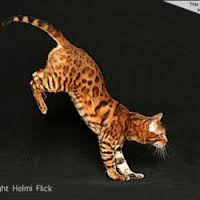
What about building the flexible strength of the cat instead?

images

Obviously, no matter how strong your muscles are, if you had no bones, they would turn into a puddle on the ground? That is because your skeleton has a lot to do with your strength. Your bones are the structure and firmness needed by your muscles for you to stand, sit. walk or jump.

BONE STRENGTH

Watch or re-watch this easy to view 7 min video by Kathleen Porter
about how the skeleton works as your primary support system!
mqdefault-1

Your skeleton does need a certain amount of necessary muscle tension to work with; however, as long as skeleton and necessary muscle tension work together as part of an integrated movement, your strength develops itself to support the movement with no need for unnecessary muscle tension, the source of much of your body stiffness. Your bone strength makes up for it. Using your will power is more about the mind choosing to sustain a challenging integrated pose or activity than to muscularly force the body to stay in it. The more you use your skeletal system strength, the easier it is to not use unnecessary tension and the stronger you are building your core strength. Only then, you are building the flexible strength of the cat!

In integrated movements, all your body parts work in harmony together.
Tightness gets in the way of this harmonious functioning of the whole.

The woman in black displays Poor Use of her Skeletal System, notice her muscular straining in the upper back and neck.
The woman in white displays
Good Use of her Skeletal System with her skeleton and muscles working more together.

images-18 images-16

While exercising, necessary muscle tension is a whole body feeling of power or stability rather than a tight feeling in a specific muscle group. Your body-wisdom does work some muscles more than others as needed yet it also knows your natural limits of the moment and will not let you go in an injury promoting zone. Children and animals trust that process. Just touch the muscles of a cat, so soft! And yet they certainly can jump up or down with powerful strength and accuracy in a beautiful integrated and fluid motion!

Maybe it is Time to Learn to Be Strong Using Brain and Bones & No Longer Overworking your Muscles. Besides, it feels easier simply because gravity becomes your ally and you can work out smart instead of hard! The only thing you will loose is body stiffness, not strength. Check the humorous 2-minute video below, you’ll see what I mean!

A woman in the early 1900’s lays the smack down with some classic Jiujitsu
Unknown-1

DYNAMIC POSTURE

 Dynamic posture does not require you to remember to check in and position yourself to sit upright. It is an integral part of good and fluid functioning, not a holding you go back to when you think of it. Look at young children! No effort whatsoever, and it is also your birthright!

images-1

Modern life offers challenges for sure with time spent at desks and computers, or standing for hours. Yet is it those activities that are the problem or how you use yourself while engaged in them?

You know that you cannot force a horse to drink water but you can salt his oats to make him choose to drink. And when thirsty, he’ll go the extra mile to satisfy his thirst. In the same way, you cannot strengthen your inner core muscles by sheer force but you can challenge your whole body with a specific pose or exercise and let it engage your inner muscles which will strengthen them in an organic way. They will go the extra mile if and when they have to!

So you can learn from children and animals how to reclaim an efficient and integrated way to use yourself on and off the mat where all your body parts work harmoniously together to benefit all of who you are! .

Till we meet again, be well!

Incoming workshops in Boston, MA:
Integrated Motion for Mind/Body Flow on March 26, 2015 6 to 8pm
Strain-Free Yoga/Strain-Free Body on March 29, 2015 1.15pm to 3.15pm
For more detail and registration, go to: https://offthematyogablog.com/schedule/

 Working with an Alexander Technique teacher is a short cut to changing the habits of a life time. Call me to schedule and appointment or sign up to my workshops and classes. And I am working on an online workshop or class for those far away who want to work with me. Will keep you posted!

Core Strengthening Language! Part 1: Pitfalls

Standard

Natural+Stretching+Exercises3

Some like it slow, some like it with flow, some like it tough while others like it gentle and the varieties go on and on. How do you like it? Do you practice yoga to relax, to stretch and strengthen, or to restore? Do you use props or no props? Do you stand for naked yoga, or against it? Do you travel to practice yoga on every beach you can get your feet to or do you like the regularity of going to your yoga studio?

Yoga has become a popular trend and yoga studios are still flourishing everywhere. On some level, it makes sense, different body types, different personalities, different awareness levels, so attraction to different forms of yoga! It certainly has also become a lucrative business for many. Yet, on a deeper level, it seems like people are missing something in their everyday life and they are searching that missing thing in yoga and its community. It is an amazing phenomena and it is beautiful in many ways to witness this drive some have to satisfy their deep yearning. And it is wonderful when it becomes a family activity that brings families doing something positive together.

images-5

However, in most adult classes, there is also some confusion in the teaching and practice of yoga due to various historic factors but most recently, due to the influence of the core strengthening and muscle stretching language which has created unfortunate pitfalls.

In most yoga studio, whether students are encouraged to do this slowly or fast, you can hear instructions relating to body parts to be controlled in one way or the other: pull your shoulders back, roll your shoulder blades down, lift your chest, tuck your chin or tuck your pelvis, squeeze your legs together, position your feet this way or that way, push this and hold that. This way of practicing yoga is made up of numerous muscular adjustments imposed on various body parts. 

If you add to the equation that most teachers have their own understanding of what those instructions mean and all students in a class have their own interpretations and corrupted translations, how is it even possible to teach without expecting trouble sooner or later? It is a way of working that has presented definite benefits but lots of unnecessary challenges as well which were not part of the original intention of yoga.

images-8Most people in this picture stick their neck forward in an effort to do a pose they are not ready to do in a healthy way.

Yoga postures as described by Patanjali are meant to be a balance between steadiness and comfort. Steadiness in various poses encourages your body to build up strength. Comfort allows for your strength to remain flexible. Yoga postures are all about this balancing act. However, our sense of balance and coordination, our ability to move fluidly and to enjoy good postural balance is the job of our postural mechanism which works with the body as one whole coordinated entity when not interfered with. For more info about this, go to: https://offthematyogablog.com/2013/12/18/what-are-postural-reflexes/

Neuroscience along with disciplines like the Alexander Technique also understand body functioning as a coordinated whole, where each part affects the whole and the whole is connected to each part in a synergy of its own for each individual. That is why in countries where people use themselves in a more natural way, you won’t find pulled shoulders and tucked bellies, you witness ease of movement and flexible strength with a smile!

 images-7

So for yoga lovers to get the most out of their yoga practice and prevent injuries, there has to be a change in the way language is used in the yoga class. Developing an understanding of how the postural mechanism functions to make it part of every stretch and every strengthening practice is an amazing way to turn things around in a fairly easy way. Yoga teachers instructed in this way of teaching have reported clear changes for the better in their own practice and in their students practice.

Like these teachers and students, you can discover how to build body strength without building body stiffness in the process. You can learn to trust your innate body wisdom instead of second guessing it and working against it with unnecessary muscular control. It can transform not only your yoga practice but your daily level of well-being. How do you go about it? Look for an Alexander Technique teacher, preferably one with yoga experience so they can speak your language (although any good teacher can help you with this).

The Alexander Technique seems like the perfect tool to negotiate this balance successfully within each pose, and best of all it translates into less muscular tension, improved posture and better coordination On and Off the mat. For more info about this, go to: http://www.alexandertec.com/what.htm

More details coming up in Part 2 and maybe 3.

In the meantime, to learn more about how to use the Alexander Technique as applied to yoga to get the most out of it and prevent injuries on and off the mat, find an Alexander Technique teacher in your neck of the woods or if in the Boston area, sign up to Cecile’s workshops and classes or keep reading her blogs. You can also, follow the blog to receive tips of the week right to your inbox!

https://offthematyogablog.com/schedule


Harmful Stretching versus Healthy Stretching! Part 1

Standard

images-5Notice how her upper back and shoulders are rounded which makes her compress the back of her neck as she is reaching for her foot? It may be the best she can do considering where she may be at with her posture but this is certainly enhancing her habitual postural pattern.

Stretching feels good and can be helpful when done in a way that is appropriate for the body as a whole.
How do you stretch? Do you stay mostly focused on the muscles you are stretching? Do you find yourself rounding your back to stretch your tensed back muscles thinking it is a good thing to do because it feels good? Are you aware you may be compressing the back of your neck while you focus on a stretch?

You may be surprised to hear that muscles are not meant to be stretched in that way and that actually, this is a form of overstretching! It is easy to confuse the feeling good in the stretched muscles for something good to do. A bit like indulging in a meal that tastes good and is healthy even though it may not be best for your body.  What matters for “Healthy Stretching” is not only what you do but how you do it and sometimes why you do it.  Creating muscle strain and skeletal distortion while you exercise does not really serve you well despite all your good intentions. However, expanding your awareness by making helpful distinctions can resolve many problems by placing them in a bigger perspective.

images-1

Notice how her neck is nicely aligned with the rest of her spine so her head is still poised on top of her spine and above her sits bones. On the other end,  his neck is jutting forward creating neck tension while he is trying to undo tension in other parts of his body.

Do you know how to access your inner teacher to make sure you are not creating excess body tension in one part of your body while you are undoing tension with your stretch in another?

Keeping an awareness of what is happening in your whole body whatever body part you are working with is essential to benefit from your stretches without creating more problems for yourself while you stretch.  Your stretches are most efficient when you start by freeing your joints from excess tension with a thought of letting go of that tension. Neurons get fired at every thought and affect your whole body as they travel via your nervous system.

That is why when you have happy thoughts, it shows in your facial expression and in the way you carry yourself. Same applies with depressing thoughts. The fact is your postural mechanism is in charge of your balance and coordination. And it can guide you towards your most efficient stretches if you let it do its job by releasing into your stretches starting with your joints.

In the article below by Brooke Thomas called   “S t r e t c h i n g   d o e s   n o t   w o r k   the   w a y   y o u   t h i n k   i t   d o e s“,  she shares the finding of Jules Mitchell’s thesis presenting a bio-mechanical view into stretching and yoga poses. Because Jules started her work from the perspective of a yoga teacher- with all the training that had told her that stretching leads to increased flexibility, she was surprised to discover that the research on stretching did not prove what she was taught to be true.

http://breakingmuscle.com/mobility-recovery/stretching-doesnt-work-the-way-you-think-it-does

images-7

For this pose to be more holistic and therefore efficient, these women could choose to release their knees a bit more
which would help them release all the other joints, especially their hip joints sockets. As a result, their spine would lengthen effortlessly!

Jules Mitchell discovered that this popular stretching idea – if you stretch more and stretch harder, your tissue will change – was untrue. In reality, Brooke points out, “we are not lumps of clay that can be molded by persistently tugging on things”. We are functioning as an integrated whole from head to toes, mind, body and soul!

The best way to stretch is to let your postural mechanism do its job while you stretch. Only then do you benefit from “Healthy Stretching”! There are actually two complementary ways to practice “Healthy Stretching”. For more details about it, look for Part 2 of this article coming soon on this blog.

Alexander Technique teachers have been teaching this since the 19th century. If you want to learn to stretch in an integrated way and you are in the Boston area, come to my workshops and classes or call for a private session by calling 617 359 7841.

To inquire about my October and November Workshops for Yoga Teachers, Workshops for Yoga Students and my Alexander Technique Workshops or to register online, click on https://offthematyogablog.com/schedule/

3 Common Oversights by Yoga Lovers that keep their Muscles and Joints Strained Part #1

Standard
Prayer-Twist-Yoga-Pose when all is in balance!

Prayer-Twist-Yoga-Pose when all is in balance!

* Do you still feel your muscles and joints complaining
even though you do yoga to stretch, strengthen, balance and relax?

* Do you find yourself micro-adjusting muscles and joints in search for balance,
never being sure if or when you will find your sweet spot?

* Do you want to know how to safely expand your growing edge?

* Would you like to enjoy the benefits of yoga without the strain?

* Would you like to improve your posture without holding yourself up ?

If you answered YES to any of these questions, you will enjoy and benefit from reading this blog series!

Before revealing those 3 common oversights that may  keep your muscles and joints strained unnecessarily, I want you to experience what happens when in your daily life and on the yoga mat,  you plug into your beginner’s mind. It is helpful because your daily mind guided by habits tends to be attached to the way you do things, the way you think or talk and that is limiting.

If I say to you  “Less muscular efforts allows for more strength, observe how your habitual way of thinking receives this, observe if and how you want to react, yet choose not to and see what comes out of this choice. Stay in a spirit of discovery: “Let’s see what happens if I don’t try so hard…can I really get stronger?” and maybe you’ll discover that indeed you can get stronger and even gain flexible strength as it were. Mainly this blog is designed to inspire you and open doors to safely go further than ever into your growing edge! As a yoga lover, I know how much you love growing past your limits and I do too!

Sometimes, there is a blind spot in our awareness and we do not realize it till it is pointed out to us. Ignoring it holds a danger factor just as ignoring the blind spot while driving a car would. Keeping a beginner’s mind opens our gate of perception wider. Understanding and experiencing become deeper and more accurate!

As a yoga lover, you already have some level of mind and body awareness. However, there are many levels of awareness to open up to as you live, learn, and mature in your life journey. Studying Yoga from learning Asanas to developing Spiritual Depth which is the  purpose of Yoga is one such journey. Learning to practice yoga based on the natural movements of the body and its postural mechanism is one dimension of this same journey.  It allows you to move safely on-or-off the yoga mat, thus preventing injuries.

Natural movements based on the innate wisdom of your postural mechanism is a sound foundation and a perfect tool to progressively merge the physical, mental, emotional and spiritual at every step of the way on your life journey. It is a mind and body relationship that improves the quality of your life by improving the quality of your movements, the mind and the body being the two sides of the same coin really. And it is what Off-The-Mat- Yoga blogs, classes and workshops are here to assist you with!

Food for thought till next blog: Muscular Overdoing & Will Power.
When do you use Blind Will and when do you use Wise Will?

In the meantime, make a point to explore with your beginner’s mind between now and the next blog and I’d love it if you would share your experience on this blog!