Category Archives: Uncategorized

Self-Consciousness, Self- Awareness & Straining!

Standard

Do you know what really motivates you to exercise deep down?
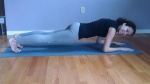
IMG_4925

On the surface, it is easy to assume that you do it because exercise is good for you as doctors and scientists keep telling us. Could it be that it is not all that black and white? Not that I am discouraging you from exercising at all. You’ll always gain some benefits from exercising, but do you always get only benefits? And do you get the best out of your practice regardless of how or why you do it?

When I used to exercise out of being self-conscious about my weight or the way I looked, I was totally overdoing it. I was exercising with all the uptight energy coming from efforting to control my body, shape it, trim it, make it thinner. And although exercising was still beneficial to me in some ways, the problem was that it was motivated by a sense that I was not good enough, I was not lovable or attractive enough as I was and would not be till I reach this unrealistic ideal (for most of us) imposed by the media to all of us, especially women.

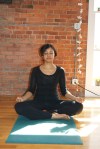
IMG_4923

Why is it a problem? It is a problem because when the underground reason for exercising is fear-based self-consciousness, you are actually stressing the body in a way that stems from and activates your “reptilian brain”. This results in the production of a stress hormone called Cortisol which affects both your mind and body into protective mode favoring holding and contraction. This tends to keep you in the fear based cycle of not feeling good enough unless you are pushing yourself. Exercise becomes an addiction of sorts. How do you truly feel when you reach your goal, do you appreciate it and relax or are you driven to keep going like the hamster on his wheel? Does this sound like a familiar cycle? You are definitely getting some good benefits from the physicality of yoga, but is it worth it to not examine the real reason motivating you to practice when it can actually strengthen your underground stress level in the process? Not to mention that this is what promote straining on and off the mat.

When practicing yoga is really love-based, you are truly nurturing your body in a way that stems from and activates the “pre-frontal cortex”. It creates a feel-good hormone called oxytocin or the “love hormone” which affects both your mind and body into open-mindedness and expansion. It also allows you to function as a fluid coordinated self. This develops flexible strength as one skill instead of focusing on stretching, strengthening or posture organizing as if they were separate from each other. The more you approach movements as a coordinated self, the more your body handles the perfect adjustments necessary for any chosen activity. Your Whole Body Intelligence knows how much to stretch this muscle, or strengthen that muscle and realign your postural balance for you all at once. Straining becomes unnecessary.

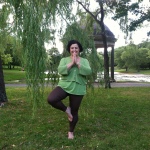
IMG_4930 IMG_4929

And in this process, your synergy changes to be more functional without needing to strain or push yourself in the usual sense of the term. You challenge yourself by choosing and staying in a specific pose or activity yet you let go of the strain so your body can step up to the plate and do its magic! The idea is to let your body do its job and trust its innate intelligence. It knows better than your mind and the results are safer.

I once was totally off balance for months. As I got out of my overthinking mind to observe my every movements , I was able to discover and then let go of habitual patterns that were straining my body. While letting go, I was also rebooting my whole body synergy using my Body Intelligence Activation Process (B.I.A. Process), a way to allow the natural way to take over. As a result, my own body reorganized my very twisted posture into perfect balance in a month time when constant visits to chiropractors, acupuncturists and massage therapists had not given any sustainable results for a period of 6 months.

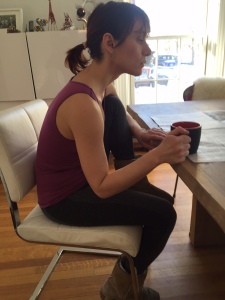
IMG_4924

Acting on and off the mat from a place of “Self-Consciousness” is not serving you because it is rooted in a feeling of inadequacy that you feel you must overcome,  product of your intellect judging your self as not good enough.  I know because I have been there and it is easy to revisit that familiar place when we are not in the now. Instead let’s be rooted in the present moment, accepting of what is. Acting from a place of “Self-Awareness” outside the intellect is the way to blossom into whatever you choose to do on or off the mat.

And learning to activate the Intelligence of your Whole Body is an awesome key to letting go of  self-consciousness and embrace self-awareness, it is a process that allows your mind and your whole-body wisdom to be team partners, living in the same time zone in a way that gives you optimal safety and best performance whether you are on the mat or in daily life. It positively affects your level of self confidence and  self appreciation while you get the most out of your yoga and out of life.

Interested in exploring this further? Then check:

1) My Free Email Seminar 2) My Free Webinar 3) My Pilot 90 Day E-Course Special.
Physicality, Embodiment & Yoga

Standard

Do you feel that unless you strain when you exercise, you are not doing enough?
Are you sure that strain is necessary to get strong in body or mind?

Do you think you are connected to your body because you exercise or practice yoga?
Are you sure that being physical means that you are well connected to your body?

What if strain only added body stiffness to the strength you could build without the strain?
What if being physical was not enough to be fully connected to your innate body wisdom?

IMG_20160203_122745161IMG_20160203_122936107
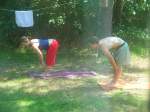
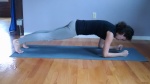
On the left she tightens and creates body stiffness in her outer muscles,
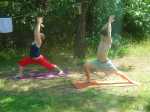
on the right she allows space to relax and let her core muscles strengthen themselves!
My  journey from physicality to awareness of disembodiment

When I started exercising and decided to eat right, I was motivated by wanting to look the best I could and keep my weight down. I used to exercise 3 hours a day. Half of that time was walking to and from campus for 45 minutes each way and the other 90 minutes were at the gym, running or an aerobic dance class plus using the universal machines of the time.

I thought I was very connected to my body and although I never strained to the point of hurting myself, I did judge the amount of appropriate tension by how much I was pushing myself. Burning calories was high on my list as I have a compact muscular body and always wanted to trim it down.

However, I had a profound realization that changed the course of my life. One day, while finishing grad school and being very pregnant with my first child. I found myself leaning on the table at the library so my belly was totally squished against the edge of the table. Noticing that was like a wake up call. I asked myself ” What am I doing to my baby? And what am I doing to my body?”. I started noticing other such instances. Maybe I was not as connected to my body as I thought? It made me realize that physicality was only part of being fully connected. I became aware that my physicality had been driven by my mind that acted as if it knew better than my body.

My journey towards embodiment of my aware mind
 DSC_0405

That profound realization led me to practice meditation and let go of a promising career teaching French Literature at the college level for which I had just studied several years. Everyone thought I was crazy. But academia was going to keep me in my head so I had to find another more holistic type of teaching, and I did. Although embodiment is a life long evolution, working in a mind/body field with the Alexander Technique has made a huge difference in my life, especially combined with my meditation practice.

Over time, I realized and experienced that my addictive straining was only adding body stiffness to the strength I was building. It was true in the gym or on the yoga mat. I found it to be a mindset that reveals itself throughout all aspect of my life as self-created stress if I let it. And when I am flexible and strong in my mind, I can enjoy flexible strength in my workout or my yoga practice.

It became clear that I wanted flexible strength and that flexible strength starts with an aware and embodied mind. When your mind is embodied, there is no room for strain when you are being physical because you are in harmony with your innate body wisdom. And this is a whole body affair through every movement and every moment of the day. When you focus mainly on physicality, you are missing a dimension and the door to injury is still wide open whether you are at your computer, in your kitchen or on the mat.

When your mind is embodied, there is no room for strain when being physical
because you are in harmony with your innate body wisdom.
IMG_2643

Connecting to your body in a holistic way means that you are not tending separately to the mind and the body. You are aware of both whether you meditate or exercise. It also means that you allow your whole body wisdom to guide you as it is designed rather than controlling your skeleton muscularly according to the dictates of your mind as if it knew better than your innate body intelligence. It means organic good posture takes care of itself in a sustainable way like it does in children.

There is a breakthrough process that can help you access your whole body wisdom with ease whatever type of exercise you enjoy doing. It helps you to be embodied in a way beyond focusing on your stretch edge or your pain edge which represents only a small percentage of your whole body wisdom. It helps you reclaim organic good posture and strain-free living.

Interested in exploring this further? Then check:

1) My Free Email Seminar 2) My Free Webinar 3) My Beta 90 Day E-Course Special.


How Your Body Image affects Your Body Use into Straining & Slumping!

Standard
Have you ever consciously thought about what your body image is?

The one that drives you to eat, exercise, or dress a certain way? As a woman, do you want to look thin, sexy, professional? As a man, do you want to look strong and unaffected? Whether man or woman, do you think your looks and wealth equals your worth? For better or for worse, those values are actually 19th century by-products of the Industrial Revolution in a society that has been valuing: appearances, money and machines.

On a more personal level, where is your body image coming from?
 And is it serving you?

Considering your body image shapes your current beliefs, you may want to explore your thoughts on the subject. They are creating feelings and actions that are possibly holding you back. Once you uncover these thoughts and beliefs feeding your body image, you can choose to create new ones if need be and see your life change progressively; sometimes drastically. Check this inspiring one minute video with Kate Winslet:

Kate Winslet

Unlike Kate do you remember words from a parent, friend or teacher that sent you on a specific body image path?

My Story with Body Image

My well-intentioned mom projected her limiting beliefs about weight on me at a very young age.  I became a slave to my body image around weight for decades.  The process to free myself from a body image that did not serve me started when I was pregnant with my first child.

One day, when very pregnant and quite absorbed in my studies, I caught myself in the library studying with my belly squished against the table. It was a powerful moment. I wondered about what I was doing to my baby and to my own body? And in a flash, that is when I realized something had to change. Being in my head so much as a PhD student only emphasized a mind/body disconnect that had started long ago with my compact body image. I saw this clearly then. My mind had taken over and I did not experience my body fully except as a number on a scale.

In short, this led me to a meditation practice, to a career change and to train as an Alexander Technique teacher in the hope to become a more integrated being. Although this tends to be a lifelong journey, training then teaching this work has made a serious difference. I have discovered my body from a different perspective and learned to appreciate many dimensions about it thanks to becoming more of an “embodied” mind.

One important thing I discovered was that my body image was affecting the way I was using my whole body, and the way I was using my body was affecting its functioning. On the other end, improving my overall functioning by improving the way I used myself seriously decreased the impact my body image had on me. Now, I can dance through life joyfully!

How Your Body Image Story affects Your Body Use

IMG_0941
Familiar slump leaning into the comfort of habits


Your body image is affecting how you use yourselves in everyday life and vice versa. When you are not happy with the way you look or feel, you consciously or unconsciously want to curl in, hide or cover up. Have you experienced this familiar slump where you lean into the comfort of your habit despite its cost? As you know, slumping often translates into back or neck discomfort, sometimes into breathing and digestive issues as well because your inside is being squished constantly interfering with the best functioning of your organs. Have you just been triggered to pull your shoulders back in an effort to straighten up because of what you just read? And yet, you know it is pointless since you go right back down in seconds?

Does this sound like you? Do you have muscles and joints discomfort, pain or tiredness? Are you prone to feeling stressed and overwhelmed? Do you tend to worry uncontrollably? It comes with the territory of this familiar pose. There is a reason for it as explained in this Ted Talk video. Luckily for you, there is a way out!

And it has nothing to do with you trying to control your body muscularly. Otherwise you may turn into a chronic holder when it comes to your posture and an over-doer on the mat.   Like many people, unless you strain on the mat, you may think that you are not doing enough, not strengthening enough, not stretching enough. And yet, you do not really want to strain, do you? You just want the benefits of exercising whether on or off the mat.

How to Stop the Straining & Slumping Cycle

IMG_7233
The difference between sitting in a balance way
and sitting with your gravity center behind your sits bones: A big difference!


What you really want is “Flexible Strength” and “Sustainable Good Posture”. And the secret to acquiring the flexible strength of the cat is to behave like one. No kidding! Do you see cats exercising one body part at a time? I don’t think so. They use their body as a whole when they move. And guess what? You are designed that way as well!

The truth is that you may not be moving and exercising your body as a coordinated self even if you know, intellectually, that all the parts are meant to function as a whole. The reason for this lies in a handful of common unconscious habits that interfere with your best efforts. Since you can only be mindful of what you are aware of,  becoming aware of and learning to overcome these common habits is the key to functioning with optimal safety and optimal performance,  the key to stopping the cycle from straining to be upright, to surrendering into your inevitable habitual slump.

Interested in exploring this further?

Check 1) My Free Email Seminar 2) My Free Webinar 3) My Beta 90 Day E-Course Special.

 

The Art of Flexible Strength: Drop the Strain, Keep the Strength!

Standard

IMG_4020
Striving to Stretch

As a yogi or fitness practitioner, do you  feel it is important to develop strength and flexibility? And yet do you truly feel you are developing flexible strength in the process? The flexible strength of the cat for instance which allows the cat to be totally tension free one minute and in an instant, display amazing strength, flexibility, accuracy of aim and speed of action.

If you are like most of us, the answer is no, not really!

IMG_4021
Beautiful natural integrated stretch

The truth is you strive for more flexibility and you may succeed up to a certain point. Yet are you tension free between yoga classes or even on the mat? If you can say yes, then you can stop reading right here. If the answer is no, then read on.

One reason you may not feel as flexible as you would want to be in your body (even though you work hard at it), is because flexibility starts in the mind, it is not just a body feature. And since the mind and the body are the two sides of the same coin, if your mind is not flexible, your body will reflect that by feeling uptight and it goes the other way round as well if you are flexible as a whole rather than having some flexible parts.

DSCN8391 DSCN8402 DSCN8394
Different bodies and awareness levels, different practices, different level of benefits

Another reason is that you may have unconscious habits of movements that are in the way of getting the result you are working for. I have found this to be a common explanation for nagging muscular and joint tension. In fact there are five such common habits that stem from misconceptions of movement. They have to do with you using parts of your body to do the job of other parts of your body so naturally, the misused parts end up complaining that they are not suited for the task. Becoming aware of this in your own body is a game changer.

The young man in the picture is aware of the way the pose is supposed to be but some of his unconscious habitual patterns prevent him from doing the pose the way he sees it and if he tries to straighten his back muscularly, he can only strain. Luckily he sensed that and was not trying to force anything. And the habits could manifest more subtly and be harder to detect but still doing a job on the synergy of your body. The fact is these common unconscious habits make you use your body in a way that is not in line with your innate body wisdom. As a result, no matter how much exercise you do, you feel you are not getting the results you want or when you do, you find them not to be sustainable.

One way to address this is to attend my free webinars or better yet sign up for my 90 Day Live Interactive E-Course. The work I do is very practical and can benefit you from the start by expanding your awareness with a new way to approach movement. It can also help you handle mind or body stress from a fresh new perspective and truly transform your life.

For more info or to sign up to June 9 webinar, go to: https://offthematyoga.leadpages.co/free-live-interactive-webinar/
For the E-Course, go to: https://offthematyoga.leadpages.co/cecileclearofferinteractivee-course/


Postural Gadgets, Chronic Holders & Natural “Good Posture”?

Standard

IMG_7216

It is a known fact that “Good Posture” is desirable and not just for your looks but also for your mind and body health. Why then are postural issues a widespread happening? So widespread that people all over are spending gazillions of dollars on “Posture Gadgets or Devices”. Can these objects designed to help improve posture and/or reduce related discomfort truly help long term? Given that changing habits is one of the hardest thing to do and we all appreciate all the help we can get, let’s find out the pros and cons that can be expected from these popular gadgets?

Screen Shot 2016-04-05 at 9.21.49 PMbort-stabilofix-mens-posture-brace_edited_1 upper-back-straightener-side_1

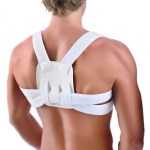
There are two main categories of gadgets or devices: the wearable ones to prevent slouching (such as posture braces like the ones above) and those using a device that let you know when you are slouching like the IPosture or the UpRight wearable devices.

Screen Shot 2016-04-05 at 9.25.54 PM Screen Shot 2016-04-05 at 9.25.31 PM

Although these objects were created to help people with this rampant posture problem producing lots of discomfort or pain, do they actually do the job beyond temporary help? Less slouching is always beneficial and can relieve slouching related pain and discomfort while making people feel good about themselves for being more consistent with sitting or standing up straight.  So in that way, posture gadgets can be a good thing. However, if being reminded that you are slouching is the only solution to your posture problem, it may actually create another problem. How?

Without changing how you manage your slouching habit, you may be turning into a “chronic holder”!  For sustainable results without added tension, managing a slouching habit must be a natural whole body happening, not just a muscular correcting pushing yourself upward with your back muscles. See below why that is and rejoice that there is a natural solution to this common issue.

In my experience of 25 years as an Alexander Technique teacher, I have found that your postural mechanism is perfectly well built for you to enjoy effortless postural balance as seen in children. They do not need to be reminded to sit up straight, it happens organically. And they can slouch as well but their slouch is not integrated into their everyday movements. It is just the behavior of a moment in time. That’s why they don’t normally complain of tired backs. That is the key for grown-ups as well. Here below is a child sitting, running and playing in the sand with perfect postural balance without a thought about his posture. It is your birthright to do so as well and you just need to learn a special skill to get back to that place.

IMG_3743 IMG_3749 IMG_3748

As a grown up, being reminded that you slouch is likely to trigger your habitual reaction: your back muscles tense up in order to send the torso up. Only these muscles are not meant to do this job. So naturally, minutes later, they tire and your need to slouch wins over. Does this sound familiar? And if you battle long enough with the desire to slouch thanks to using a device (or for any other reasons), you may just turn into a “chronic holder” which does not serve you either.

The fact is that your body is a coordinated whole made of very intricate relationships which is why you cannot change one part of your body without addressing the synergy of your whole body. This is also why there is more to “Good Posture” than “Proper Alignment” and it has nothing to do with holding yourself up. In fact, thinking of a straight spine as good posture is often the sure way to overdo the back muscles and upsetting the balance of your whole body. It is a form of lifting away from your support instead of releasing into it to go up.

You may not feel perfectly straight, but if you are in a state of expansion and your body functions properly and fluidly as a whole, you may have a better postural balance and enjoy more comfort in your body than when you feel straight but chronically holding tension which is neither comfortable, natural or sustainable. So your idea about “Good Posture” is the first thing to revisit. Then, how you improve your posture without any unnecessary muscle tension is the thing to learn.

Studying the Alexander Technique with a good teacher near you is a great organic solution to learn how to sit, stand and move without unnecessary tension. It teaches you how you can regain ease of movement and your best postural balance naturally. Even though all teachers share the same Alexander principles, each teacher has its own approach to teaching, so finding the right teacher for yourself is essential in the same way you would look for the right teacher in other disciplines.

IMG_7195 IMG_7196 IMG_7198

How can you reeducate your postural balance with the Alexander Technique? It is an experience to have. It cannot be explained accurately in words anymore than you could explain how to swim to someone who never tried. Guidance from a teacher is crucial at the beginning. However, it can be said that you get reconnected to the proper functioning of your postural mechanism which favors expansion over contraction provided you do not interfere with unnecessary muscular efforts.

Once you start this process of discovery and reorganization, using a device to remind you that you have reverted to slouching could be helpful as long as you do not try to correct your posture in your habitual way. Rather  learn to handle this slouch as instructed by your teacher which, in essence,  will help you to allow your body to handle it on its own. Yes, it is designed to do so! No need to do it the hard way or go the long way around. The Alexander Technique is actually the best kept secret of famous performers and Olympic athletes who swear by it because it helps them reach their highest potential without unnecessary tension.

If you want a taste of my work, you can join my next Free Webinar or to start yourself with a good foundation, sign up to my Interactive Online Program. You can also schedule a private Free Consult , a full  Skype Session or get a Skype Package Option. Call me at 617 359 7841 for private sessions if you are local or email me at cecileraynor@gmail.com for questions.


The Secret to Ultimate Safety and High Performance on the Yoga Mat!

Standard

IMG_3910
“Striving Yogis” by Cecile Raynor

Since 2012 when the New York Times published an article called “Can Yoga Wreck Your Body?”  followed by a Huffpost interview with Glenn Black,  many yoga studios and teachers everywhere have been innovating to increase safety on the mat. Teachers have been learning how to assist yoga students. Practitioners at risk have chosen gentle forms of yoga, while many others shy away from yoga all together.

In the meantime, yoga studios are filled with a big majority of young yogis with forgiving bodies who still handle a lot of strain. For them, “no gain without pain” has been replaced by “no gain without strain”. Pushing to their limit just because they can (whether stretching or strengthening) is seen as a good thing. So they follow their teachers guidance and are satisfied to push and pull to their heart’s content as long as it feels good and they pay attention to not reach their pain threshold.

NO GAIN WITHOUT PAIN has become NO GAIN WITHOUT STRAIN

But is that enough for ultimate safety on the mat and is it even the best way to reach highest performance? Are yoga studios safer than before? Is yoga practice enough to keep yogis bodies strain-free and their minds able to manage stress gracefully between classes? How is it for you? Which part of your yoga practice is sustainable in your daily life and which is not? We all know yoga is not what wrecks people’s body, so why do many people still get hurt on and off the mat even when they exercise in the gym or on the mat?

For one thing,  some of the assisting has been questioned to the point that some studios have created special tokens or cards used on mats to signal teachers whether they are welcome to assist or not.  True, some yoga assists have turned into well received massage moments although some yoga students simply do not care to be touched and always want the option to say so; mostly, students asking for tokens have gotten hurt by teachers assisting hands. Why is this happening?

IMG_3906

There are 3 main reasons for this happening.  Despite the numerous assist workshops given out there, the first reason is a lack in quality touch experience in teachers as well as a lack of awareness of the mind-body foundation of all movements. These happen to be strengths of Alexander Technique teachers who have a 3 year training of 1600 hours before they get certified. Yoga teachers start teaching after 200 hours of certification with little training if any in these two aspects. Secondly, there is the way teachings were passed on through generations of teachers suffering from loss and misinterpretations which led to some asanas created only in the past century to be widely embraced even when not necessarily appropriate for everyone nor always in line with our innate body intelligence.

Last but not least, since the Industrial Revolution of the 19th century, men have been focusing on appearances, money and machines. We have come to think of the body as a machine with parts to exercise and replace when necessary. For all the buzz on holistic health, the norm remains to focus on body part exercising across the fitness world. Do you catch yourself chronically holding your back trying to sit or stand upright to slouch only seconds later? Could it be happening because it is neither comfortable nor natural to being up that way?

IMG_3752
Organic good posture, no conscious efforting involved!

Many are disconnected from their “whole body” wisdom as they are exercising their “body parts”. Do you go to yoga to improve your posture, strengthen and stretch? Yet do you still experience neck or back tension, or strained knees on or off the mat? As it were, there are more gadgets than ever on the market to address “bad posture” and its consequences: neck, back, shoulder or joint discomfort or pain. However, are they only band-aid solutions or do they produce sustainable results?

Much of the teachings on posture tend to equate alignment with good posture which results in a static expression of aligned posture.  Like posture gadgets, they also imply that muscularly correcting posture is the ultimate solution. The reality is that there is more  to good posture than alignment. “Good Posture” is a dynamic and organic happening like in children!

Learning to activate your postural mechanism is the secret breakthrough skill that can lead you to improved posture with no neck, back or joint straining on or off the mat. It is a reflex-like system we are born with that is activated when we step out of our own way to let our body intelligence do its job. And every time we release excess tension without sacrificing our skeletal height, it gets activated. You probably stumbled unto it before when you suddenly reached your effortless balancing spot. Only it is a skill you can learn and access on demand based on undoing conscious and unconscious habits of movements. When under your belt, that skill allows you to approach every yoga poses from a totally different angle where straining is not necessary to strengthen or stretch with ultimate safety and to reach your highest performance!

FREE LIVE EVENT:  BREAKTHROUGH SKILL
 << Not taught in Yoga Trainings >>
 March 16, 2016 @ 7.30pm EST
 

It is to bring you an experience of this breakthrough skill that I have been learning about webinar and e-course technology. I am now happy and excited to invite you to my first webinar offering and I will personally introduce you to this breakthrough skill which can help you open the door to ultimate safety even within high performance level! You will be given a chance to engage in some experiential activities and I am scheduling time for Q & A as well. I will also explain how this skill can lead you beyond band-aid solutions, to sustainable results.

Why mark your calendars and sign up asap? It is a global offer to yoga practitioners and teachers in the world, yet I am only offering 50 spots. Participants will be accepted on a first come basis.  At the end of the webinar, participants will be given a chance to sign up for my 90 Day Interactive E-course First Launch at 50% off which includes loads of bonuses as well. Available only to 25 people!

So here is the link to sign up to the Free Webinar: https://offthematyoga.leadpages.co/free-webinar-breakthrough-skill/

Hope to meet some of you in cyberspace!

Cecile Raynor
Alexander Technique Teacher, Thai Yoga Therapist & Kryia Yoga Initiate

Vision/Posture Connection & Drishti

Standard
This time of year seems appropriate to talk about vision for various reasons.

Vision_Future
On the physical level,  the health of your eyes is a precious thing you may take for granted especially when they don’t give you any trouble. However,  they can affect your overall health depending on how you use them in your everyday activities. Neck craning forward or head tilting back while slouching at the computer for instance can actually create compression or over-extension of the back of your neck and rounding your shoulders.  On the mental level, you envision a specific future for yourself. New Year’s Resolutions for example require you to have a vision of the future you want to see happen. Or you may have a personal vision on a work project or on how to solve a given issue. Such vision guides what you manifest in your life or not. Spiritually, vision is a reference to your ability to see with your intuitive heart beyond what is visible. It refers to your inner vision.

Yoga teachers may talk about “Drishti” (vision), and on the mat, they often refer to it as a form of gazing in the distance to focus your mind in the present moment. Focus is fundamental in yoga practice. Focusing your eyes and your attention is using this yogic technique called “Drishti”.

images-4

However, although using your vision to stay in the now or come back to it is an excellent tool, there is something important to consider in “Drishti”. Along with this intention to gaze so as to step out of your over-active mind, you need to always make sure the gaze direction does not lead you to sacrifice your spinal length so the kundalini energy can flow through it.

The woman in the triangle pose above is using her vision well to support an integrated triangle pose. As she is looking towards the tip of her fingers and beyond, her head neck and torso remain nicely aligned. However, there is more to good postural balance than perfect alignment, there is dynamic alignment.  Dynamic postural alignment implies the harmonious relationship between the various part is respected so that the energy can flow back and forth through the muscles into the support and up the skeleton then able to expand in its full space.

Straining interferes with getting the benefit of any yoga pose. Having space to release while in a pose is the most dynamic way to engage in a pose. It challenges the muscles to work without adding body stiffness to the mix. If you have gone to a place where release into your support is no longer an option, you are doing too much.

images-12images-5images-11
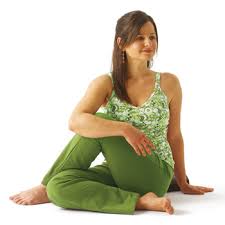
These women engaged in a seated twist are using their vision to lead their seated twist as they stay balanced and centered above their supported sits bones. Led by the direction of their vision, each is going as far as they are comfortable without sacrificing their skeletal height.

images-13

On the other end, the instructions for the seated twist on this picture are incomplete and it shows on the model illustrating this pose. The sits bones are arched a bit like a rocking chair so it is not enough to feel your sits bones, it is crucial to be aligned above their balancing point. Otherwise, any attempt at releasing your back will take you into a slouch.

Here it is clear that she is not balanced because her gravity line is behind her sits bones. As a result, she is slouched in her twist. It is straining her back, squishing her internal organs, limiting her breathing and how far she can go into her seated twist. Although she certainly seems like a happy camper on this picture, she is not getting the best out of her yoga pose! 

Even in daily life, you need to know how to do this. Whether you are siting on a chair or in a car, you can hurt your neck if you do not apply these principles as you turn your head to look behind yourself.

Helpful Tips

1) To maximize a seated twist, connect to the balancing point of your sits bones so your head is still above them without loosing your skeletal height which comes by sending your sits bones into your support rather than tensing your back muscles. Then look in the direction you are turning moving from the joint at the top of your spine first.  As you go, keep releasing neck and back muscles straight into your support. This prevents you from creating body stiffness or muscle straining.

2) Do not fix your gaze, a fixed gaze creates a fixed body which is not the purpose of yoga, keep it soft and wide using your peripheral vision as in driving. Keep it connected to the rest of you! You are on the mat to stay present and to tune in, not to tune  out!

3) When doing asanas, just do asanas. Don’t start to think about the meaning of life or anything else but what is happening right there and then. Your vision, your breath, your kinesthetic senses are all ways to anchor yourself in the present moment.

4) The spiritual dimension of “Drishti” can only come from the practice of being present yet non attached to thoughts, body senses and sense pleasures. Mind grasping or muscular grasping (the two sides of the same coin) take us away from such practice. So stay in touch with yourself and don’t tense your muscles. Body stiffness is not body strength. Body strength remains flexible, like the strength of the cat!

5) Stay aware of the direction of your vision as often as possible. When lost in your thoughts or in your body feelings, you may be gazing in a way that stiffens your neck. So watch out for your neck by making sure your vision choice does not conflict with the need of your neck to stay free of tension. This will give you an integrated movement connecting you from head to toes.

images-9
When not aligned above support and relaxed, gravity promotes slouching.
When aligned above support and relaxed
, gravity promotes effortless good posture.

Do you want to learn more about this mind/body approach to natural good posture? 
Do you want to learn how to reclaim efficient moving for balanced living?
Join my latest FREE 6-part EMAIL SEMINAR:
"How to Unlearn Habits that Create Body Stiffness On and Off the Mat"
(Based on the Alexander Technique Principles and Facts)

Wishing you a wonderful New Year,
filled with Gratitude, Health, Prosperity and lots of Laughter!

https://offthematyogablog.com/

Bandhas, Blocks and Bones!

Standard

images

Yogic Bandhas are a form of energy activation via special centers in the body to temporarily contain the body energy (prana) in the torso. The 3 specific bandhas are : Mula Bandha, energy activation at the perineum, Uddiyana Bandha, energy activation of the abdomen into the rib cage, and Jalandhara Bandha, to energize the throat.

It is common to practice this energization by squeezing and tightening these centers to close energy gates as a way to create energy flow when the tightness is released (it functions a bit like a damn). However, when practiced this way, unnecessary tension can also be created from muscular overdoing out of habit and because of the conditioning around more being better. But is it?

IMG_3067

Listen to Leo’s experience with block squeezing versus blog hugging when activating Mula Bandha

Bandhas are about energy activation above all else. Although performed on the physical level engaging the skeletal muscles (part of the core muscles), they also function as an internal energetic process. The key is to not overdo muscle tension so the energetic process can happen most efficiently and body stiffness can be avoided.

It is my personal experience and the experience of yogis I have worked with, that when you focus only on the local area around the centers, you loose connection with the whole body and its innate intelligence. You still can get results from your practice yet you also develop or reinforce body stiffness in the process. How can you avoid overdoing in this context? Stay connected to your bones and skeletal structure!

mqdefault-1
Watch or re-watch this easy to view 7 min video by Kathleen Porter
about how the skeleton works as your primary support system!

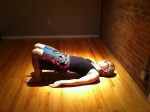
Muscular overdoing overshadows the skeletal structure and bone strength. To experience this, explore energizing the root chakra with Mula Bandha using a block between your legs as high as it fits to hug the block with your bones.  Start exploring in Mountain Pose or Bridge Pose for instance and compare plain squeezing to bone hugging. Bone hugging instead of muscular squeezing prevents excess tension while connecting you with your complete skeletal structure and the support under it. This way, your bandha activation is allowing your whole body to be engaged in an appropriate way, each part using just the right amount of muscle tension.

Once you have experienced energizing the root chakra with the block to connect with your skeletal structure and strength, it can be done without the block as well even in lotus pose. As a result, the outer muscles can let go, the core muscles kick in organically working with the skeleton and its support. The energy activated by the bandhas is then both localized and generalized so that when released, the gates for the energy to flow are wide open all over the body.

IMG_3062 IMG_3064
Notice the muscular pulling down created by the squeezing versus the lengthening and improved alignment
when simply hugging the block to activate the root chakra for Mula Bandha!
(Compare the red line in h
is shorts on both pictures!)

With an awareness of bones hugging rather than muscles over-squeezing, you will experience the strength of your bones working harmoniously with necessary muscle tension to create flexible strength and powerful energy flow. You can use a block to practice through a flow of poses or a single pose. All the while, you activate the bandhas in an integrated way that includes and respect your innate body intelligence guidance.

This way of handling the bandhas, based on Cecile’s experience and teaching of the Alexander Technique, reminds us to always use the body as a coordinated self, rather than focusing on isolated body parts. This allows all your movements to be in sync with your innate body intelligence. Such movements then become your safest and most efficient movements. Yoga poses or other yogic practices then benefit from optimal safety and efficiency.

Do you want to learn more about this mind/body approach to strain-free yoga? 
Do you want to learn how to reclaim efficient moving for balanced living?
Join my FREE 6-part EMAIL SEMINAR:
"How to Unlearn Habits that Create Body Stiffness On and Off the Mat"
(Based on the Alexander Technique Principles and Facts)

Mastermind for Committed Yoga Teachers with a Vision!

Standard
BODY SYNERGY LAB
 The First Mastermind For Committed Yoga Teachers with a Vision

IMG_2690

A Mastermind is an awesome journey for a small group of people with a similar focus. All participants have an interest to serve and support each other, personally and professionally with an intention to deepen personal accountability as they learn and grow, during the time frame of the Mastermind, towards a specific goal (or in a specific direction) that also happens to benefit Humanity. It is a journey that allows each member to blossom towards their deepest inner goal with the committed support of all members in a spirit of harmony.

IMG_2975

As a participant, you bring your own life experience and professional experience to support the others to attain their chosen goals. My contribution to this mastermind is my life experience and professional experience as a Facilitator, an Alexander Technique Teacher, a Thai Yoga Therapist, Kriya Yoga Initiate (through lineage of Paramahansa Yogananda) and Kinesthetic Artist. As a result, you will receive a Body Synergy Lab Certificate of Completion for studying one year of Alexander Technique-Based Yoga with Cecile Raynor (even though this is only part of the benefits you will gain from committing to this Mastermind!).

My work sprouted from my 25 years teaching the Alexander Technique, the best kept secret of famous performers and Olympic athletes who swear by it because it allows them to reach their highest potential without straining or over-stressing while enjoying effortless postural balance. As applied to yoga, it is the best tool for ultimate safety, and optimum benefits even within high performance practices. These benefits naturally spread over your daily life and include improved posture and flexible strength.

My contribution to this Mastermind supports and complements the yoga training you received with an uncommon perspective that makes your practice safer, your teaching more impactful on and off the mat, while giving your career a unique edge.

Here is a testimonial by Anthe Kelley, Founder and Director of Akasha Yoga School 
and Akasha Studio in Jamaica Plain, Boston MA

“The enormous impact that Cecile makes in a few hours at the start of each 6 month yoga teacher training program I run has never ceased to amaze me.  I’ve witnessed students completely transform through the insights gained from her work.  Teacher trainees approach all subsequent material through a lens that encompasses and continues to revisit Cecile’s work based on the Alexander Technique as applied to yoga practice and teaching. 

 The profundity of this phenomenon is nothing short of remarkable!  Any yoga teacher trainee who gets to experience her hands-on attention, the breadth of her insight, wisdom and postural understanding will be well-served in their career as a successful, evolving, present and sensitive yoga teacher and human being.”

Here is also a testimonial from one of the yoga teacher graduates 
 about the work we have done together and the impact it had
 on her own yoga practice and her yoga teaching practice right from the start.

IMG_2915

Click here to listen to Sara!
Discover strain-free yoga whatever yoga style you are attracted to 
from Kripalu yoga to power yoga, hot yoga or any other style!
 Discover the joy of a strain-free body On and Off the Mat!

To be part of this journey designed for a small number of selected teachers with a vision, simply apply for it by going to this link !

If you have any questions please do not hesitate to email me at cecileraynor@gmail.com.

What Can Be Wrong with Always Doing “What Feels Right?”

Standard

IMG_2708

She is holding a lotus, symbol of the Self-Realization happening to yogis
who have blossomed beyond Ego Consciousness!

Do you assume that doing “what feels right” is always the right thing to do? Is it true of everything all the time? Is it true whether you are talking about movement or behavior? Is it true whether your sensory perception is accurate or not? And who is assessing what is right or wrong, the human limited mind of your ego or your higher consciousness?

This concept of “unreliable sensory perception” is at the core of the Alexander Technique which I have been teaching for over two decades. This unreliability of perception is often the reason why you may spend time, energy and money to change your habits, only to find the outcome to be unsuccessful or not sustainable. The good news is that, once you realize and acknowledge that it is unreliable, you can proceed to reeducate your sensory perception as you expand your awareness, and unlearn habits that do not serve you. Then you can truly be in tune with the innate wisdom of your body and of your higher consciousness.

IMG_2708 - Version 3  OR  IMG_2708 - Version 2

Movement and Sensory Perception

A) Sometimes, you are moving in a context where there are no preconceived ideas like playing with movement in a spirit of exploration such as an improvisation dance for instance. In such a situation, you naturally tend to listen to your whole body. Therefore your body wisdom is guiding you. Going with what feels right then is appropriate, safe and restorative. Children are very good at that, especially babies.

In the short video below, notice the baby girl’s eyes leading her head which leads her shoulders which lead her whole body to spiral until she lands on her belly. And she can do this back and forth. Body wisdom at work when left alone. Skeletal system and necessary muscle tension working together effortlessly throughout the whole motion.

Reconnecting with the evolution of baby movements is very beneficial for adults to rediscover their motion potential and even process tension stored in the body over time!

Baby rolling over without help!

B) When you walk, when you sit, when you do pretty much anything where habits” or preconceived ideas” play a big part, can you trust, that what feels right, is necessarily right for you? Maybe not, due to the power of habits and of the mind overriding your body wisdom!

For instance, in my last blog about Yoga Body, Daily Body & Sensory Perception , I talk about the connection between daily body and yoga body in relation to posture. I show how our sensory perception often corrupted by our daily habits of movements is not 100% reliable once on the mat. What is habitual is mistaken for what is natural. Hence injuries brewing down the road on or off the mat.

Does it mean your sensory perception cannot be trusted at all? No, of course. If you listen to what feels right, you are less likely to let your mind shape your body up only according to preconceived ideas of what the body should be doing. But listening to your body’s pain edge, stretching edge or strengthening edge is different from listening to your whole body wisdom.

Your focus on a specific aspect of the body or on a specific body part often blinds you to hearing the wise guidance of your whole body. Your body wisdom can only come loud and clear when you function as an integrated self. When in touch with your body as an integrated whole though, you will perceive the specific as well!

Integrated One leg Stand with a dynamic relationship between the head, neck, torso and leg!

IMG_2637 

Behavior and Perception

I am purposely choosing a striking example here: battered women. A phenomenon that many do not understand. Why would anyone stay with a loved one when being mistreated by them? Could it be they grew up with a parent they loved who was mistreating them physically and their notion of being loved got corrupted out of habits just like our sensory perception? Or maybe they were verbally mistreated and their lack of self-worth led them to feel they deserved to be mistreated that way? It is not my field of expertise but I wanted to make my point. It may feel right to stay with someone you love despite being mistreated. Yet, how trustworthy is this “feeling right” corrupted by past experiences?

On a lighter note, when you do not grow up in a culture that eats snails, the idea of eating snails may feel very wrong. Is it right or wrong? Neither. It is what the French do. They even consider it a delicacy.
So often, what feels right or wrong is relative to habits.
images-2

Conclusion

Frederick Matthias Alexander used to say that sometimes, we need to accept what feels wrong (the challenged habit) so it can feel right again in the natural way. Have you ever considered that? Working with a teacher at the beginning is quite helpful to keep things in perspective because most of us are not comfortable with the concept of “feeling wrong” in any context. We were trained to believe it is always a bad thing. Hopefully now you see that one needs a bigger picture to assess more accurately whether “a feeling” is right or wrong. We need to investigate where is it coming from before we condemn or embrace it!

It is not always easy to make that step towards the unknown. When on a path towards personal growth, we eventually do it though. It is said that when we are ready the teacher appears.  And when this happens, it is time to go along. Our higher consciousness knows it!

Why is it we are often afraid to go in the cave that holds the treasure we are looking for?

Our dual nature, no doubt! Our human limited self tends to feel right staying with what is familiar while our higher consciousness knows with clarity that going into that cave is the right thing to do. Only fear holds us back! Luckily for us, we are born to thrive sooner or later!

Join my latest FREE 6-part EMAIL SEMINAR:
"How to Unlearn Habits that Create Body Stiffness On and Off the Mat"
(Based on the Alexander Technique Principles and Facts)