Category Archives: Uncategorized

Yoga Body, Daily Body & Sensory Perception

Standard

  woman-on-computer-3Daily Body Sitting

 Do you see a difference between your Yoga Body and your Daily Body?
Would someone observing you (without you knowing it) perceive a difference?
What is your Yoga Body focused on while on the mat? Core strengthening? Flexibility? Proper Alignment? Relaxation?
All of the above? What does your Daily Body remember between classes?
Does it remain strong, flexible and does it display sustainable good posture? Or not?

stock-photo-young-woman-in-orange-bikini-sitting-on-beach-in-lotus-pose-with-closed-eyes-and-meditating-palms-66598336
Yoga Body Sitting

Often, there is a bit of a discrepancy between those two bodies
and yet they impact each other greatly in a positive or negative way
depending on how in touch you are with your body wisdom.

DAILY BODY STORY
Do you find yourself slouching at the computer or on the couch? Do you find yourself crossing your legs always favoring the same side crossing over the other? Or if you are a parent, do you favor one hip over the other to carry your young one? Or maybe you crane your neck forward and down to read or send text messages?

640-01351420 Model Release: Yes Property Release: No Portrait of a mother carrying her son

Right hip locked to the right, left foot forward and to the left

As you sit at your computer, you probably try to stand more upright once in a while and you bring your shoulders back and lift your chest up. Doing so you may be arching your back and this feeling becomes a synonym for feeling taller, only is it sustainable for long? Not really, unless you are a chronic holder, seconds later, the synergy of your whole body reclaims the habitual slump. Does it sound familiar?

The fact is if you repeatedly spend time in a distorted position,  you start distorting your skeletal structure in a way that is so habitual that it feels more natural than the natural way. As a result, your skeleton is not organized for effortless balance, so your muscles are overworking creating stiffness and tiredness or giving up all together into an inevitable slouch. You can’t wait to go to your yoga class to stretch and strengthen yet why is your back not getting strong enough to stay upright in a sustainable way?

Top-View-Sitting-Man-Working-Computer-11002068398164-Goodlooking-young-man-relaxing-at-home-in-armchair-sitting-in-living-room-with-laptop-computer-smili-Stock-Photo
The danger of regularly catering to harmful habits is that, although it may feel comfortable in the moment,
it weakens your postural muscles because you do not let them do their job.

YOGA BODY STORY

You finally make it to your yoga mat, it feels so good to stretch and move your body. Whether you do power yoga or gently yoga, you enjoy yourself because this is the style of yoga that speaks to you. But whatever the style, you are also bringing with you your Daily Body habits to the mat. You may be aware of some of them but habits can become invisible to your awareness after a time.

The confusing thing is that, you can still feel better on some level because yoga is a wide field of many colors, the asanas being only a small part of it. However, how you use yourself on and off the mat must be addressed if you are to get the most out of your practice and truly prevent injuries even if you choose to challenge yourself on the mat?  Stretching tension or building strength can be beneficial if done in line with your innate body wisdom. Overdoing can be seductive and often misleading because of the element of physical pleasure and instant gratification it includes. And this is true both for stretching and strengthening!

How can you know for sure if you are in line with your innate wisdom of your whole body when you listen to parts of you at a time and your sensory appreciation is no longer fully reliable?
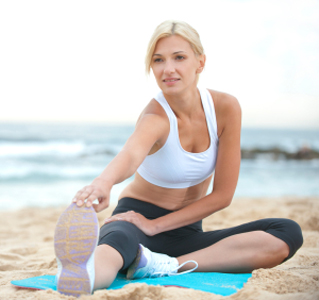
runner-yogaSeated-Calf-Stretch
The woman on the beach is an example of distorted torso to gain the end of touching her toes.
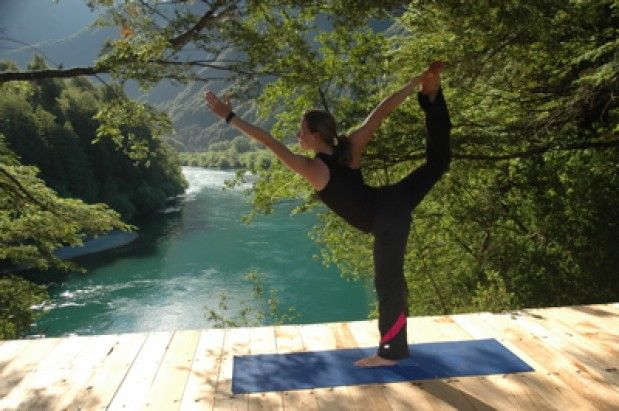
An integrated pose that respects your innate body wisdom as the woman in purple is more beneficial!

SENSORY PERCEPTION & INJURIES

As mentioned earlier, your Daily Body sensory perception gets somewhat corrupted over time. As a result, it needs a bit of reeducation. Without regaining accurate sensory perception, you cannot truly rely on what you feel while practicing yoga or engaged in daily movements and yet most people do. As a matter of fact,  it is my experience that this is the real culprit in most yoga injuries. Whether they happen on or off the mat, the majority of neck back or joint injuries if you are a healthy yogi, tend to start with your Daily Body habits brought to the mat.


SENSORY PERCEPTION REEDUCATION & BODY WISDOM

Controlling your habits on the mat then catering to them the rest of the time
is not going to get you out of the tension cycle.
It is like collecting water from your dripping ceiling when it rains 
instead of fixing the roof problem in the first place!

On the surface, it may seem that tension is the problem and yoga the solution. However,  you will get more out of your yoga when unnecessary tension is dealt with for what it is, a symptom of something else that needs addressing to get lasting results. And sorry to say that no costly gadgets can get around the need to regain accurate sensory perception!

You have a wonderful mechanism in your body called “Postural Mechanism” and it is an ambassador to your Innate Body Wisdom. It is in charge of handling your posture, fluidity of movement and balance. When you learn how to stimulate it, you can stretch and strengthen without taking a chance to overdo. In fact, as you unlearn your harmful habitual patterns, you keep empowering that mechanism to do its job. And it is available to you 24/7.
images-9
When not aligned above support and relaxed, gravity promotes slouching.
When aligned above support and relaxed
, gravity promotes effortless good posture.

Do you want to learn more about this mind/body approach to natural good posture? 
Do you want to learn how to reclaim efficient moving for balanced living?
Join my latest FREE 6-part EMAIL SEMINAR:
"How to Unlearn Habits that Create Body Stiffness On and Off the Mat"
(Based on the Alexander Technique Principles and Facts)
 

OFF-THE-MAT YOGA with Cecile FB Closed Group!

Standard

Dear Blog Followers,

Off-The-Mat Yoga with Cecile is exclusively for people who have taken classes or workshops with me. It is also for those who have read and enjoyed my Free Email Seminar, my blog posts and/or the teachings I offer based on the Alexander Technique and other related experience from Meditation to Thai Yoga and Yoga Philosophy.

These teachings are all about moving and doing yoga in a manner that is in line with the Natural Design of our Innate Body Wisdom on and off the mat. They are also about how we can apply the Alexander principles and Yoga philosophy to how we live our life to help us reach our highest potential. They are all connected one way or the other with becoming more aware of our tendency to react so we can respond as we truly want.

This group is designed for you to ask questions, get answers from Cecile and other members, as we are all sharing our journey practicing yoga and living our life based on the reality that we are a coordinated self, mind body and soul!

Mind and body are the two sides of the same coin and cannot be separated to enjoy an integrated way to function as a whole person. Let’s integrate that understanding in togetherness with other like-minded yoga lovers.

For your information, I am now offering Skype sessions. They are designed for you if you want to work with me and are too far away to come to workshops, classes or private sessions. They can help you with how to use yourself more efficiently in your daily movements and yoga practice. They can also be great for you if you want support on being personally accountable to the private you in achieving personal growth goals. Just contact me via the blog for now.

To join the private OFF-THE-MAT YOGA with Cecile FB group, click below to request being part of it.
https://www.facebook.com/groups/1416394871990487/

Hope to see you there for an interesting, friendly exchange and learning experience!
Till then, be well!:)

Cecile Raynor

Muscle Engaging, Bone Strength and Dynamic Posture!

Standard

MUSCLE ENGAGING

In the fitness world including yoga, it is common to hear teachers urging students to engage their muscles in one way or another. Mostly, they urge you to engage your core muscles. But what does that really mean? What do you do when your teacher encourages you to engage your muscles? Are you using your will power to tighten your muscles further expecting to feel and get stronger that way?

Have you considered that tightening muscles may not be the best way to “engage your muscles”?
Could it be creating as much body stiffness as it creates strength?

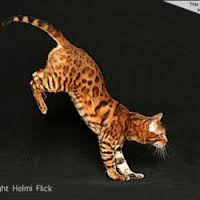
What about building the flexible strength of the cat instead?

images

Obviously, no matter how strong your muscles are, if you had no bones, they would turn into a puddle on the ground? That is because your skeleton has a lot to do with your strength. Your bones are the structure and firmness needed by your muscles for you to stand, sit. walk or jump.

BONE STRENGTH

Watch or re-watch this easy to view 7 min video by Kathleen Porter
about how the skeleton works as your primary support system!
mqdefault-1

Your skeleton does need a certain amount of necessary muscle tension to work with; however, as long as skeleton and necessary muscle tension work together as part of an integrated movement, your strength develops itself to support the movement with no need for unnecessary muscle tension, the source of much of your body stiffness. Your bone strength makes up for it. Using your will power is more about the mind choosing to sustain a challenging integrated pose or activity than to muscularly force the body to stay in it. The more you use your skeletal system strength, the easier it is to not use unnecessary tension and the stronger you are building your core strength. Only then, you are building the flexible strength of the cat!

In integrated movements, all your body parts work in harmony together.
Tightness gets in the way of this harmonious functioning of the whole.

The woman in black displays Poor Use of her Skeletal System, notice her muscular straining in the upper back and neck.
The woman in white displays
Good Use of her Skeletal System with her skeleton and muscles working more together.

images-18 images-16

While exercising, necessary muscle tension is a whole body feeling of power or stability rather than a tight feeling in a specific muscle group. Your body-wisdom does work some muscles more than others as needed yet it also knows your natural limits of the moment and will not let you go in an injury promoting zone. Children and animals trust that process. Just touch the muscles of a cat, so soft! And yet they certainly can jump up or down with powerful strength and accuracy in a beautiful integrated and fluid motion!

Maybe it is Time to Learn to Be Strong Using Brain and Bones & No Longer Overworking your Muscles. Besides, it feels easier simply because gravity becomes your ally and you can work out smart instead of hard! The only thing you will loose is body stiffness, not strength. Check the humorous 2-minute video below, you’ll see what I mean!

A woman in the early 1900’s lays the smack down with some classic Jiujitsu
Unknown-1

DYNAMIC POSTURE

 Dynamic posture does not require you to remember to check in and position yourself to sit upright. It is an integral part of good and fluid functioning, not a holding you go back to when you think of it. Look at young children! No effort whatsoever, and it is also your birthright!

images-1

Modern life offers challenges for sure with time spent at desks and computers, or standing for hours. Yet is it those activities that are the problem or how you use yourself while engaged in them?

You know that you cannot force a horse to drink water but you can salt his oats to make him choose to drink. And when thirsty, he’ll go the extra mile to satisfy his thirst. In the same way, you cannot strengthen your inner core muscles by sheer force but you can challenge your whole body with a specific pose or exercise and let it engage your inner muscles which will strengthen them in an organic way. They will go the extra mile if and when they have to!

So you can learn from children and animals how to reclaim an efficient and integrated way to use yourself on and off the mat where all your body parts work harmoniously together to benefit all of who you are! .

Till we meet again, be well!

Incoming workshops in Boston, MA:
Integrated Motion for Mind/Body Flow on March 26, 2015 6 to 8pm
Strain-Free Yoga/Strain-Free Body on March 29, 2015 1.15pm to 3.15pm
For more detail and registration, go to: https://offthematyogablog.com/schedule/

 Working with an Alexander Technique teacher is a short cut to changing the habits of a life time. Call me to schedule and appointment or sign up to my workshops and classes. And I am working on an online workshop or class for those far away who want to work with me. Will keep you posted!

A Note to Keep in Touch!

Standard

Dear Followers,

Just a quick note to keep in touch. No I have not abandoned my blog writing, have been busy exploring the possibility of offering something online and I had to keep going with the learning curve. Not quite sure yet where it will end up. Leaning towards an online workshop of sorts or a 10 week class maybe. Just thinking of bringing you more value in a deeper way compared to a blog. Let me know if that is of interest to you?

Will let you know when I have something ready to launch.

In the meantime, I am planning to resume my blog writing and already have a few different ones started.

Please do not hesitate to send requests. What are you struggling with at the moment?
Am happy to write on any topic relating to neck, back, joint pain or posture improvement!

Hope you are all well. A Bientot! (Expression that comes from my native French which translate by “Till Soon!)

Cecile Raynor

Core Strengthening Language Part 2: How Helpful is the Focus on Anatomy?

Standard

An increasing number of yoga training courses and teachers feel the need to focus on anatomical data as if the quality of their skill depended on it. Does it really? There is nothing wrong with acquiring knowledge especially for those with the right mind to enjoy learning this kind of information. However, how many doctors are being helped in their own body by the anatomical details they know? How useful is it to them or to most yoga teachers and practitioners?

What matters more with yoga is to discover the anatomy of movement and stillness as a purely kinesthetic and holistic experience which is being lost in translation when the focus is all on anatomical details. What follows about core strengthening is supported by anatomy specialists (we do need them) but is expressed in a way everyone can receive and start practicing.

imagesCORE STRENGTHENING

Beyond anatomical data, do you know how core strengthening happens in an organic way?

Like the core of an apple, your core refers first to the inner muscle sets of your torso which work partly intertwined and always in harmony with all other muscles to keep you up and together. Core Strengthening happens organically when you allow the outer muscles to release while engaged in a whole body activity.  When your outer muscles cooperate rather than take charge of maintaining your skeletal height, your core muscles can step up to the plate and get strong in their own deep and quiet way.

Torso muscles cannot remain efficient when engaged all at once. Like the arm or leg muscles flexing or extending in turn to allow movement, your torso muscles are part of a similar dance; while some engage, the others need to quiet down. Their way of working feels different. Postural muscles for instance quietly do their supporting job and give you a sense of effortlessness. Outer muscles however have a presence which can easily be turned into body stiffness when no distinction is made between necessary muscular tension and unnecessary muscle tension.


Releasing excess tension is neither going limp 
nor decreasing how much strength you are building. 
It is preventing building body stiffness while you are building strength.

Bracing yourself with muscle tension thinking it will give you core stability is a myth and only leads to body stiffness
as you can hear Peter O’Sullivan explain in his 2013 interview.

LANGUAGE INSTRUCTIONS AND DISTINCTIONS

Verbal instructions to get into a pose must reflect this duality of functioning to be efficient. The verbal instructions you still follow yourself or use to lead others into poses have an enormous impact on how those poses are performed. Experienced yoga teachers who actually did make some language changes felt the difference in themselves and in their students as a result. It comes down to making important distinctions.

Outer Muscles need Space to Release 
for the Inner Muscles to Efficiently Strengthen.

Yoga pose using block
The purpose for the block used in this pose is to keep the skeleton properly aligned,
not to squeeze it with all your might creating body stiffness in the process.

“Holding” makes you grab your skeleton for dear life instead of letting your postural mechanism take care of your balance.  “Staying” in a pose gives you space to release without loosing the pose kept by the skeleton. As a result, you can build strength without building body stiffness in the process. When releasing unnecessary muscle tension into what is supporting your body weight, you are activating your postural mechanism and it can do its job which is to handle your postural balance and coordination using an appropriate amount of necessary muscle tension.

“Allow the spine to lengthen” / “Lengthen the spine”. When allowing something to happen, you are less likely to overdo. When you think of lengthening the spine, you are likely to work at lengthening the spine, stiffening your mid back in the process and getting the very opposite of what you think you are doing as the woman in the picture below.

yoga-woman
Arched mid back, hips tilted forward, sits bones pointing back, upper back leaning back.

“Do not allow the back of your neck to compress as you look up” / “Look Up”. Your spine must remain an open channel all the way to the top. Compressing the back of the neck just because you can go that far into a pose is not helpful to create an integrated pose where all body parts work in harmony.

images-1 images-17
The woman in black has a beautifully integrated pose.
Her spine (including the neck part of it) and her arms are all part of the same curve started where her knee is supported.

“Allow your whole body to expand into its full space” / “Lift this or pull that to get taller”. The goal is the same but how you get there is different. Of course, you may not have been taught how to trust and experience your innate body wisdom. Just know it is possible, safer and more efficient to work with your body wisdom which is different from listening to how a specific body part or muscular area feels. 

“Listen to your whole body, not your body parts”. When always listening to your whole body at once, you will be aware of individual parts in need of attention as well. Keeping your attention on body parts to check how they feel makes you loose connection with your whole body wisdom. You may help one part of your body at the expense of another.

***************************
If you want to learn more about the Alexander Technique or Off-The-Mat Yoga (Alexander Technique based Yoga), check my workshop and class schedule by clicking here. You can also follow my blog by signing in on the home page to receive tips of the week right to your inbox.


Core Strengthening Language! Part 1: Pitfalls

Standard

Natural+Stretching+Exercises3

Some like it slow, some like it with flow, some like it tough while others like it gentle and the varieties go on and on. How do you like it? Do you practice yoga to relax, to stretch and strengthen, or to restore? Do you use props or no props? Do you stand for naked yoga, or against it? Do you travel to practice yoga on every beach you can get your feet to or do you like the regularity of going to your yoga studio?

Yoga has become a popular trend and yoga studios are still flourishing everywhere. On some level, it makes sense, different body types, different personalities, different awareness levels, so attraction to different forms of yoga! It certainly has also become a lucrative business for many. Yet, on a deeper level, it seems like people are missing something in their everyday life and they are searching that missing thing in yoga and its community. It is an amazing phenomena and it is beautiful in many ways to witness this drive some have to satisfy their deep yearning. And it is wonderful when it becomes a family activity that brings families doing something positive together.

images-5

However, in most adult classes, there is also some confusion in the teaching and practice of yoga due to various historic factors but most recently, due to the influence of the core strengthening and muscle stretching language which has created unfortunate pitfalls.

In most yoga studio, whether students are encouraged to do this slowly or fast, you can hear instructions relating to body parts to be controlled in one way or the other: pull your shoulders back, roll your shoulder blades down, lift your chest, tuck your chin or tuck your pelvis, squeeze your legs together, position your feet this way or that way, push this and hold that. This way of practicing yoga is made up of numerous muscular adjustments imposed on various body parts. 

If you add to the equation that most teachers have their own understanding of what those instructions mean and all students in a class have their own interpretations and corrupted translations, how is it even possible to teach without expecting trouble sooner or later? It is a way of working that has presented definite benefits but lots of unnecessary challenges as well which were not part of the original intention of yoga.

images-8Most people in this picture stick their neck forward in an effort to do a pose they are not ready to do in a healthy way.

Yoga postures as described by Patanjali are meant to be a balance between steadiness and comfort. Steadiness in various poses encourages your body to build up strength. Comfort allows for your strength to remain flexible. Yoga postures are all about this balancing act. However, our sense of balance and coordination, our ability to move fluidly and to enjoy good postural balance is the job of our postural mechanism which works with the body as one whole coordinated entity when not interfered with. For more info about this, go to: https://offthematyogablog.com/2013/12/18/what-are-postural-reflexes/

Neuroscience along with disciplines like the Alexander Technique also understand body functioning as a coordinated whole, where each part affects the whole and the whole is connected to each part in a synergy of its own for each individual. That is why in countries where people use themselves in a more natural way, you won’t find pulled shoulders and tucked bellies, you witness ease of movement and flexible strength with a smile!

 images-7

So for yoga lovers to get the most out of their yoga practice and prevent injuries, there has to be a change in the way language is used in the yoga class. Developing an understanding of how the postural mechanism functions to make it part of every stretch and every strengthening practice is an amazing way to turn things around in a fairly easy way. Yoga teachers instructed in this way of teaching have reported clear changes for the better in their own practice and in their students practice.

Like these teachers and students, you can discover how to build body strength without building body stiffness in the process. You can learn to trust your innate body wisdom instead of second guessing it and working against it with unnecessary muscular control. It can transform not only your yoga practice but your daily level of well-being. How do you go about it? Look for an Alexander Technique teacher, preferably one with yoga experience so they can speak your language (although any good teacher can help you with this).

The Alexander Technique seems like the perfect tool to negotiate this balance successfully within each pose, and best of all it translates into less muscular tension, improved posture and better coordination On and Off the mat. For more info about this, go to: http://www.alexandertec.com/what.htm

More details coming up in Part 2 and maybe 3.

In the meantime, to learn more about how to use the Alexander Technique as applied to yoga to get the most out of it and prevent injuries on and off the mat, find an Alexander Technique teacher in your neck of the woods or if in the Boston area, sign up to Cecile’s workshops and classes or keep reading her blogs. You can also, follow the blog to receive tips of the week right to your inbox!

https://offthematyogablog.com/schedule


Harmful Stretching versus Healthy Stretching Part 2

Standard

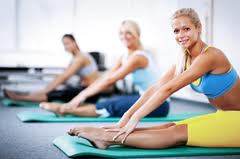
images-6The 3 women above use their head, neck, and torso relationship for dynamic postural alignment

Dynamic postural alignment has been proven crucial for the best mind and body functioning. You can  bend down further than these women without sacrificing your dynamic postural alignment. It is not about keeping a straight back at all cost, it is about hinging at the joints instead of using your neck or back as a hinge. This way, your spine can release into a beautiful smooth curve when needed.

How do you know if you are hinging with your neck or back? Hinging from a made up hinge (usually neck or back) results in straining with compression or over-extension. You are straining your neck when you collapse your head back and down creating a compression or when you stick your head forward. You are straining your back when you tighten your back muscles to send yourself upright or when you are stretching a single area in your back just because it feels good.

How you use your body in an integrated way is more important than producing an extreme version of any pose. No pain, no gain is a myth!

Spinal overstretch as well as neck or waist compression happen when you do not work with your innate body intelligence while performing a specific stretch or movement and it shows. Moreover, this kind of tension and distortion accumulates over time and eventually promotes injury on or off the yoga mat.

images-2 images

These are examples of how in an effort to reach your toes, you may bend from your upper back as if it was a hinge.

Joints in the body are the only appropriate hinges. Yet, these pictures are a common sight and it feels good and is gratifying to stretch hard but is it worth it? Their focus is on the goal at end (reaching their toes and stretching their back) instead of using the innate wisdom of their body which would simply release natural hinges (occipital joint, armpits, hip joint sockets, knees and ankles) and respect the dynamic alignment of the head, neck and torso.

Lack of flexibility or excess flexibility are both a problem as explained in the little cartoon video below. However, learning to use your body as a whole to release into a stretch will give you the best lengthening possible in your body and increasingly add to your flexibility level without leading to overstretching.
http://www.youtube.com/watch?v=XeEIoGMldyc

H O L I S T I C   S T R E T C H I N G   T I P S

1) RELEASE INTO A STRETCH.

Allow all your joints to release, starting with the ones on each side of a muscle or muscle group you want to lengthen. As a result your muscles are able to easily lengthen naturally into a stretch that spreads all over your body no matter where you started. In the process,  the skeletal alignment reorganizes itself instead of being distorted like in the pictures above! How does this happen?

By allowing a letting go of tension in your joints, you empower your postural mechanism to do its job.  And your body intelligence knows how much release and what skeletal alignment is appropriate in that moment. No risk of overdoing, yet you get the best stretch ever. A holistic stretch is like riding a wave, only the wave is going through your whole body connecting you from head to toes!

The body is a web of connections, so unless you always include what happens in the whole body, focusing on one body part at a time is not very efficient although it feels good in the moment. Besides running the risk of overstretching and creating unnecessary muscular-skeletal problems, it also promotes an ongoing need to stretch the same muscles over and over because the benefits do not have enough staying power. The fact is that the whole body synergy, when not addressed, calls for that tension to come back.

2) STOP TIGHTENING YOUR BODY AND MIND.

Consider stretching your mind as a prerequisite to gaining a looser body on and off the mat. The mind and the body are the two sides of the same coin. This  “I choose not to tighten”  practice is an intention you carry over throughout the day. It affects both your body and mind, it helps you let go of attachment to things and thoughts.

As your mind relaxes,  so do your joints and muscles which helps activate your postural mechanism in charge of your best balance and coordination. Tightening constricts your skeleton and the organs inside it all day long. Choosing to stop tightening allows it to expand back and up and out. It makes you feel lighter both in your body and in your mind.

*****************************************************************

Alexander Technique teachers have been teaching this since the 19th century. If you want to learn to stretch in an integrated way and you are in the Boston area, come to my workshops and classes or call for a private session by calling 617 359 7841.

To inquire about my Workshops for Yoga Teachers, my Workshops for Yoga Students and my Alexander Technique Workshops or to register online, click on https://offthematyogablog.com/schedule/

Harmful Stretching versus Healthy Stretching! Part 1

Standard

images-5Notice how her upper back and shoulders are rounded which makes her compress the back of her neck as she is reaching for her foot? It may be the best she can do considering where she may be at with her posture but this is certainly enhancing her habitual postural pattern.

Stretching feels good and can be helpful when done in a way that is appropriate for the body as a whole.
How do you stretch? Do you stay mostly focused on the muscles you are stretching? Do you find yourself rounding your back to stretch your tensed back muscles thinking it is a good thing to do because it feels good? Are you aware you may be compressing the back of your neck while you focus on a stretch?

You may be surprised to hear that muscles are not meant to be stretched in that way and that actually, this is a form of overstretching! It is easy to confuse the feeling good in the stretched muscles for something good to do. A bit like indulging in a meal that tastes good and is healthy even though it may not be best for your body.  What matters for “Healthy Stretching” is not only what you do but how you do it and sometimes why you do it.  Creating muscle strain and skeletal distortion while you exercise does not really serve you well despite all your good intentions. However, expanding your awareness by making helpful distinctions can resolve many problems by placing them in a bigger perspective.

images-1

Notice how her neck is nicely aligned with the rest of her spine so her head is still poised on top of her spine and above her sits bones. On the other end,  his neck is jutting forward creating neck tension while he is trying to undo tension in other parts of his body.

Do you know how to access your inner teacher to make sure you are not creating excess body tension in one part of your body while you are undoing tension with your stretch in another?

Keeping an awareness of what is happening in your whole body whatever body part you are working with is essential to benefit from your stretches without creating more problems for yourself while you stretch.  Your stretches are most efficient when you start by freeing your joints from excess tension with a thought of letting go of that tension. Neurons get fired at every thought and affect your whole body as they travel via your nervous system.

That is why when you have happy thoughts, it shows in your facial expression and in the way you carry yourself. Same applies with depressing thoughts. The fact is your postural mechanism is in charge of your balance and coordination. And it can guide you towards your most efficient stretches if you let it do its job by releasing into your stretches starting with your joints.

In the article below by Brooke Thomas called   “S t r e t c h i n g   d o e s   n o t   w o r k   the   w a y   y o u   t h i n k   i t   d o e s“,  she shares the finding of Jules Mitchell’s thesis presenting a bio-mechanical view into stretching and yoga poses. Because Jules started her work from the perspective of a yoga teacher- with all the training that had told her that stretching leads to increased flexibility, she was surprised to discover that the research on stretching did not prove what she was taught to be true.

http://breakingmuscle.com/mobility-recovery/stretching-doesnt-work-the-way-you-think-it-does

images-7

For this pose to be more holistic and therefore efficient, these women could choose to release their knees a bit more
which would help them release all the other joints, especially their hip joints sockets. As a result, their spine would lengthen effortlessly!

Jules Mitchell discovered that this popular stretching idea – if you stretch more and stretch harder, your tissue will change – was untrue. In reality, Brooke points out, “we are not lumps of clay that can be molded by persistently tugging on things”. We are functioning as an integrated whole from head to toes, mind, body and soul!

The best way to stretch is to let your postural mechanism do its job while you stretch. Only then do you benefit from “Healthy Stretching”! There are actually two complementary ways to practice “Healthy Stretching”. For more details about it, look for Part 2 of this article coming soon on this blog.

Alexander Technique teachers have been teaching this since the 19th century. If you want to learn to stretch in an integrated way and you are in the Boston area, come to my workshops and classes or call for a private session by calling 617 359 7841.

To inquire about my October and November Workshops for Yoga Teachers, Workshops for Yoga Students and my Alexander Technique Workshops or to register online, click on https://offthematyogablog.com/schedule/

Core Strengthening, Stability & Low Back Pain

Standard

There is a lot of talk about “Core Strengthening” in the yoga world and in the fitness world in general. Only, there is also a lot of confusion about it? This blog is an attempt to clarify this notion of core using common sense and experience. You may think that the stronger your trunk muscles are the safer your back and the more stable you are. It is not totally untrue. Yet, the popular consensus seems to be that strengthening is all about making something tighter and more compact. So it brings about the following questions.

How can inner or outer armoring allow you to function with ease and flexibility? How can you be stable without flexibility? Who decided that the core needed to be muscularly strengthened? And how can you separate the core from the rest of your body and exercise it specifically when everything in the body is intertwined? Are there studies showing it increases stability and helps back pain sufferers? Listen to Peter O’Sullivan in his U Tube video published on Apr 4, 2013 where he discusses cognitive functional therapy and the myth of “core stability” in relation to chronic low back pain.

http://www.youtube.com/attribution_link?a=D_uzTQTBMKI&u=%2Fwatch%3Fv%3DYezBG_NdLgs%26feature%3Dshare

In his paper “The Myth of Core Stability”, Professor Eyal Lederman from London also claims no studies actually shows the effectiveness of muscular core strengthening. In fact, we are told that studies have shown no such connection between muscular strengthening of the core and back pain or stability for that matter. Better daily use of the body and regular whole body exercising are the best tools to strengthen what needs strengthening. It is the best way to stay fit, to prevent back pain and create healing space when injured. And the Alexander Technique is the best tool I know to achieve this “Better Use of Ourselves” without relying on muscular control of individual body parts. It teaches you how to step out of the way so the wisdom of your body can do its job of strengthening, and balancing as you engage in any activity.

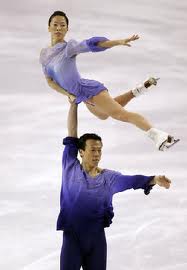
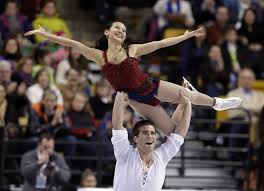
When you allow yourself to let go of muscular control while staying in a yoga pose for instance, you discover that the body takes over and goes the extra mile to accommodate your pose, only it knows how to do it efficiently.  As a result,  a new level of ease and flexibility comes about. All the while, you are still building the same amount of strength without building excess tension.  This is where the ease of any good athlete comes from. Think about the strength and stability of skaters gliding, jumping or lifting each other gracefully on slippery ice as if it was the easiest thing in the world!

images-16 images-17 OSHmqgfVosBH1tXd8AMOGNIIbx7DLJ7Q-eE_gS82C41OcAwyjwqENpYRSCy0RnUO69Ngbkc=s85

The psoas muscle system and the postural muscles happen to get stronger when they are free of excess tension. This way,  they grow strong simply assisting your skeletal structure. The psoas muscle system, postural muscles and skeleton, in tune with the postural mechanism affect your body from head to toes, and dance intricately and fluidly together to keep you upright with no need for added muscular effort on your part. That is the beauty of your postural mechanism when you do not interfere with unnecessary tension.

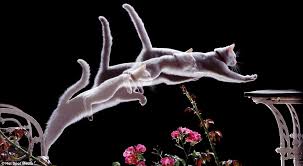
The paradigm viewing the body as a mechanical object with parts to be trained, fixed or replaced is being challenged. Slowly but surely, it is being supplanted by an understanding of the body as a living organism where everything is connected and everything affects everything. An organism where each part is a mirror of the whole and the whole is more than all the parts put together. You are a coordination system in action at every breath. So how can addressing one part at a time work in the long run? At best, it may fix one problem at the expense of another. Do animals need to exercise their core specifically for it to be strong and flexible? It seems to happen naturally as they use their whole body to fend for themselves. House cats don’t even have to fend for themselves much, still they are amazingly strong and flexible because they always move their body as a well-functioning whole.

images

Therefore, especially when you exercise to compensate for your sedentary life style,  include “Whole Body Awareness” even as you choose to work on one part of your body at a time!  This way, you give your body a chance to develop the natural core strength and stability of the cat. With no notice, they can jump up or down a great distance with grace, precision and strength but their muscles remain supple and soft. How could they accomplish this if they had tight muscles? Why would it be different for you? Is it possible that you are confusing excess tension for strength? The fact is if you do not let your postural mechanism do its job, when you exercise, you are building strength and excess tension at the same time. That added tension can only decrease your stability. On the other end, look at these women below. Their strength also comes from using their body as a whole from a young age. This way, they never lose connection with its wisdom.

images-1   images-6 images-14 images-7

Learning to activate your postural muscles is one amazing key to connect to the intelligence and wisdom of your body. As you activate them,  listen, notice, embrace and learn from the micro-managements made by your postural mechanism to keep you balanced, strong and stable.

Whatever your yoga style, and whether you are on or off the mat, you can use your body efficiently and prevent injury by listening to your inner teacher via your postural mechanism! My workshops and classes teach you to do just that.  Click at the top of this blog-post to check them out and register. Also, you can sign up to follow this blog which is full of great info and helpful tips.

3 Common Oversights by Yoga Lovers that keep their Muscles and Joints Strained Part #4

Standard

THIRD COMMON OVERSIGHT: OVERRIDING BODY-WISDOM

Confusing what is habitual for what is natural is a major reason why you end up overriding the wisdom of your body. As explained in the previous blogs, muscular overdoing can be a compensation for skeletal distortion and skeletal distortion can happen from muscular overdoing as well. Unfortunately, all this comes to feel natural simply because it is habitual.  However, muscular overdoing and skeletal misuse are both coming from the most essential oversight of all:  lack of expanded awareness due to a disconnect from our beginner’s mind.

expanded-awareness_med_300x300

The key is to realize that you can only focus your mind on what you are aware of.

When you are being mindful on the yoga mat, the broader your body awareness, the deeper rooted is your mindfulness which allows you to blossom up and out like a beautiful tree on-and-off the mat.  Certainly  you can already focus your mind on not pushing past your perceived healthy limits. But what about your unperceived healthy limits? That is why somatic education to expand your body awareness is crucial. It makes the difference between your holding a tree pose with excess tension and your releasing through it as you expand up and out into it. Totally different in the moment. Totally different over time in the quality of what you harvest from your practice.

yoga-pose-tree-pose-6533-1

Let’s use nutrition awareness as a metaphor for understanding how various levels of awareness can expand to work together. You know what you like and don’t like to put in your mouth. In this case, your focus is on what tastes good, a primitive pleasure even a baby can be aware of. That is one level of awareness to select what to eat. However, you can also include in your decision what is healthy for your body to eat. That brings your awareness to another level. Then again, you may care to include in your decision what is healthy and sustainable for all the humans on the planet. That takes your awareness yet to another level! So as you can see, you may be mindful on some level yet unaware of a broader type of awareness.

It is the same with body awareness: you may be mindful when practicing on the yoga mat but what are you mindful of? As substantial as it may seem, what if it is just the tip of the iceberg? Motivated by the good intention to develop strength of body and mind, with all your might you may be controlling your skeleton with your muscles to perform a specific pose. Maybe muscles and bones can work together as a team if you allow them to do so within the framework of the pose chosen by your mind! Try to develop an awareness of your skeleton as your primary support system instead of relying on muscular effort to stabilize the skeleton and see what happens. In this process, you are less likely to overlook the real needs of your body and its wisdom, which is to move efficiently with ease in an integrated way.

Watch or re-watch this easy to view 7 min video I had posted in my last blog about how the skeleton works as your primary support system!

 How to not override the wisdom of your body?

Be aware of your whole body no matter what body part you are focusing on. Excess tension interferes with the optimal functioning of your postural mechanism. So release all excess tension into your support without sacrificing your skeletal height so you can feel lighter, stronger but still resilient and balanced in your pose. Try it now as you are sitting reading this blog on your computer or smartphone. This ease and lightness comes from your allowing your postural mechanism to do its job by stepping out of its way. Observe how it affects your body from head to toes as you expand in all directions like bread dough rising. Notice your postural alignment improve with no muscular effort which allows you to go deeper into your growing edge when on the mat. This way, you promote a quality in your movements that is organically sustainable on and off the yoga mat.

Known for his meticulous style, Yoga Guru Iyengar himself said: “By attending to the mental and spiritual side, a sincere student of yoga becomes like a smoothly flowing river …”. This fluidity is the gift you receive from your body wisdom when you let your postural mechanism work for you. It micro-manages your joints and muscles for you while taking you to that sweet balance spot quickly and easily. This gift is often overlooked by some yoga teachers and students alike when they focus on a myriad of details to the point they loose track of the big picture. They focus on the hundreds of little waves instead of embracing the entire ocean with its full depth, hidden riches and organic support system.

Dolphins in the wave

Awareness expands with combined education and experience. You have heard people say, “Life happens when you are not looking!” In the same vain, you could say “the risk of injury increases when your awareness still holds some blind spots”. It does not mean that you have to be on your best behavior 24/7. It is more about educating yourself to increase the depth of your awareness and then choose to be mindful as best you can.

Expand your body awareness by learning to let your postural mechanism do its job.
It will take you into an inner journey onto the smooth flowing river of your body wisdom.


Flowing river Yoga 

PS: To learn how to let your postural mechanism work for you and avoid unnecessary tension, join one of my classes or workshops listed above!