Category Archives: Uncategorized

3 Common Oversights by Yoga Lovers that keep their Muscles and Joints Strained. Part #3

Standard

SECOND COMMON OVERSIGHT: SKELETAL MISUSE

Let’s see how it happens and how you can remedy this oversight!

Here is what Yoga Guru IYENGAR himself had to say this month of May 2014 at age 96 to the question“So what exactly does yoga do?”: “Yoga generates a lot of energy in the body. Correct positions generate energy. If the asanas are done correctly, according to the body constitution, without putting any impediment in the flow of energy, it gives tremendous recovery.”
Yoga-Poses-Improve-Balanceimages-5

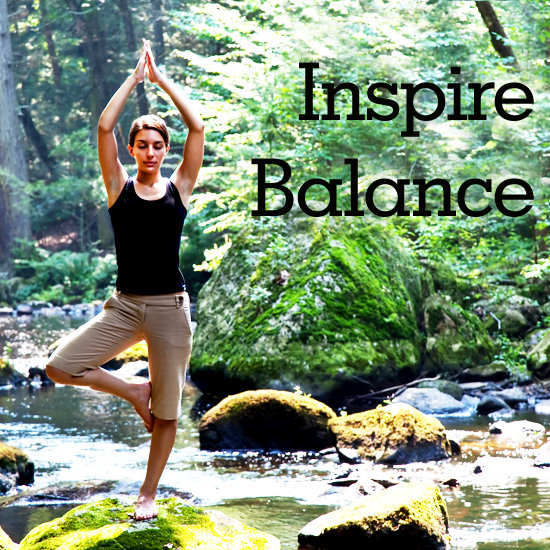
It is important to address skeletal misuse properly on-and-off the mat, because intending to not overdo on the mat cannot prevent all the overdoing happening on-or-off the mat when skeletal misuse is happening. And by addressing skeletal misuse, I am not talking about holding yourself upright. “Holding” is actually a big part of the problem. It interferes with flow and is neither sustainable, nor necessary thanks to your postural mechanism, which is designed to work for you. As you release all excess tension into your support, your postural reflexes are being triggered to do their job and in response, you can expand from the ground up and out, like a tree. When you do this, you become “Balance”.

My recent Survey Monkey for “Yoga Lovers and Injuries “ showed that many yoga lovers still suffer from chronic discomfort in the neck, shoulders, back, as well as knees and wrists, which puts them at risk of getting further injured on the yoga mat or in daily activities. At best, they can modify or avoid some poses. The fact is, once injured, sometimes, yoga lovers cannot do what they love so dearly because of how they used themselves on-and-off the yoga mat before getting injured.

Before reading more on skeletal misuse and solutions, check this video that says it so well!

As seen on this video, skeletal misuse actually comes from habitual patterns of movements you develop in everyday life such as the way you walk, the way you sit at your computer or the way you carry your backpack on your right shoulder for instance. As shown in my blog about working in the kitchen, it can get quite complex like the way you carry your young child on one hip while squeezing the phone between your shoulder and ear as you are stirring the dish simmering on the stove. These repeated ways of being take their toll on your postural alignment, which gets distorted progressively. At some point, you mistake what is habitual for what is natural. This corrupted postural sense becomes the basis for all your movements’ on-and-off the yoga mat. As a result, the muscles overdo to compensate for a lack of integration in your movements and yoga can enhance the issue instead of fixing it. Here is how this on and off the mat connection plays itself out.

Let’s say you catch yourself slouching in a daily situation and you decide to sit up or stand up instead, you may be arching your back in the process and pulling your shoulders back in an effort to feel taller and straighter. However, this being neither natural nor comfortable, you cannot sustain it for very long and most likely, seconds later you find yourself right back where you started. Sounds familiar?

As a result, when you are on the yoga mat and a pose requires proper postural alignment, you only know to arch your back to a lesser or bigger degree, yet you experience yourself to be aligned. Although proper alignment is part of good posture, there is more to good posture than proper postural alignment. Unless all excess tension is totally released, holding is happening and good posture is compromised. This is how skeletal misuse can make yoga harder than it is meant to be. Yoga has its challenges but creating unnecessary strain on your muscles and joints is not one of them not to mention it is counter-productive to your yoga practice! Yoga can help release tension or create more tension depending on the quality of your movements in general. This is why it is so essential to optimize the quality of your movements on and off the yoga mat.
images-7 images-11

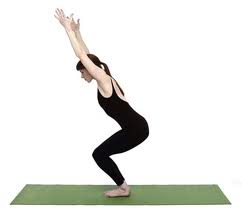
Do you see the difference between these two chair pose demonstrations? Which one is more balanced because her weight is evenly spread through her feet? Which one is arching her back and overdoing with her legs to compensate for her lack of balance?

NEXT TIME YOU ARE IN  A POSE, TRY THIS:

Using your beginner’s mind, as you picture the pose you have in mind and as you get into the chosen pose allow your muscles to let go of all excess tension into your support and refuse to strain. Allow small changes to happen on their own. Remain flexible as you stay in the pose while embracing your support. You will be guided instantly and every time to your sweet spot, the best way to handle the pose of the moment with no unnecessary tension. If you let it, your body wisdom can micro-manage your skeletal alignment as you release excess tension from muscles and joints. It is a fascinating experience.

Observe and learn from your own body wisdom guidance, your very best teacher!

Good luck practicing releasing all excess muscular tension while keeping your skeletal height and width.
Let the innate wisdom of your body guide you and say good bye to the unnecessary straining in your yoga practice!

Part 4 coming soon!


3 Common Oversights by Yoga Lovers that keep their Muscles and Joints Strained Part # 2

Standard
Elegant Pigeon Pose

Elegant Pigeon Pose

Ironically, the 3 common oversights I am addressing here can happen precisely as you are trying very hard to be conscientious about exercising and building healthy habits. The root problem of all oversights comes from starting the building process without clearing the harmful habits you have developed over time.

As a result, you spend time, energy and money yet the results don’t show up or don’t have staying power and naturally confusion or discouragement can follow.

Did this ever happen to you?

It is like building a beautiful house on bad foundations. Sooner or later, trouble starts showing up. The work offered at Off-The-Mat-Yoga is addressing the foundation of all movements precisely to avoid unnecessary trouble to show up for you on or off the mat!
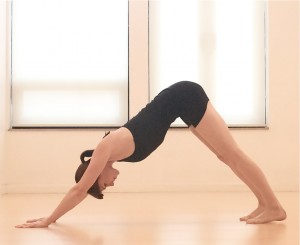
With a good foundation, you end up with Simple, Integrated and Elegant Movements and Poses!

Integrated Down Dog

Integrated Down Dog

                                     FIRST COMMON OVERSIGHT: MUSCULAR-OVERDOING

                             Muscular-overdoing is not always pure oversight.  

Sometimes you choose to overdo because you think of it as pushing your limits to be strong. And it does show strength of character and will power. However, in doing so, you overlook the input of your innate body wisdom. You know how inefficient it is to talk and listen to someone at the same time, right? So when you focus on doing the pose the way you think it ought to be, you are listening to your mind and you miss out on hearing the whispering guidance of your body wisdom .  And if you are not listening to the innate wisdom of your body, at the service of what part of you, are you placing your will power?

Your postural mechanism is designed to function so you can move with the appropriate amount of tension for each movement during every activity. Yoga is no exception. You can assess how in tune you are with your body wisdom by how fluid and light your movements are or how easily you find your sweet spot when on the mat.

As a yoga practitioner, if you do not know how to let your postural mechanism work for you, you are putting a lot of unnecessary stress on your body. While you are working on building up strength and balance, you are also actively building unnecessary muscle tension.

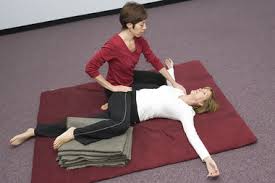
Using props, working with a  Thai Yoga therapist or an Alexander Technique teacher can help you progressively expand your motion range without sacrificing your skeletal alignment and without interfering with the optimum functioning of your postural mechanism.

   yoga_props_small images-2

Overstretching is also a form of muscular overdoing or excess tension. In fact, did you know that too much tensing or stretching actually weakens your muscles natural tone and interferes with the efficiency of your postural mechanism? It is one way that gets you in trouble on-or-off the mat. It is also placing your will power at the service of your human limited mind or ego mind. It is using blind will!

Working on expanding your growing edge however, is not overdoing, when done in harmony with the innate wisdom of your body. Then, it is placing your will power at the service of wisdom. It is using wise will!

This being said,  some of you may not want to overdo, still you find yourself straining into a pose. Due to daily movement habits,  you may not even realize you are straining, yet later on your body hurts or feels tight. This type of overdoing on the mat can be caused by unconscious or semi-conscious skeletal misuse carried over from how you handle your body off the mat.

How do you develop such skeletal habits, and how can you improve skeletal alignment without using muscular effort?

This will be the topic of my next blog on Skeletal Misuse & Solutions!

Off The Mat Yoga in the Kitchen

Standard

Recently, a few people asked my advice to better handle themselves in the kitchen and avoid creating tension while cooking and eating. So here I am with some pointers to help you stay centered while eating and mostly to help all those kitchen chefs out there!

Look at the bottom of this page for two easy yoga poses I recommend you to practice before you start cooking even if you don’t have a regular yoga practice. It will remind you how to use yourself in the kitchen!

To write this blog, I went online to get some pictures of common mistakes done by people when in their kitchen.
Here is what I found. Does this look familiar?

Unknown-2    Unknown-1    Image

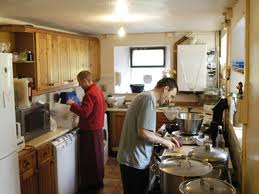
On these pictures, you can notice the neck part of the spine craning forward from the upper back. You can also notice the mother bending her neck sideways to squish the phone between her shoulder and ear while doing three things at once as it is often the case with parents of young children.

Repeating these motions daily takes its toll on your body and then they become the basis for how you move in other activities. The head is quite heavy and when the neck is craned the way you see on the picture on the right or bent to the side as in the picture on the left, it creates tension in the neck and imbalances. Eventually it brings the shoulders rolling forward as well as you can see in the picture in the center. Only it happens progressively and then you find it feels totally natural. It is so easy to confuse what is natural with what is habitual and promote injury without being aware we are doing it!


HOW COULD YOU DO THE SAME ACTIVITIES IN A LESS HARMFUL WAY?

1) Allowing your head to rest at the top of the spine would be a good start.

2) Allowing your knees and hip joints to release away from each other ever so slightly so as to lean forward from those hinges instead of letting the neck do their job. Sitting at a kitchen table could be better when possible.

3) Feel the support under your feet and let the whole body chop these vegetables not just your arms and wrists, the more you release through your support, the stronger you actually are to get thru the tough vegetables.

4) Using your speakerphone or some headphones is a must if you are on the phone while cooking or if you spend much time on the phone. It allows you to keep your head on top of your spine more easily.

5) If you are a mother, beware of the Mother’s Hip Syndrome. Avoid carrying your children favoring one hip over the other. It will progressively distort and corrupt your postural sense and it will become the basis for all your movements! This syndrome started a trend that got me into serious trouble much later and it took a while before I got over it!

6) Sitting at the table is the same as sitting at a computer (see my blog on that topic), you want to hinge forward towards your plate from your sits bones instead of letting your neck crane forward. The more you need to get close to your food or table top for any reason, the more you need to keep your chair back so you have room to lean forward from the contact with the chair keeping your back relaxed. Try it and see how much easier it is on your neck!:)

7) Last but not least, observe how you reach for something in your cabinet shelving. The higher you reach, the more you need to remember to release all the joints between your hand and feet….it will give you access to your maximum length without hurting any part of you in the process!

All these recommendations help you to sit, stand and move in a more integrated fashion that promotes increased health and well-being!

If you are also interested in learning about Integrated Nutrition, a perfect adjunct to what is presented on this blog, check Paul Pitchford book “Healing with Whole Foods”

http://justgreatfoods.com/paul-pitchford which you can find new or used by clicking on this link: http://www.amazon.com/Paul-Pitchford/e/B000APSJYE

Best yoga poses to practice before starting your kitchen work:
Utkatasana or Chair Pose & Garudasana or Eagle Pose
Keep this nice alignment which allows the back of the neck to be relaxed
while your head and your tail bone release away from each other! Enjoy!

DSC_0117DSC_0120


Yoga Lovers and Injuries

Standard
Hi Yoga Lovers!
 
Whether you are an experienced yoga practitioner or you just started,
I created the Survey Monkey below to better understand the concerns of Yoga Lovers regarding Injuries.If you are a yoga lover, whether you are practicing at this point in time or not, please take the couple minutes it takes to fill out this survey, it is completely anonymous.
There are 10 questions and they are all multiple choices answers to make it really easy on you!

Thank you for helping me help you!:)

https://www.surveymonkey.com/s/78SCBVZ

Yoga Lovers & Injuries Survey

Off The Mat Yoga and The Spine beyond The Spine as we know it!

Standard

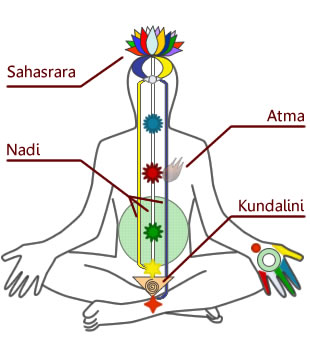
ChakraKundalini

Do you know anything about the Spine beyond its physical characteristics?
Am inspired to share some information that is not necessarily common knowledge about the spine although thousands of years old.

Who knew about the Spine thousands of years ago?
The ancient yogis of India believed that while we are growing in our mother’s belly,  life force comes from Cosmic Energy via the Medulla Oblongata at the base of the skull  and it flows up and down the spine till the end of our life on earth. They also believed that when we think and act in a naturally positive way, the Kundalini energy goes up the spine towards Higher Cosmic Consciousness where it came from. Of course, the Kundalini energy can stagnate or go down mirroring our life energy.

So the spine is not just a functional part of the human body?
That’s right! These yogis actually see it as a representation within us of the entire cosmos as chakras and that the more free flowing the energy is in the spine, the easier it is for our Kundalini energy to rise back upwardly to our source.  This is one crucial reason why alignment is so very important in all forms of yoga practice. Kryia yoga especially promotes the Kundalini energy to go up. There are many ways to do Kryia Yoga. Some do it with rigorous breathing and body movements, while others use mental directions made available to those initiated who believe this way to be more efficient and powerful. Both physical and mental ways of energizing our Kundalini energy can be combined of course. The important part here is that the spine is the container for the Kundalini energy which is connected to our state of awakening to Higher Consciousness.

How can we nurture this Kundalini flow up the Spine?
You can develop mindfulness around how you care for your body and your mind. You can learn to release straight into your support by letting the muscles around your skeleton be relaxed without loosing your skeletal height. Avoid muscular efforts with your back  in the process. This way, you let the skeleton lengthen up and out from that support and the spine can expand into its full space. With these thoughts in mind, you can practice Yoga & Meditation,  Tai Chi & Chi Gong and although you can get immediate results, deep changes happen in time. You can read books and listen to spiritual teachers that help with self understanding,  with understanding of the world, and your place in it on a wide scale. At some point, it is good to choose a path and follow it as you would choose a road and stick to it if you were lost in a forest. Just remember that whatever you choose, it is not what you do that matters as much as how you do it and why.

For more info about “Kundalini”, go to http://en.wikipedia.org/wiki/Kundalini

Off The Mat Yoga and Smartphones!

Standard

Recently, I read a British article called “Do you suffer from IPosture” which you can read in the following link: http://www.dailymail.co.uk/health/article-2439365
It was found that 84% of 18 to 24-years-olds have admitted to suffering back pain in the last 12 months – perhaps because they were spending a large amount of time hunching over tablets and smartphones. Besides, this age group now loses more working days a year to back pain than those in their parents’ generation. Also, half of the population experience pain in the neck or lower back every year.

Are you in this age group? Do you go to the yoga class in the hope to get some relief?
Or do these issues actually keep you away from yoga?

Yoga is a good start for these neck and back pain because stretching tight muscles can be very helpful provided you do not force your stretch excessively. Of course, it also feels awfully good. The question is: what do you actually integrate from your yoga class and what is it you forget as soon as you leave the yoga studio? It seems to me that increased flexibility and strength are definitely yoga benefits that can drive you back to your class because you can feel the difference in your everyday life. However, could there be something missing in your practice? What could account for the difference in how aligned you look on the yoga mat and how it all melts away when you grab that smartphone or when you find yourself in front of a screen, be it the computer or the TV?

Can you give me a specific example?
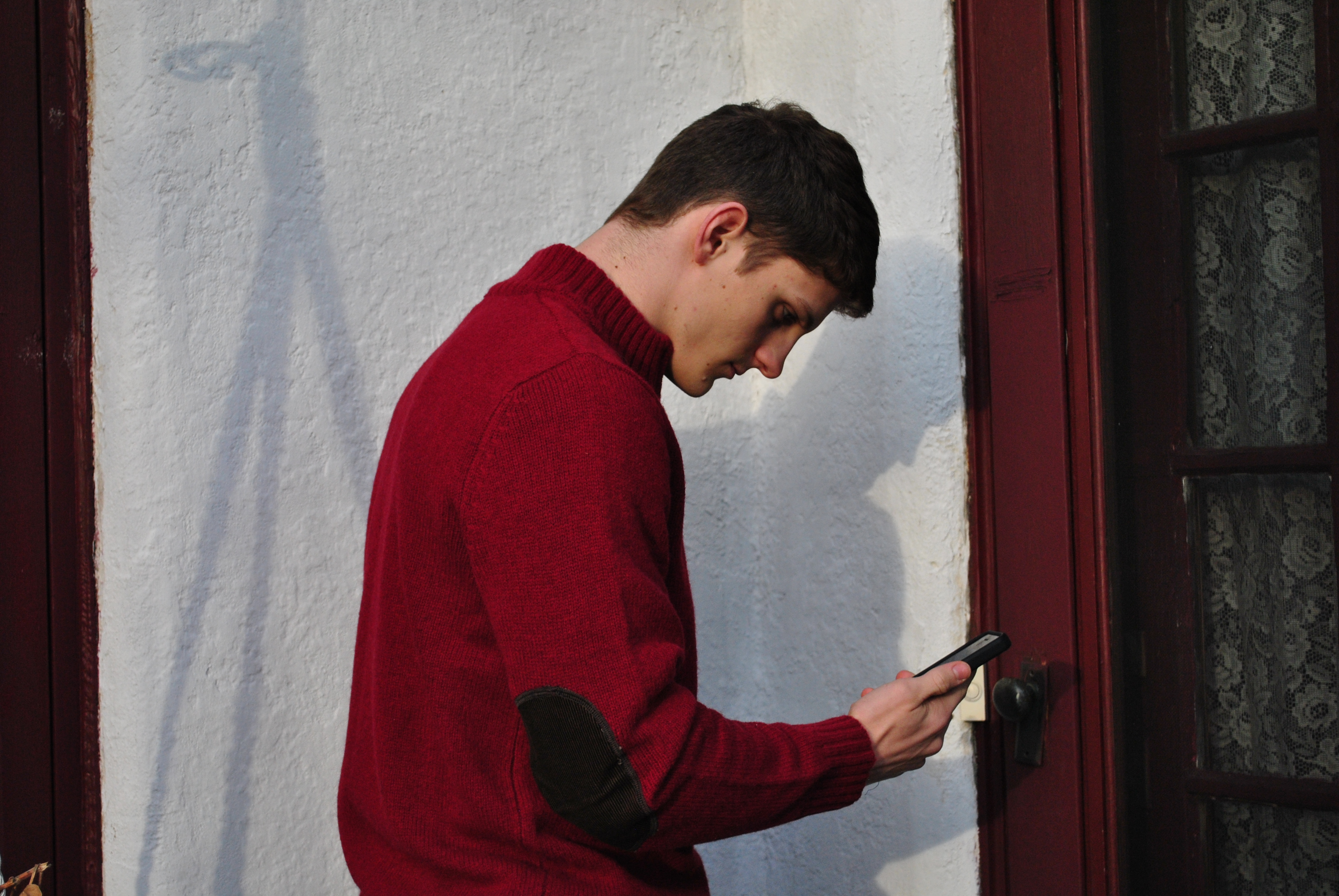
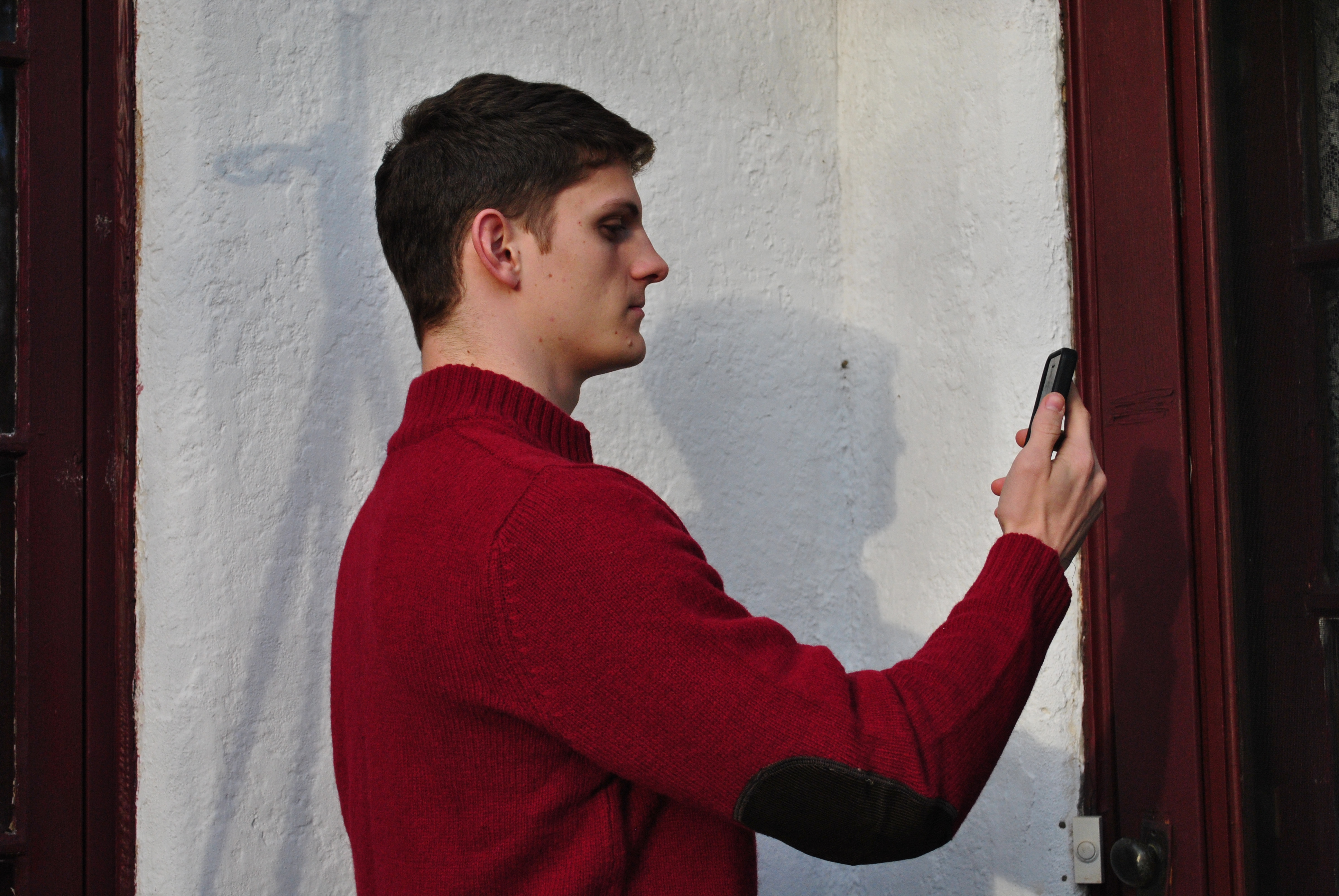
Ok. For instance, when doing your eagle pose, your head neck and torso are aligned and your arms are bent at the elbows, hands pointing up. Then your class over, you go to the changing room and grab your smartphone to check your messages. Before you know it, do you find yourself with  your neck extended forward as your eyes face your smartphone which is itself parallel to the ground? Head neck and torso no longer are in alignment and the forward extension past your chest of both your neck and head are pulling your shoulders forward and down as well. Does that sound familiar? Look at the pictures below.

I PostureAligned ViewingI PhotoAligned Viewing

Why is alignment present on the mat and so difficult to remember off the mat?
First, you are mindful of your postural balance when in your yoga class in a way you are not outside of it. Still, you should not have to think about your postural balance all the time. So mindfulness is only part of the solution. The other part is to have a deeper understanding of movement, an understanding that includes the awareness of your postural reflexes and how to activate them. Without letting your postural reflexes do their job, you are using too much muscular tension to control your yoga pose. As a result, you cannot sustain it for very long. As a matter of fact, you are building unnecessary muscle tension while you are trying to build strength. That excess tension interferes with  your postural muscles strength build-up. Your postural muscles are in charge of your postural balance and can do so for long periods of time. When interfered with however, they can no longer do their job. They become lazy and make you surrender to gravity as in reading the smartphone after the yoga class.

 Helpful tips
As shown on the pictures above, you can start by bringing your yoga awareness to your everyday activities. For instance, next time you grab that smartphone to read your messages, don’t sacrifice your head neck and torso alignment. Use your eagle pose as a model of how to bring the phone in front of your face instead of binging your head and neck down to the phone. When possible and if you are planning to use your phone for a while, have your elbows supported so that you don’t have to hold your arms. You could use the back of a chair if it is tall enough for your height. You could sit and lean forward so your elbow rest on your thighs close to the knees or above them depending on your body type. Once you know what you do not want to sacrifice, you will figure something out that works in your environment. And till you learn to activate your postural reflexes so you can release and expand into your inner space, make sure you use the least amount of effort to do what you do. Release body excess tension into your support without sacrificing your head neck torso alignment. You will be ahead of the game!

Coming next: Off the Mat Yoga and working at the computer!

Part 2: What is Off The Mat Yoga?

Standard

What is Off the Mat Yoga?
Off The Mat Yoga was created to help you get the best out of your yoga practice, to prevent injuries and to help you feel good in your movements on and off the yoga mat. It is also to guide you in using your yoga poses as a guide in your everyday movements whenever possible. Through basic yoga poses and other daily movements, you will be guided both verbally and with a gentle touch to trigger your own postural reflexes. They are responsible for your best postural balance and ease of movement and can help you perform your best yoga yet! Check the blog on postural reflexes for more info about what these reflexes are and what they can do for  you.

On The Mat Yoga and Off The Mat Yoga are the two sides of the same coin. The way you understand and perform movements in your everyday life affects how you understand and perform yoga poses and movements. The reverse is true as well, the benefits of your yoga practice can help you handle life movements differently. You may have focused on getting more flexible or strong. You may have focused on learning the proper form. You may have focused on practicing being in the present moment and all these benefits of yoga are why people do go to yoga classes. However, many people still get hurt doing yoga, including some teachers. Many shy away from yoga from fear of getting hurt. And this does not have to be so! Many of you may have already experience moments of yoga or daily movements where everything seems to work together effortlessly, only you don’t necessarily know how you got there and how to get back to it instantaneously. Learning how to trigger your postural reflexes is the way to get to that place of perfect integration.

Yoga injuries and other types of injuries often happen because you have not been told how to activate your postural reflexes. Even when your teacher says “do what is right for you”; you only know how to control the degree of tension you use. Instead you can learn to let your postural reflexes do their job of reorganizing your whole body so unnecessary tension can be released on demand instantaneously. Learning about postural reflexes activation outside of the yoga mat helps you develop greater awareness of your ways of being and moving when you are off the mat. This way, you won’t bring harmful unconscious habits of movement to your yoga mat and you’ll feel better more of the time!

The truth is that your yoga class is likely to be overcrowded and your teacher has neither the time nor the skill to help you in this way. She is there to teach you the form as best she can. There is often a discrepancy between what she asks you to do and how you interpret it in your body; besides, the fact is that she is not trained in this primitive understanding of the body functioning nor is it her responsibility to teach you how to use your body in cooperation with your postural reflexes on and off the mat.

Coming soon: Off The Mat Yoga & Smartphones?

Part 1: What are postural reflexes?

Standard

What are postural reflexes? What do they do for you?
Postural reflexes are automatic movements that control the equilibrium required once you started walking and dealing with the gravity pull. They maintain your posture, balance and fluidity of movement effortlessly if there is no interference in the way.

What does that allow you to do while in your yoga class?
By activating your postural reflexes, it allows you to release through and expand into each pose in a way perfect to you in each moment. It also allows you to create modified versions of the poses you know not to attempt yet.

Don’t I do that when I try to be aware of my posture?
Not quite. There is posture and there is poise. Posture is something held, fixed and stopped in time that you can look at, like on a picture. However, poise is a sort of postural balance at work. And it is the job of the postural reflexes to maintain this postural balance as best as possible!

What is preventing my postural reflexes to do their job then?
Great question! Do you find yourself holding up into what you think is good posture and feel the urge to collapse in a flash if you let go of any holding?Did I hear you say “yes”? There is your answer; any amount of holding is preventing the postural muscles to do their job. No holding is necessary to be upright. We are so well designed in that way.

Have you ever thought that the unconscious way you handle movements in your everyday activities shows up in your yoga class? And could it be that although you do yourselves good when practicing yoga, yet you also strengthen unconscious habitual patterns that you take for granted everyday?

How can I learn not to do this holding and still be up?
Your golden key to all this is the ability to trigger your postural reflexes to stop overusing your muscles just to sit or stand upright! This way you can handle any activity or your daily yoga practice with confidence and know what is appropriate for you at any given moment. This way, you listen to yourselves rather than force your body to conform to a specific shape.

Coming soon “What is Off The Mat Yoga“?