Category Archives: Mind/Body

Vision/Posture Connection & Drishti

Standard
This time of year seems appropriate to talk about vision for various reasons.

Vision_Future
On the physical level,  the health of your eyes is a precious thing you may take for granted especially when they don’t give you any trouble. However,  they can affect your overall health depending on how you use them in your everyday activities. Neck craning forward or head tilting back while slouching at the computer for instance can actually create compression or over-extension of the back of your neck and rounding your shoulders.  On the mental level, you envision a specific future for yourself. New Year’s Resolutions for example require you to have a vision of the future you want to see happen. Or you may have a personal vision on a work project or on how to solve a given issue. Such vision guides what you manifest in your life or not. Spiritually, vision is a reference to your ability to see with your intuitive heart beyond what is visible. It refers to your inner vision.

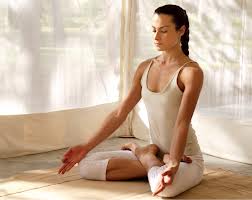
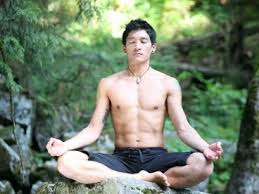
Yoga teachers may talk about “Drishti” (vision), and on the mat, they often refer to it as a form of gazing in the distance to focus your mind in the present moment. Focus is fundamental in yoga practice. Focusing your eyes and your attention is using this yogic technique called “Drishti”.

images-4

However, although using your vision to stay in the now or come back to it is an excellent tool, there is something important to consider in “Drishti”. Along with this intention to gaze so as to step out of your over-active mind, you need to always make sure the gaze direction does not lead you to sacrifice your spinal length so the kundalini energy can flow through it.

The woman in the triangle pose above is using her vision well to support an integrated triangle pose. As she is looking towards the tip of her fingers and beyond, her head neck and torso remain nicely aligned. However, there is more to good postural balance than perfect alignment, there is dynamic alignment.  Dynamic postural alignment implies the harmonious relationship between the various part is respected so that the energy can flow back and forth through the muscles into the support and up the skeleton then able to expand in its full space.

Straining interferes with getting the benefit of any yoga pose. Having space to release while in a pose is the most dynamic way to engage in a pose. It challenges the muscles to work without adding body stiffness to the mix. If you have gone to a place where release into your support is no longer an option, you are doing too much.

images-12images-5images-11
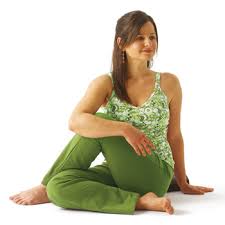
These women engaged in a seated twist are using their vision to lead their seated twist as they stay balanced and centered above their supported sits bones. Led by the direction of their vision, each is going as far as they are comfortable without sacrificing their skeletal height.

images-13

On the other end, the instructions for the seated twist on this picture are incomplete and it shows on the model illustrating this pose. The sits bones are arched a bit like a rocking chair so it is not enough to feel your sits bones, it is crucial to be aligned above their balancing point. Otherwise, any attempt at releasing your back will take you into a slouch.

Here it is clear that she is not balanced because her gravity line is behind her sits bones. As a result, she is slouched in her twist. It is straining her back, squishing her internal organs, limiting her breathing and how far she can go into her seated twist. Although she certainly seems like a happy camper on this picture, she is not getting the best out of her yoga pose! 

Even in daily life, you need to know how to do this. Whether you are siting on a chair or in a car, you can hurt your neck if you do not apply these principles as you turn your head to look behind yourself.

Helpful Tips

1) To maximize a seated twist, connect to the balancing point of your sits bones so your head is still above them without loosing your skeletal height which comes by sending your sits bones into your support rather than tensing your back muscles. Then look in the direction you are turning moving from the joint at the top of your spine first.  As you go, keep releasing neck and back muscles straight into your support. This prevents you from creating body stiffness or muscle straining.

2) Do not fix your gaze, a fixed gaze creates a fixed body which is not the purpose of yoga, keep it soft and wide using your peripheral vision as in driving. Keep it connected to the rest of you! You are on the mat to stay present and to tune in, not to tune  out!

3) When doing asanas, just do asanas. Don’t start to think about the meaning of life or anything else but what is happening right there and then. Your vision, your breath, your kinesthetic senses are all ways to anchor yourself in the present moment.

4) The spiritual dimension of “Drishti” can only come from the practice of being present yet non attached to thoughts, body senses and sense pleasures. Mind grasping or muscular grasping (the two sides of the same coin) take us away from such practice. So stay in touch with yourself and don’t tense your muscles. Body stiffness is not body strength. Body strength remains flexible, like the strength of the cat!

5) Stay aware of the direction of your vision as often as possible. When lost in your thoughts or in your body feelings, you may be gazing in a way that stiffens your neck. So watch out for your neck by making sure your vision choice does not conflict with the need of your neck to stay free of tension. This will give you an integrated movement connecting you from head to toes.
images-9
When not aligned above support and relaxed, gravity promotes slouching.
When aligned above support and relaxed
, gravity promotes effortless good posture.

Do you want to learn more about this mind/body approach to natural good posture? 
Do you want to learn how to reclaim efficient moving for balanced living?
Join my latest FREE 6-part EMAIL SEMINAR:
"How to Unlearn Habits that Create Body Stiffness On and Off the Mat"
(Based on the Alexander Technique Principles and Facts)

Wishing you a wonderful New Year,
filled with Gratitude, Health, Prosperity and lots of Laughter!

https://offthematyogablog.com/

Bandhas, Blocks and Bones!
Standard

images

Yogic Bandhas are a form of energy activation via special centers in the body to temporarily contain the body energy (prana) in the torso. The 3 specific bandhas are : Mula Bandha, energy activation at the perineum, Uddiyana Bandha, energy activation of the abdomen into the rib cage, and Jalandhara Bandha, to energize the throat.

It is common to practice this energization by squeezing and tightening these centers to close energy gates as a way to create energy flow when the tightness is released (it functions a bit like a damn). However, when practiced this way, unnecessary tension can also be created from muscular overdoing out of habit and because of the conditioning around more being better. But is it?

IMG_3067

Listen to Leo’s experience with block squeezing versus blog hugging when activating Mula Bandha

Bandhas are about energy activation above all else. Although performed on the physical level engaging the skeletal muscles (part of the core muscles), they also function as an internal energetic process. The key is to not overdo muscle tension so the energetic process can happen most efficiently and body stiffness can be avoided.

It is my personal experience and the experience of yogis I have worked with, that when you focus only on the local area around the centers, you loose connection with the whole body and its innate intelligence. You still can get results from your practice yet you also develop or reinforce body stiffness in the process. How can you avoid overdoing in this context? Stay connected to your bones and skeletal structure!

mqdefault-1
Watch or re-watch this easy to view 7 min video by Kathleen Porter
about how the skeleton works as your primary support system!

Muscular overdoing overshadows the skeletal structure and bone strength. To experience this, explore energizing the root chakra with Mula Bandha using a block between your legs as high as it fits to hug the block with your bones.  Start exploring in Mountain Pose or Bridge Pose for instance and compare plain squeezing to bone hugging. Bone hugging instead of muscular squeezing prevents excess tension while connecting you with your complete skeletal structure and the support under it. This way, your bandha activation is allowing your whole body to be engaged in an appropriate way, each part using just the right amount of muscle tension.

Once you have experienced energizing the root chakra with the block to connect with your skeletal structure and strength, it can be done without the block as well even in lotus pose. As a result, the outer muscles can let go, the core muscles kick in organically working with the skeleton and its support. The energy activated by the bandhas is then both localized and generalized so that when released, the gates for the energy to flow are wide open all over the body.

IMG_3062 IMG_3064
Notice the muscular pulling down created by the squeezing versus the lengthening and improved alignment
when simply hugging the block to activate the root chakra for Mula Bandha!
(Compare the red line in h
is shorts on both pictures!)

With an awareness of bones hugging rather than muscles over-squeezing, you will experience the strength of your bones working harmoniously with necessary muscle tension to create flexible strength and powerful energy flow. You can use a block to practice through a flow of poses or a single pose. All the while, you activate the bandhas in an integrated way that includes and respect your innate body intelligence guidance.

This way of handling the bandhas, based on Cecile’s experience and teaching of the Alexander Technique, reminds us to always use the body as a coordinated self, rather than focusing on isolated body parts. This allows all your movements to be in sync with your innate body intelligence. Such movements then become your safest and most efficient movements. Yoga poses or other yogic practices then benefit from optimal safety and efficiency.

Do you want to learn more about this mind/body approach to strain-free yoga? 
Do you want to learn how to reclaim efficient moving for balanced living?
Join my FREE 6-part EMAIL SEMINAR:
"How to Unlearn Habits that Create Body Stiffness On and Off the Mat"
(Based on the Alexander Technique Principles and Facts)

Mastermind for Committed Yoga Teachers with a Vision!

Standard
BODY SYNERGY LAB
 The First Mastermind For Committed Yoga Teachers with a Vision

IMG_2690

A Mastermind is an awesome journey for a small group of people with a similar focus. All participants have an interest to serve and support each other, personally and professionally with an intention to deepen personal accountability as they learn and grow, during the time frame of the Mastermind, towards a specific goal (or in a specific direction) that also happens to benefit Humanity. It is a journey that allows each member to blossom towards their deepest inner goal with the committed support of all members in a spirit of harmony.

IMG_2975

As a participant, you bring your own life experience and professional experience to support the others to attain their chosen goals. My contribution to this mastermind is my life experience and professional experience as a Facilitator, an Alexander Technique Teacher, a Thai Yoga Therapist, Kriya Yoga Initiate (through lineage of Paramahansa Yogananda) and Kinesthetic Artist. As a result, you will receive a Body Synergy Lab Certificate of Completion for studying one year of Alexander Technique-Based Yoga with Cecile Raynor (even though this is only part of the benefits you will gain from committing to this Mastermind!).

My work sprouted from my 25 years teaching the Alexander Technique, the best kept secret of famous performers and Olympic athletes who swear by it because it allows them to reach their highest potential without straining or over-stressing while enjoying effortless postural balance. As applied to yoga, it is the best tool for ultimate safety, and optimum benefits even within high performance practices. These benefits naturally spread over your daily life and include improved posture and flexible strength.

My contribution to this Mastermind supports and complements the yoga training you received with an uncommon perspective that makes your practice safer, your teaching more impactful on and off the mat, while giving your career a unique edge.

Here is a testimonial by Anthe Kelley, Founder and Director of Akasha Yoga School 
and Akasha Studio in Jamaica Plain, Boston MA

“The enormous impact that Cecile makes in a few hours at the start of each 6 month yoga teacher training program I run has never ceased to amaze me.  I’ve witnessed students completely transform through the insights gained from her work.  Teacher trainees approach all subsequent material through a lens that encompasses and continues to revisit Cecile’s work based on the Alexander Technique as applied to yoga practice and teaching. 

 The profundity of this phenomenon is nothing short of remarkable!  Any yoga teacher trainee who gets to experience her hands-on attention, the breadth of her insight, wisdom and postural understanding will be well-served in their career as a successful, evolving, present and sensitive yoga teacher and human being.”

Here is also a testimonial from one of the yoga teacher graduates 
 about the work we have done together and the impact it had
 on her own yoga practice and her yoga teaching practice right from the start.

IMG_2915

Click here to listen to Sara!
Discover strain-free yoga whatever yoga style you are attracted to 
from Kripalu yoga to power yoga, hot yoga or any other style!
 Discover the joy of a strain-free body On and Off the Mat!

To be part of this journey designed for a small number of selected teachers with a vision, simply apply for it by going to this link !

If you have any questions please do not hesitate to email me at cecileraynor@gmail.com.

Yoga Body, Daily Body & Sensory Perception

Standard

  woman-on-computer-3Daily Body Sitting

 Do you see a difference between your Yoga Body and your Daily Body?
Would someone observing you (without you knowing it) perceive a difference?
What is your Yoga Body focused on while on the mat? Core strengthening? Flexibility? Proper Alignment? Relaxation?
All of the above? What does your Daily Body remember between classes?
Does it remain strong, flexible and does it display sustainable good posture? Or not?

stock-photo-young-woman-in-orange-bikini-sitting-on-beach-in-lotus-pose-with-closed-eyes-and-meditating-palms-66598336
Yoga Body Sitting

Often, there is a bit of a discrepancy between those two bodies
and yet they impact each other greatly in a positive or negative way
depending on how in touch you are with your body wisdom.

DAILY BODY STORY
Do you find yourself slouching at the computer or on the couch? Do you find yourself crossing your legs always favoring the same side crossing over the other? Or if you are a parent, do you favor one hip over the other to carry your young one? Or maybe you crane your neck forward and down to read or send text messages?

640-01351420 Model Release: Yes Property Release: No Portrait of a mother carrying her son

Right hip locked to the right, left foot forward and to the left

As you sit at your computer, you probably try to stand more upright once in a while and you bring your shoulders back and lift your chest up. Doing so you may be arching your back and this feeling becomes a synonym for feeling taller, only is it sustainable for long? Not really, unless you are a chronic holder, seconds later, the synergy of your whole body reclaims the habitual slump. Does it sound familiar?

The fact is if you repeatedly spend time in a distorted position,  you start distorting your skeletal structure in a way that is so habitual that it feels more natural than the natural way. As a result, your skeleton is not organized for effortless balance, so your muscles are overworking creating stiffness and tiredness or giving up all together into an inevitable slouch. You can’t wait to go to your yoga class to stretch and strengthen yet why is your back not getting strong enough to stay upright in a sustainable way?

Top-View-Sitting-Man-Working-Computer-11002068398164-Goodlooking-young-man-relaxing-at-home-in-armchair-sitting-in-living-room-with-laptop-computer-smili-Stock-Photo
The danger of regularly catering to harmful habits is that, although it may feel comfortable in the moment,
it weakens your postural muscles because you do not let them do their job.

YOGA BODY STORY

You finally make it to your yoga mat, it feels so good to stretch and move your body. Whether you do power yoga or gently yoga, you enjoy yourself because this is the style of yoga that speaks to you. But whatever the style, you are also bringing with you your Daily Body habits to the mat. You may be aware of some of them but habits can become invisible to your awareness after a time.

The confusing thing is that, you can still feel better on some level because yoga is a wide field of many colors, the asanas being only a small part of it. However, how you use yourself on and off the mat must be addressed if you are to get the most out of your practice and truly prevent injuries even if you choose to challenge yourself on the mat?  Stretching tension or building strength can be beneficial if done in line with your innate body wisdom. Overdoing can be seductive and often misleading because of the element of physical pleasure and instant gratification it includes. And this is true both for stretching and strengthening!

How can you know for sure if you are in line with your innate wisdom of your whole body when you listen to parts of you at a time and your sensory appreciation is no longer fully reliable?

runner-yogaSeated-Calf-Stretch
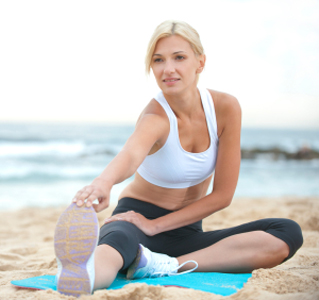
The woman on the beach is an example of distorted torso to gain the end of touching her toes.
An integrated pose that respects your innate body wisdom as the woman in purple is more beneficial!

SENSORY PERCEPTION & INJURIES

As mentioned earlier, your Daily Body sensory perception gets somewhat corrupted over time. As a result, it needs a bit of reeducation. Without regaining accurate sensory perception, you cannot truly rely on what you feel while practicing yoga or engaged in daily movements and yet most people do. As a matter of fact,  it is my experience that this is the real culprit in most yoga injuries. Whether they happen on or off the mat, the majority of neck back or joint injuries if you are a healthy yogi, tend to start with your Daily Body habits brought to the mat.


SENSORY PERCEPTION REEDUCATION & BODY WISDOM

Controlling your habits on the mat then catering to them the rest of the time
is not going to get you out of the tension cycle.
It is like collecting water from your dripping ceiling when it rains 
instead of fixing the roof problem in the first place!

On the surface, it may seem that tension is the problem and yoga the solution. However,  you will get more out of your yoga when unnecessary tension is dealt with for what it is, a symptom of something else that needs addressing to get lasting results. And sorry to say that no costly gadgets can get around the need to regain accurate sensory perception!

You have a wonderful mechanism in your body called “Postural Mechanism” and it is an ambassador to your Innate Body Wisdom. It is in charge of handling your posture, fluidity of movement and balance. When you learn how to stimulate it, you can stretch and strengthen without taking a chance to overdo. In fact, as you unlearn your harmful habitual patterns, you keep empowering that mechanism to do its job. And it is available to you 24/7.

images-9
When not aligned above support and relaxed, gravity promotes slouching.
When aligned above support and relaxed
, gravity promotes effortless good posture.

Do you want to learn more about this mind/body approach to natural good posture? 
Do you want to learn how to reclaim efficient moving for balanced living?
Join my latest FREE 6-part EMAIL SEMINAR:
"How to Unlearn Habits that Create Body Stiffness On and Off the Mat"
(Based on the Alexander Technique Principles and Facts)


The Top 5 Myths about “Good Posture” On & Off the Mat – Debunked!

Standard

images-5

 MYTH #1: Good Posture means Chest Out and Shoulders Back

Reality: Good posture is not about getting it right, it is not about positioning your shoulders. This way of approaching posture creates back muscle tension and is not sustainable. In a daily context, by pushing your chest out and pulling your shoulders back, you soon find yourself slouching right back to where you started (unless you are a “chronic holder” which does not serve you either). Good posture is a dynamic and integral part of fluid functioning, not a deliberate holding in place. Look at young children! No effort whatsoever. It is your birthright!

Solution: Instead of letting your mind manipulate your skeleton by engaging your muscles, learn about integrated body use so you can let your innate body wisdom handle your posture for you. You are using your body in an integrated way when all body parts are working in harmony together guided by your innate body intelligence. As a result, you experience your skeletal system strength instead of using unnecessary muscle tension.

images-16
Effortless Good Posture

MYTH #2: Exercising Core Muscles promotes Good Posture

Reality: Yes, core muscles are crucial for good posture. Only they are not the muscles you may think. Just like an apple core is the center part of the apple, core muscles are also located deep in your center. Inner muscles and outer muscles must work in harmony but they cannot all be equally engaged at once. When you engage your outer muscles to feel strong, you are automatically disengaging  your core muscles.

Solution: When you challenge your body in whatever position or exercise you chose to; give your core muscles a chance to step up to the plate and strengthen by not tightening your outer muscles. For instance, if you are doing a plank, you stay in your plank all the same. The challenge of it remains, only disengaging the outer muscles allows the core muscles to kick in. The secret here is to keep your skeletal alignment. Then, listen to your whole body. Do not expect the inner muscle work to feel like the outer muscles when engaged. Inner core muscles work deeper, quieter and are felt more as a whole body experience.

images-7
Her open hands, smile, and her open upper back suggest she is building Flexible Strength rather than Body Stiffness!
This also means she is allowing her Core Muscles to step up to the plate and strengthen!
She is cooperating with her Whole Body Wisdom.

plank-exercises-variations
Her uptight upper back and neck, her held facial expression and tight fists are clearly signs
she is building Stiff Strength in her Outer Muscles & not allowing her Core Muscles to step up to the plate and strengthen!
She is not cooperating with her Whole Body Wisdom.

MYTH #3: Stretching & Strengthening Back Muscles promotes Good Posture

Reality: Stretching and strengthening the back as it is commonly done is working the big outer muscles of the back, the ones you can feel being stretched and exerting effort to strengthen. It may feel good when you do it but “feeling good” and “being good for you” are two different things although they can happen together when in line with your whole body wisdom.

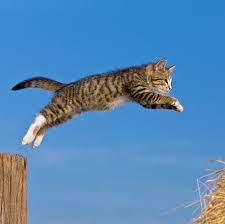
Solution: Discover your postural muscles for effortless and sustainable good posture. These core muscles get increasingly stronger when you let them do their job of supporting you instead of you engaging the big outer muscles to do the job. It is all about developing trust in the wisdom of your body. You don’t need to work so hard like in the plank example given earlier. Work smarter instead by choosing to experience what flexible strength feels like. The fact is that you are still building the same amount of strength. And that is the strength of the cat, not an ounce of stiffness in their body, but they are quite strong when they need to jump or pounce on a moving target.

images-8
Power, Accuracy, Grace…. Flexible Strength at work!

MYTH #4: Good Posture is all about Proper Alignment

Reality: The truth is that there is more to good posture than proper alignment. If you are holding yourself in what you think is the right alignment, you are doing just that, “holding yourself”. And the way you are holding yourself is with excess tension. Besides, you are forcefully going again the synergy of your own body so either it is not sustainable or you are building chronic tension.

Solution: Exploring how much holding you are actually doing would be a first step. Then, choose to no longer hold your skeleton with tensed muscles. Connect with your skeletal system, keep its height, and discover its own strength. That will change the synergy of your whole body so you can experience what it is to be bone tall with relaxed muscles!

images-16images-13
Her arched back and belly forward suggest holding tension in her back.

His perfect alignment without back arching or shoulders pulled back suggest a released yet dynamic posture.

MYTH #5: Gravity challenges Good Posture

Reality: Not so. Gravity promotes good postural balance when you use yourself as you are designed to. When you lose your skeletal height, you are not balanced above your support efficiently. As a result, gravity claims the heavy weight of the unsupported head forward and down. It also brings the shoulders with it whether you are sitting, standing or walking.

Solution: By learning to be balanced above your support, the need to push up disappears without being replaced by the urge to slouch. Allow your weight to be evenly spread on your feet when standing and learn to find the balancing point of your sit bones when sitting, and voila, anti-gravity action works for you instead of against you, propelling you upwards effortlessly like children do all the time!

images-9
When not aligned above support and relaxed, gravity promotes slouching.
When aligned above support and relaxed
, gravity promotes effortless good posture.

Do you want to learn more about this mind/body approach to natural good posture? 
Do you want to learn how to reclaim efficient moving for balanced living?
Join my latest FREE 6-part EMAIL SEMINAR:
"How to Unlearn Habits that Create Body Stiffness On and Off the Mat"
(Based on the Alexander Technique Principles and Facts)

Muscle Engaging, Bone Strength and Dynamic Posture!

Standard

MUSCLE ENGAGING

In the fitness world including yoga, it is common to hear teachers urging students to engage their muscles in one way or another. Mostly, they urge you to engage your core muscles. But what does that really mean? What do you do when your teacher encourages you to engage your muscles? Are you using your will power to tighten your muscles further expecting to feel and get stronger that way?

Have you considered that tightening muscles may not be the best way to “engage your muscles”?
Could it be creating as much body stiffness as it creates strength?

What about building the flexible strength of the cat instead?

images

Obviously, no matter how strong your muscles are, if you had no bones, they would turn into a puddle on the ground? That is because your skeleton has a lot to do with your strength. Your bones are the structure and firmness needed by your muscles for you to stand, sit. walk or jump.

BONE STRENGTH

Watch or re-watch this easy to view 7 min video by Kathleen Porter
about how the skeleton works as your primary support system!
mqdefault-1

Your skeleton does need a certain amount of necessary muscle tension to work with; however, as long as skeleton and necessary muscle tension work together as part of an integrated movement, your strength develops itself to support the movement with no need for unnecessary muscle tension, the source of much of your body stiffness. Your bone strength makes up for it. Using your will power is more about the mind choosing to sustain a challenging integrated pose or activity than to muscularly force the body to stay in it. The more you use your skeletal system strength, the easier it is to not use unnecessary tension and the stronger you are building your core strength. Only then, you are building the flexible strength of the cat!

In integrated movements, all your body parts work in harmony together.
Tightness gets in the way of this harmonious functioning of the whole.

The woman in black displays Poor Use of her Skeletal System, notice her muscular straining in the upper back and neck.
The woman in white displays
Good Use of her Skeletal System with her skeleton and muscles working more together.

images-18 images-16

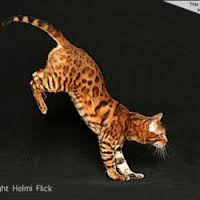
While exercising, necessary muscle tension is a whole body feeling of power or stability rather than a tight feeling in a specific muscle group. Your body-wisdom does work some muscles more than others as needed yet it also knows your natural limits of the moment and will not let you go in an injury promoting zone. Children and animals trust that process. Just touch the muscles of a cat, so soft! And yet they certainly can jump up or down with powerful strength and accuracy in a beautiful integrated and fluid motion!

Maybe it is Time to Learn to Be Strong Using Brain and Bones & No Longer Overworking your Muscles. Besides, it feels easier simply because gravity becomes your ally and you can work out smart instead of hard! The only thing you will loose is body stiffness, not strength. Check the humorous 2-minute video below, you’ll see what I mean!

A woman in the early 1900’s lays the smack down with some classic Jiujitsu
Unknown-1

DYNAMIC POSTURE

 Dynamic posture does not require you to remember to check in and position yourself to sit upright. It is an integral part of good and fluid functioning, not a holding you go back to when you think of it. Look at young children! No effort whatsoever, and it is also your birthright!

images-1

Modern life offers challenges for sure with time spent at desks and computers, or standing for hours. Yet is it those activities that are the problem or how you use yourself while engaged in them?

You know that you cannot force a horse to drink water but you can salt his oats to make him choose to drink. And when thirsty, he’ll go the extra mile to satisfy his thirst. In the same way, you cannot strengthen your inner core muscles by sheer force but you can challenge your whole body with a specific pose or exercise and let it engage your inner muscles which will strengthen them in an organic way. They will go the extra mile if and when they have to!

So you can learn from children and animals how to reclaim an efficient and integrated way to use yourself on and off the mat where all your body parts work harmoniously together to benefit all of who you are! .

Till we meet again, be well!

Incoming workshops in Boston, MA:
Integrated Motion for Mind/Body Flow on March 26, 2015 6 to 8pm
Strain-Free Yoga/Strain-Free Body on March 29, 2015 1.15pm to 3.15pm
For more detail and registration, go to: https://offthematyogablog.com/schedule/

 Working with an Alexander Technique teacher is a short cut to changing the habits of a life time. Call me to schedule and appointment or sign up to my workshops and classes. And I am working on an online workshop or class for those far away who want to work with me. Will keep you posted!

Core Strengthening Language Part 2: How Helpful is the Focus on Anatomy?

Standard

An increasing number of yoga training courses and teachers feel the need to focus on anatomical data as if the quality of their skill depended on it. Does it really? There is nothing wrong with acquiring knowledge especially for those with the right mind to enjoy learning this kind of information. However, how many doctors are being helped in their own body by the anatomical details they know? How useful is it to them or to most yoga teachers and practitioners?

What matters more with yoga is to discover the anatomy of movement and stillness as a purely kinesthetic and holistic experience which is being lost in translation when the focus is all on anatomical details. What follows about core strengthening is supported by anatomy specialists (we do need them) but is expressed in a way everyone can receive and start practicing.

imagesCORE STRENGTHENING

Beyond anatomical data, do you know how core strengthening happens in an organic way?

Like the core of an apple, your core refers first to the inner muscle sets of your torso which work partly intertwined and always in harmony with all other muscles to keep you up and together. Core Strengthening happens organically when you allow the outer muscles to release while engaged in a whole body activity.  When your outer muscles cooperate rather than take charge of maintaining your skeletal height, your core muscles can step up to the plate and get strong in their own deep and quiet way.

Torso muscles cannot remain efficient when engaged all at once. Like the arm or leg muscles flexing or extending in turn to allow movement, your torso muscles are part of a similar dance; while some engage, the others need to quiet down. Their way of working feels different. Postural muscles for instance quietly do their supporting job and give you a sense of effortlessness. Outer muscles however have a presence which can easily be turned into body stiffness when no distinction is made between necessary muscular tension and unnecessary muscle tension.


Releasing excess tension is neither going limp 
nor decreasing how much strength you are building. 
It is preventing building body stiffness while you are building strength.

Bracing yourself with muscle tension thinking it will give you core stability is a myth and only leads to body stiffness
as you can hear Peter O’Sullivan explain in his 2013 interview.

LANGUAGE INSTRUCTIONS AND DISTINCTIONS

Verbal instructions to get into a pose must reflect this duality of functioning to be efficient. The verbal instructions you still follow yourself or use to lead others into poses have an enormous impact on how those poses are performed. Experienced yoga teachers who actually did make some language changes felt the difference in themselves and in their students as a result. It comes down to making important distinctions.

Outer Muscles need Space to Release 
for the Inner Muscles to Efficiently Strengthen.

Yoga pose using block
The purpose for the block used in this pose is to keep the skeleton properly aligned,
not to squeeze it with all your might creating body stiffness in the process.

“Holding” makes you grab your skeleton for dear life instead of letting your postural mechanism take care of your balance.  “Staying” in a pose gives you space to release without loosing the pose kept by the skeleton. As a result, you can build strength without building body stiffness in the process. When releasing unnecessary muscle tension into what is supporting your body weight, you are activating your postural mechanism and it can do its job which is to handle your postural balance and coordination using an appropriate amount of necessary muscle tension.

“Allow the spine to lengthen” / “Lengthen the spine”. When allowing something to happen, you are less likely to overdo. When you think of lengthening the spine, you are likely to work at lengthening the spine, stiffening your mid back in the process and getting the very opposite of what you think you are doing as the woman in the picture below.

yoga-woman
Arched mid back, hips tilted forward, sits bones pointing back, upper back leaning back.

“Do not allow the back of your neck to compress as you look up” / “Look Up”. Your spine must remain an open channel all the way to the top. Compressing the back of the neck just because you can go that far into a pose is not helpful to create an integrated pose where all body parts work in harmony.

images-1 images-17
The woman in black has a beautifully integrated pose.
Her spine (including the neck part of it) and her arms are all part of the same curve started where her knee is supported.

“Allow your whole body to expand into its full space” / “Lift this or pull that to get taller”. The goal is the same but how you get there is different. Of course, you may not have been taught how to trust and experience your innate body wisdom. Just know it is possible, safer and more efficient to work with your body wisdom which is different from listening to how a specific body part or muscular area feels. 

“Listen to your whole body, not your body parts”. When always listening to your whole body at once, you will be aware of individual parts in need of attention as well. Keeping your attention on body parts to check how they feel makes you loose connection with your whole body wisdom. You may help one part of your body at the expense of another.

***************************
If you want to learn more about the Alexander Technique or Off-The-Mat Yoga (Alexander Technique based Yoga), check my workshop and class schedule by clicking here. You can also follow my blog by signing in on the home page to receive tips of the week right to your inbox.


Core Strengthening Language! Part 1: Pitfalls

Standard

Natural+Stretching+Exercises3

Some like it slow, some like it with flow, some like it tough while others like it gentle and the varieties go on and on. How do you like it? Do you practice yoga to relax, to stretch and strengthen, or to restore? Do you use props or no props? Do you stand for naked yoga, or against it? Do you travel to practice yoga on every beach you can get your feet to or do you like the regularity of going to your yoga studio?

Yoga has become a popular trend and yoga studios are still flourishing everywhere. On some level, it makes sense, different body types, different personalities, different awareness levels, so attraction to different forms of yoga! It certainly has also become a lucrative business for many. Yet, on a deeper level, it seems like people are missing something in their everyday life and they are searching that missing thing in yoga and its community. It is an amazing phenomena and it is beautiful in many ways to witness this drive some have to satisfy their deep yearning. And it is wonderful when it becomes a family activity that brings families doing something positive together.

images-5

However, in most adult classes, there is also some confusion in the teaching and practice of yoga due to various historic factors but most recently, due to the influence of the core strengthening and muscle stretching language which has created unfortunate pitfalls.

In most yoga studio, whether students are encouraged to do this slowly or fast, you can hear instructions relating to body parts to be controlled in one way or the other: pull your shoulders back, roll your shoulder blades down, lift your chest, tuck your chin or tuck your pelvis, squeeze your legs together, position your feet this way or that way, push this and hold that. This way of practicing yoga is made up of numerous muscular adjustments imposed on various body parts. 

If you add to the equation that most teachers have their own understanding of what those instructions mean and all students in a class have their own interpretations and corrupted translations, how is it even possible to teach without expecting trouble sooner or later? It is a way of working that has presented definite benefits but lots of unnecessary challenges as well which were not part of the original intention of yoga.

images-8Most people in this picture stick their neck forward in an effort to do a pose they are not ready to do in a healthy way.

Yoga postures as described by Patanjali are meant to be a balance between steadiness and comfort. Steadiness in various poses encourages your body to build up strength. Comfort allows for your strength to remain flexible. Yoga postures are all about this balancing act. However, our sense of balance and coordination, our ability to move fluidly and to enjoy good postural balance is the job of our postural mechanism which works with the body as one whole coordinated entity when not interfered with. For more info about this, go to: https://offthematyogablog.com/2013/12/18/what-are-postural-reflexes/

Neuroscience along with disciplines like the Alexander Technique also understand body functioning as a coordinated whole, where each part affects the whole and the whole is connected to each part in a synergy of its own for each individual. That is why in countries where people use themselves in a more natural way, you won’t find pulled shoulders and tucked bellies, you witness ease of movement and flexible strength with a smile!

 images-7

So for yoga lovers to get the most out of their yoga practice and prevent injuries, there has to be a change in the way language is used in the yoga class. Developing an understanding of how the postural mechanism functions to make it part of every stretch and every strengthening practice is an amazing way to turn things around in a fairly easy way. Yoga teachers instructed in this way of teaching have reported clear changes for the better in their own practice and in their students practice.

Like these teachers and students, you can discover how to build body strength without building body stiffness in the process. You can learn to trust your innate body wisdom instead of second guessing it and working against it with unnecessary muscular control. It can transform not only your yoga practice but your daily level of well-being. How do you go about it? Look for an Alexander Technique teacher, preferably one with yoga experience so they can speak your language (although any good teacher can help you with this).

The Alexander Technique seems like the perfect tool to negotiate this balance successfully within each pose, and best of all it translates into less muscular tension, improved posture and better coordination On and Off the mat. For more info about this, go to: http://www.alexandertec.com/what.htm

More details coming up in Part 2 and maybe 3.

In the meantime, to learn more about how to use the Alexander Technique as applied to yoga to get the most out of it and prevent injuries on and off the mat, find an Alexander Technique teacher in your neck of the woods or if in the Boston area, sign up to Cecile’s workshops and classes or keep reading her blogs. You can also, follow the blog to receive tips of the week right to your inbox!

https://offthematyogablog.com/schedule


While Pushing your Edge, Building Flexible Strength or Body Stiffness?

Standard

Are you a fitness enthusiast? Do you feel good about your practice only if you push yourself to the max and feel your muscles straining a bit? Maybe you feel you do not do enough if you do not feel that stretch or that muscle power working “effort-fully”? Is that  feeling of muscular tension what you consider “pushing your edge”?

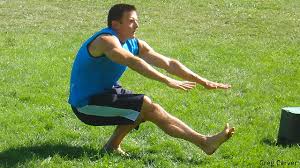
When do you know that enough is enough? What do you think of the fitness enthusiasts below displaying their ability to squat with pride because they feel that edge big time?

images-12

The man, back and shoulders rounding forward to not fall backwards, is overstretching his back and compressing the back of his neck as he is pushing his edge to stand on one foot while squatting. The woman has the ball of her feet partly off the ground because her weight mainly situated over her heels is not evenly distributed above her whole two feet. It means that to not fall backwards, she is compensating by overdoing in her leg muscles building unnecessary tension while building up strength.

Both are also stressing ankles, knees and hip joints which are constricted by the excessive muscular tension required in their legs to keep some sort of balance. Is it worth it to push your edge in a way that creates these issues?

images-13

Is there a holistic way to push your edge that allows you to stretch and strengthen all the same yet does not translate into building compressed joints and muscle stiffness on or off the mat?

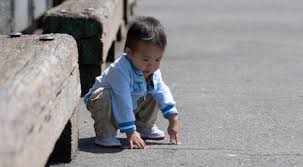
For starters, think children and tribal cultures! Look at the individuals below. Notice how their head neck and torso relationship works perfectly as their weight is balanced above their well grounded feet: some of their body weight past their toes, some of it behind their heels. A good example of what to be respectful of while you are exercising so you do not hurt yourself while you are trying to be good to yourself.

images-14 images-16 images-10

In many cultures more connected to the natural way to handle daily movements, it is actually common to see men and women of all ages squat with ease or carry heavy loads on their heads gracefully. Since such flexible strength and ease is possible among some humans, it must be accessible to all, including you!

images-18 Natural-Posture-rock-2

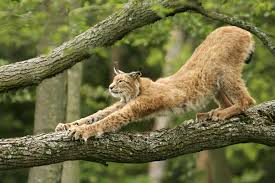
In the animal kingdom as well, you see creatures who can display powerful and precise flexible strength without building any excess muscular tension so they are totally relaxed when not in action. If they stretch, it is a whole body happening done usually once.

These examples are all about efficiency and it is precisely that efficiency that allows them to push their edge safely. Excess tension is seductive but misleading. It makes you feel like you are being productive when in fact it decreases your efficiency and creates stiffness that will backfire on you on or off the mat, sooner or later.

images-19 cheetah images-20

How can you still push your edge and develop efficient flexible strength?


1) “Flexible Strength” is the opposite of “Stiff Strength”. So stop focusing on holding and tightening (a mind need to control), and instead release into your support and allow yourself to expand into your space (trusting mind). As you engage in your pose, stay in it even when it is demanding as long as you can still release into your support. If there is no room to release all the way into your support, you are already overdoing because your pose stopped to be integrated from head to toes.

2) “Flexible Strength” is “Integrated Strength”. You are still challenging yourself and building strength when you release into your support, only you then do it in an integrated fashion that benefits your whole body and connects you to its innate wisdom. Even if some muscles are being challenged more than others, they won’t be pushed past their safe limit because you are respecting the integrated synergy of your body.

3) “Pushing Your Edge” the “Holistic Way”:  When you brace yourself grasping your skeleton to keep it in a specific pose no matter what, you are actually interfering with the best functioning of your body because your joints are locked and your muscles tensed unnecessarily. On the other end, staying in the pose and constantly releasing and expanding through it despite this being challenging is how you push your edge in a holistic way! 

CONCLUSION & IMPORTANT DISTINCTIONS

Necessary Muscular Tension can grow into “Flexible Strength” when challenged to do so during physical activities while connected to your support in a released way. Unnecessary Muscle Tension only grows into “Body Stiffness”. Since your unconscious daily habitual patterns tend to show up on the yoga mat, your poses may include habitual skeletal misuse or habitual muscle overuse  (often a compensation for skeletal misuse). It makes it harder and sometimes impossible to do a pose in a safe way.  With unnecessary muscle tension, you may feel like your body is a battle ground and you cannot find peace within it or you blank out the tension till it catches up with you.

Also, when you are mistaking the “Feeling of Muscle Tension” for the “Feeling of Strength”, you keep pushing muscularly when you ought to be letting go and releasing into expansion. Hence the stiffness lingering in your muscles and joints over time on and off the yoga mat and the constant need to stretch recurring or chronic tension.

To be safe, you must cultivate awareness of how what you do affects every part of your body as you do it. Otherwise you run the risk to create muscle tension while you are working to build up strength.

Developing an awareness of functioning in an integrated fashion is your safety net. It allows you to keep your “Postural Mechanism” fully functioning as it is its job to secure balance, coordination and fluid movements within your integrated self. It is your “Inner Teacher”, always there to guide you, and all you need to do to activate it is to release into expansion. The best way I know to develop such awareness is the Alexander Technique. If you have not yet explored it, don’t wait. Treat yourself! You will be happy you did too.

The next workshop for yoga practitioners of all levels is on December 13, 2014.
To sign up go to https://offthematyogablog.com/.
Be well! And Happy Holidays!
Cecile

Harmful Stretching versus Healthy Stretching Part 2

Standard

images-6The 3 women above use their head, neck, and torso relationship for dynamic postural alignment

Dynamic postural alignment has been proven crucial for the best mind and body functioning. You can  bend down further than these women without sacrificing your dynamic postural alignment. It is not about keeping a straight back at all cost, it is about hinging at the joints instead of using your neck or back as a hinge. This way, your spine can release into a beautiful smooth curve when needed.

How do you know if you are hinging with your neck or back? Hinging from a made up hinge (usually neck or back) results in straining with compression or over-extension. You are straining your neck when you collapse your head back and down creating a compression or when you stick your head forward. You are straining your back when you tighten your back muscles to send yourself upright or when you are stretching a single area in your back just because it feels good.

How you use your body in an integrated way is more important than producing an extreme version of any pose. No pain, no gain is a myth!

Spinal overstretch as well as neck or waist compression happen when you do not work with your innate body intelligence while performing a specific stretch or movement and it shows. Moreover, this kind of tension and distortion accumulates over time and eventually promotes injury on or off the yoga mat.

images-2 images

These are examples of how in an effort to reach your toes, you may bend from your upper back as if it was a hinge.

Joints in the body are the only appropriate hinges. Yet, these pictures are a common sight and it feels good and is gratifying to stretch hard but is it worth it? Their focus is on the goal at end (reaching their toes and stretching their back) instead of using the innate wisdom of their body which would simply release natural hinges (occipital joint, armpits, hip joint sockets, knees and ankles) and respect the dynamic alignment of the head, neck and torso.

Lack of flexibility or excess flexibility are both a problem as explained in the little cartoon video below. However, learning to use your body as a whole to release into a stretch will give you the best lengthening possible in your body and increasingly add to your flexibility level without leading to overstretching.
http://www.youtube.com/watch?v=XeEIoGMldyc

H O L I S T I C   S T R E T C H I N G   T I P S

1) RELEASE INTO A STRETCH.

Allow all your joints to release, starting with the ones on each side of a muscle or muscle group you want to lengthen. As a result your muscles are able to easily lengthen naturally into a stretch that spreads all over your body no matter where you started. In the process,  the skeletal alignment reorganizes itself instead of being distorted like in the pictures above! How does this happen?

By allowing a letting go of tension in your joints, you empower your postural mechanism to do its job.  And your body intelligence knows how much release and what skeletal alignment is appropriate in that moment. No risk of overdoing, yet you get the best stretch ever. A holistic stretch is like riding a wave, only the wave is going through your whole body connecting you from head to toes!

The body is a web of connections, so unless you always include what happens in the whole body, focusing on one body part at a time is not very efficient although it feels good in the moment. Besides running the risk of overstretching and creating unnecessary muscular-skeletal problems, it also promotes an ongoing need to stretch the same muscles over and over because the benefits do not have enough staying power. The fact is that the whole body synergy, when not addressed, calls for that tension to come back.

2) STOP TIGHTENING YOUR BODY AND MIND.

Consider stretching your mind as a prerequisite to gaining a looser body on and off the mat. The mind and the body are the two sides of the same coin. This  “I choose not to tighten”  practice is an intention you carry over throughout the day. It affects both your body and mind, it helps you let go of attachment to things and thoughts.

As your mind relaxes,  so do your joints and muscles which helps activate your postural mechanism in charge of your best balance and coordination. Tightening constricts your skeleton and the organs inside it all day long. Choosing to stop tightening allows it to expand back and up and out. It makes you feel lighter both in your body and in your mind.

*****************************************************************

Alexander Technique teachers have been teaching this since the 19th century. If you want to learn to stretch in an integrated way and you are in the Boston area, come to my workshops and classes or call for a private session by calling 617 359 7841.

To inquire about my Workshops for Yoga Teachers, my Workshops for Yoga Students and my Alexander Technique Workshops or to register online, click on https://offthematyogablog.com/schedule/