Category Archives: Integrated Motion

What Can Be Wrong with Always Doing “What Feels Right?”

Standard

IMG_2708

She is holding a lotus, symbol of the Self-Realization happening to yogis
who have blossomed beyond Ego Consciousness!

Do you assume that doing “what feels right” is always the right thing to do? Is it true of everything all the time? Is it true whether you are talking about movement or behavior? Is it true whether your sensory perception is accurate or not? And who is assessing what is right or wrong, the human limited mind of your ego or your higher consciousness?

This concept of “unreliable sensory perception” is at the core of the Alexander Technique which I have been teaching for over two decades. This unreliability of perception is often the reason why you may spend time, energy and money to change your habits, only to find the outcome to be unsuccessful or not sustainable. The good news is that, once you realize and acknowledge that it is unreliable, you can proceed to reeducate your sensory perception as you expand your awareness, and unlearn habits that do not serve you. Then you can truly be in tune with the innate wisdom of your body and of your higher consciousness.

IMG_2708 - Version 3  OR  IMG_2708 - Version 2

Movement and Sensory Perception

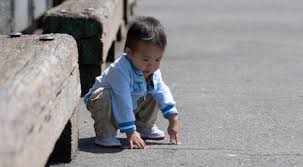
A) Sometimes, you are moving in a context where there are no preconceived ideas like playing with movement in a spirit of exploration such as an improvisation dance for instance. In such a situation, you naturally tend to listen to your whole body. Therefore your body wisdom is guiding you. Going with what feels right then is appropriate, safe and restorative. Children are very good at that, especially babies.

In the short video below, notice the baby girl’s eyes leading her head which leads her shoulders which lead her whole body to spiral until she lands on her belly. And she can do this back and forth. Body wisdom at work when left alone. Skeletal system and necessary muscle tension working together effortlessly throughout the whole motion.

Reconnecting with the evolution of baby movements is very beneficial for adults to rediscover their motion potential and even process tension stored in the body over time!

Baby rolling over without help!

B) When you walk, when you sit, when you do pretty much anything where habits” or preconceived ideas” play a big part, can you trust, that what feels right, is necessarily right for you? Maybe not, due to the power of habits and of the mind overriding your body wisdom!

For instance, in my last blog about Yoga Body, Daily Body & Sensory Perception , I talk about the connection between daily body and yoga body in relation to posture. I show how our sensory perception often corrupted by our daily habits of movements is not 100% reliable once on the mat. What is habitual is mistaken for what is natural. Hence injuries brewing down the road on or off the mat.

Does it mean your sensory perception cannot be trusted at all? No, of course. If you listen to what feels right, you are less likely to let your mind shape your body up only according to preconceived ideas of what the body should be doing. But listening to your body’s pain edge, stretching edge or strengthening edge is different from listening to your whole body wisdom.

Your focus on a specific aspect of the body or on a specific body part often blinds you to hearing the wise guidance of your whole body. Your body wisdom can only come loud and clear when you function as an integrated self. When in touch with your body as an integrated whole though, you will perceive the specific as well!

Integrated One leg Stand with a dynamic relationship between the head, neck, torso and leg!

IMG_2637 

Behavior and Perception

I am purposely choosing a striking example here: battered women. A phenomenon that many do not understand. Why would anyone stay with a loved one when being mistreated by them? Could it be they grew up with a parent they loved who was mistreating them physically and their notion of being loved got corrupted out of habits just like our sensory perception? Or maybe they were verbally mistreated and their lack of self-worth led them to feel they deserved to be mistreated that way? It is not my field of expertise but I wanted to make my point. It may feel right to stay with someone you love despite being mistreated. Yet, how trustworthy is this “feeling right” corrupted by past experiences?

On a lighter note, when you do not grow up in a culture that eats snails, the idea of eating snails may feel very wrong. Is it right or wrong? Neither. It is what the French do. They even consider it a delicacy.
So often, what feels right or wrong is relative to habits.

images-2

Conclusion

Frederick Matthias Alexander used to say that sometimes, we need to accept what feels wrong (the challenged habit) so it can feel right again in the natural way. Have you ever considered that? Working with a teacher at the beginning is quite helpful to keep things in perspective because most of us are not comfortable with the concept of “feeling wrong” in any context. We were trained to believe it is always a bad thing. Hopefully now you see that one needs a bigger picture to assess more accurately whether “a feeling” is right or wrong. We need to investigate where is it coming from before we condemn or embrace it!

It is not always easy to make that step towards the unknown. When on a path towards personal growth, we eventually do it though. It is said that when we are ready the teacher appears.  And when this happens, it is time to go along. Our higher consciousness knows it!

Why is it we are often afraid to go in the cave that holds the treasure we are looking for?

Our dual nature, no doubt! Our human limited self tends to feel right staying with what is familiar while our higher consciousness knows with clarity that going into that cave is the right thing to do. Only fear holds us back! Luckily for us, we are born to thrive sooner or later!

Join my latest FREE 6-part EMAIL SEMINAR:
"How to Unlearn Habits that Create Body Stiffness On and Off the Mat"
(Based on the Alexander Technique Principles and Facts)

					

Yoga Body, Daily Body & Sensory Perception

Standard

  woman-on-computer-3Daily Body Sitting

 Do you see a difference between your Yoga Body and your Daily Body?
Would someone observing you (without you knowing it) perceive a difference?
What is your Yoga Body focused on while on the mat? Core strengthening? Flexibility? Proper Alignment? Relaxation?
All of the above? What does your Daily Body remember between classes?
Does it remain strong, flexible and does it display sustainable good posture? Or not?

stock-photo-young-woman-in-orange-bikini-sitting-on-beach-in-lotus-pose-with-closed-eyes-and-meditating-palms-66598336
Yoga Body Sitting

Often, there is a bit of a discrepancy between those two bodies
and yet they impact each other greatly in a positive or negative way
depending on how in touch you are with your body wisdom.

DAILY BODY STORY
Do you find yourself slouching at the computer or on the couch? Do you find yourself crossing your legs always favoring the same side crossing over the other? Or if you are a parent, do you favor one hip over the other to carry your young one? Or maybe you crane your neck forward and down to read or send text messages?

640-01351420 Model Release: Yes Property Release: No Portrait of a mother carrying her son

Right hip locked to the right, left foot forward and to the left

As you sit at your computer, you probably try to stand more upright once in a while and you bring your shoulders back and lift your chest up. Doing so you may be arching your back and this feeling becomes a synonym for feeling taller, only is it sustainable for long? Not really, unless you are a chronic holder, seconds later, the synergy of your whole body reclaims the habitual slump. Does it sound familiar?

The fact is if you repeatedly spend time in a distorted position,  you start distorting your skeletal structure in a way that is so habitual that it feels more natural than the natural way. As a result, your skeleton is not organized for effortless balance, so your muscles are overworking creating stiffness and tiredness or giving up all together into an inevitable slouch. You can’t wait to go to your yoga class to stretch and strengthen yet why is your back not getting strong enough to stay upright in a sustainable way?

Top-View-Sitting-Man-Working-Computer-11002068398164-Goodlooking-young-man-relaxing-at-home-in-armchair-sitting-in-living-room-with-laptop-computer-smili-Stock-Photo
The danger of regularly catering to harmful habits is that, although it may feel comfortable in the moment,
it weakens your postural muscles because you do not let them do their job.

YOGA BODY STORY

You finally make it to your yoga mat, it feels so good to stretch and move your body. Whether you do power yoga or gently yoga, you enjoy yourself because this is the style of yoga that speaks to you. But whatever the style, you are also bringing with you your Daily Body habits to the mat. You may be aware of some of them but habits can become invisible to your awareness after a time.

The confusing thing is that, you can still feel better on some level because yoga is a wide field of many colors, the asanas being only a small part of it. However, how you use yourself on and off the mat must be addressed if you are to get the most out of your practice and truly prevent injuries even if you choose to challenge yourself on the mat?  Stretching tension or building strength can be beneficial if done in line with your innate body wisdom. Overdoing can be seductive and often misleading because of the element of physical pleasure and instant gratification it includes. And this is true both for stretching and strengthening!

How can you know for sure if you are in line with your innate wisdom of your whole body when you listen to parts of you at a time and your sensory appreciation is no longer fully reliable?

runner-yogaSeated-Calf-Stretch
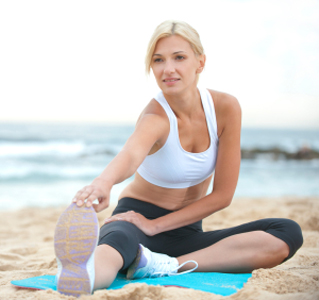
The woman on the beach is an example of distorted torso to gain the end of touching her toes.
An integrated pose that respects your innate body wisdom as the woman in purple is more beneficial!

SENSORY PERCEPTION & INJURIES

As mentioned earlier, your Daily Body sensory perception gets somewhat corrupted over time. As a result, it needs a bit of reeducation. Without regaining accurate sensory perception, you cannot truly rely on what you feel while practicing yoga or engaged in daily movements and yet most people do. As a matter of fact,  it is my experience that this is the real culprit in most yoga injuries. Whether they happen on or off the mat, the majority of neck back or joint injuries if you are a healthy yogi, tend to start with your Daily Body habits brought to the mat.


SENSORY PERCEPTION REEDUCATION & BODY WISDOM

Controlling your habits on the mat then catering to them the rest of the time
is not going to get you out of the tension cycle.
It is like collecting water from your dripping ceiling when it rains 
instead of fixing the roof problem in the first place!

On the surface, it may seem that tension is the problem and yoga the solution. However,  you will get more out of your yoga when unnecessary tension is dealt with for what it is, a symptom of something else that needs addressing to get lasting results. And sorry to say that no costly gadgets can get around the need to regain accurate sensory perception!

You have a wonderful mechanism in your body called “Postural Mechanism” and it is an ambassador to your Innate Body Wisdom. It is in charge of handling your posture, fluidity of movement and balance. When you learn how to stimulate it, you can stretch and strengthen without taking a chance to overdo. In fact, as you unlearn your harmful habitual patterns, you keep empowering that mechanism to do its job. And it is available to you 24/7.

images-9
When not aligned above support and relaxed, gravity promotes slouching.
When aligned above support and relaxed
, gravity promotes effortless good posture.

Do you want to learn more about this mind/body approach to natural good posture? 
Do you want to learn how to reclaim efficient moving for balanced living?
Join my latest FREE 6-part EMAIL SEMINAR:
"How to Unlearn Habits that Create Body Stiffness On and Off the Mat"
(Based on the Alexander Technique Principles and Facts)


The Top 5 Myths about “Good Posture” On & Off the Mat – Debunked!

Standard

images-5

 MYTH #1: Good Posture means Chest Out and Shoulders Back

Reality: Good posture is not about getting it right, it is not about positioning your shoulders. This way of approaching posture creates back muscle tension and is not sustainable. In a daily context, by pushing your chest out and pulling your shoulders back, you soon find yourself slouching right back to where you started (unless you are a “chronic holder” which does not serve you either). Good posture is a dynamic and integral part of fluid functioning, not a deliberate holding in place. Look at young children! No effort whatsoever. It is your birthright!

Solution: Instead of letting your mind manipulate your skeleton by engaging your muscles, learn about integrated body use so you can let your innate body wisdom handle your posture for you. You are using your body in an integrated way when all body parts are working in harmony together guided by your innate body intelligence. As a result, you experience your skeletal system strength instead of using unnecessary muscle tension.

images-16
Effortless Good Posture

MYTH #2: Exercising Core Muscles promotes Good Posture

Reality: Yes, core muscles are crucial for good posture. Only they are not the muscles you may think. Just like an apple core is the center part of the apple, core muscles are also located deep in your center. Inner muscles and outer muscles must work in harmony but they cannot all be equally engaged at once. When you engage your outer muscles to feel strong, you are automatically disengaging  your core muscles.

Solution: When you challenge your body in whatever position or exercise you chose to; give your core muscles a chance to step up to the plate and strengthen by not tightening your outer muscles. For instance, if you are doing a plank, you stay in your plank all the same. The challenge of it remains, only disengaging the outer muscles allows the core muscles to kick in. The secret here is to keep your skeletal alignment. Then, listen to your whole body. Do not expect the inner muscle work to feel like the outer muscles when engaged. Inner core muscles work deeper, quieter and are felt more as a whole body experience.

images-7
Her open hands, smile, and her open upper back suggest she is building Flexible Strength rather than Body Stiffness!
This also means she is allowing her Core Muscles to step up to the plate and strengthen!
She is cooperating with her Whole Body Wisdom.

plank-exercises-variations
Her uptight upper back and neck, her held facial expression and tight fists are clearly signs
she is building Stiff Strength in her Outer Muscles & not allowing her Core Muscles to step up to the plate and strengthen!
She is not cooperating with her Whole Body Wisdom.

MYTH #3: Stretching & Strengthening Back Muscles promotes Good Posture

Reality: Stretching and strengthening the back as it is commonly done is working the big outer muscles of the back, the ones you can feel being stretched and exerting effort to strengthen. It may feel good when you do it but “feeling good” and “being good for you” are two different things although they can happen together when in line with your whole body wisdom.

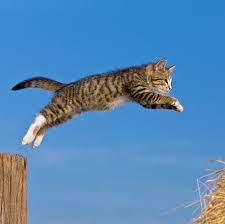
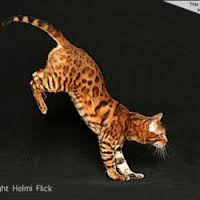
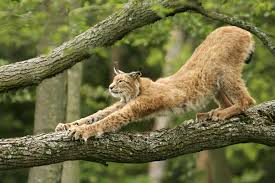
Solution: Discover your postural muscles for effortless and sustainable good posture. These core muscles get increasingly stronger when you let them do their job of supporting you instead of you engaging the big outer muscles to do the job. It is all about developing trust in the wisdom of your body. You don’t need to work so hard like in the plank example given earlier. Work smarter instead by choosing to experience what flexible strength feels like. The fact is that you are still building the same amount of strength. And that is the strength of the cat, not an ounce of stiffness in their body, but they are quite strong when they need to jump or pounce on a moving target.

images-8
Power, Accuracy, Grace…. Flexible Strength at work!

MYTH #4: Good Posture is all about Proper Alignment

Reality: The truth is that there is more to good posture than proper alignment. If you are holding yourself in what you think is the right alignment, you are doing just that, “holding yourself”. And the way you are holding yourself is with excess tension. Besides, you are forcefully going again the synergy of your own body so either it is not sustainable or you are building chronic tension.

Solution: Exploring how much holding you are actually doing would be a first step. Then, choose to no longer hold your skeleton with tensed muscles. Connect with your skeletal system, keep its height, and discover its own strength. That will change the synergy of your whole body so you can experience what it is to be bone tall with relaxed muscles!

images-16images-13
Her arched back and belly forward suggest holding tension in her back.

His perfect alignment without back arching or shoulders pulled back suggest a released yet dynamic posture.

MYTH #5: Gravity challenges Good Posture

Reality: Not so. Gravity promotes good postural balance when you use yourself as you are designed to. When you lose your skeletal height, you are not balanced above your support efficiently. As a result, gravity claims the heavy weight of the unsupported head forward and down. It also brings the shoulders with it whether you are sitting, standing or walking.

Solution: By learning to be balanced above your support, the need to push up disappears without being replaced by the urge to slouch. Allow your weight to be evenly spread on your feet when standing and learn to find the balancing point of your sit bones when sitting, and voila, anti-gravity action works for you instead of against you, propelling you upwards effortlessly like children do all the time!

images-9
When not aligned above support and relaxed, gravity promotes slouching.
When aligned above support and relaxed
, gravity promotes effortless good posture.

Do you want to learn more about this mind/body approach to natural good posture? 
Do you want to learn how to reclaim efficient moving for balanced living?
Join my latest FREE 6-part EMAIL SEMINAR:
"How to Unlearn Habits that Create Body Stiffness On and Off the Mat"
(Based on the Alexander Technique Principles and Facts)

Muscle Engaging, Bone Strength and Dynamic Posture!

Standard

MUSCLE ENGAGING

In the fitness world including yoga, it is common to hear teachers urging students to engage their muscles in one way or another. Mostly, they urge you to engage your core muscles. But what does that really mean? What do you do when your teacher encourages you to engage your muscles? Are you using your will power to tighten your muscles further expecting to feel and get stronger that way?

Have you considered that tightening muscles may not be the best way to “engage your muscles”?
Could it be creating as much body stiffness as it creates strength?

What about building the flexible strength of the cat instead?

images

Obviously, no matter how strong your muscles are, if you had no bones, they would turn into a puddle on the ground? That is because your skeleton has a lot to do with your strength. Your bones are the structure and firmness needed by your muscles for you to stand, sit. walk or jump.

BONE STRENGTH

Watch or re-watch this easy to view 7 min video by Kathleen Porter
about how the skeleton works as your primary support system!
mqdefault-1

Your skeleton does need a certain amount of necessary muscle tension to work with; however, as long as skeleton and necessary muscle tension work together as part of an integrated movement, your strength develops itself to support the movement with no need for unnecessary muscle tension, the source of much of your body stiffness. Your bone strength makes up for it. Using your will power is more about the mind choosing to sustain a challenging integrated pose or activity than to muscularly force the body to stay in it. The more you use your skeletal system strength, the easier it is to not use unnecessary tension and the stronger you are building your core strength. Only then, you are building the flexible strength of the cat!

In integrated movements, all your body parts work in harmony together.
Tightness gets in the way of this harmonious functioning of the whole.

The woman in black displays Poor Use of her Skeletal System, notice her muscular straining in the upper back and neck.
The woman in white displays
Good Use of her Skeletal System with her skeleton and muscles working more together.

images-18 images-16

While exercising, necessary muscle tension is a whole body feeling of power or stability rather than a tight feeling in a specific muscle group. Your body-wisdom does work some muscles more than others as needed yet it also knows your natural limits of the moment and will not let you go in an injury promoting zone. Children and animals trust that process. Just touch the muscles of a cat, so soft! And yet they certainly can jump up or down with powerful strength and accuracy in a beautiful integrated and fluid motion!

Maybe it is Time to Learn to Be Strong Using Brain and Bones & No Longer Overworking your Muscles. Besides, it feels easier simply because gravity becomes your ally and you can work out smart instead of hard! The only thing you will loose is body stiffness, not strength. Check the humorous 2-minute video below, you’ll see what I mean!

A woman in the early 1900’s lays the smack down with some classic Jiujitsu
Unknown-1

DYNAMIC POSTURE

 Dynamic posture does not require you to remember to check in and position yourself to sit upright. It is an integral part of good and fluid functioning, not a holding you go back to when you think of it. Look at young children! No effort whatsoever, and it is also your birthright!

images-1

Modern life offers challenges for sure with time spent at desks and computers, or standing for hours. Yet is it those activities that are the problem or how you use yourself while engaged in them?

You know that you cannot force a horse to drink water but you can salt his oats to make him choose to drink. And when thirsty, he’ll go the extra mile to satisfy his thirst. In the same way, you cannot strengthen your inner core muscles by sheer force but you can challenge your whole body with a specific pose or exercise and let it engage your inner muscles which will strengthen them in an organic way. They will go the extra mile if and when they have to!

So you can learn from children and animals how to reclaim an efficient and integrated way to use yourself on and off the mat where all your body parts work harmoniously together to benefit all of who you are! .

Till we meet again, be well!

Incoming workshops in Boston, MA:
Integrated Motion for Mind/Body Flow on March 26, 2015 6 to 8pm
Strain-Free Yoga/Strain-Free Body on March 29, 2015 1.15pm to 3.15pm
For more detail and registration, go to: https://offthematyogablog.com/schedule/

 Working with an Alexander Technique teacher is a short cut to changing the habits of a life time. Call me to schedule and appointment or sign up to my workshops and classes. And I am working on an online workshop or class for those far away who want to work with me. Will keep you posted!

Core Strengthening Language Part 2: How Helpful is the Focus on Anatomy?

Standard

An increasing number of yoga training courses and teachers feel the need to focus on anatomical data as if the quality of their skill depended on it. Does it really? There is nothing wrong with acquiring knowledge especially for those with the right mind to enjoy learning this kind of information. However, how many doctors are being helped in their own body by the anatomical details they know? How useful is it to them or to most yoga teachers and practitioners?

What matters more with yoga is to discover the anatomy of movement and stillness as a purely kinesthetic and holistic experience which is being lost in translation when the focus is all on anatomical details. What follows about core strengthening is supported by anatomy specialists (we do need them) but is expressed in a way everyone can receive and start practicing.

imagesCORE STRENGTHENING

Beyond anatomical data, do you know how core strengthening happens in an organic way?

Like the core of an apple, your core refers first to the inner muscle sets of your torso which work partly intertwined and always in harmony with all other muscles to keep you up and together. Core Strengthening happens organically when you allow the outer muscles to release while engaged in a whole body activity.  When your outer muscles cooperate rather than take charge of maintaining your skeletal height, your core muscles can step up to the plate and get strong in their own deep and quiet way.

Torso muscles cannot remain efficient when engaged all at once. Like the arm or leg muscles flexing or extending in turn to allow movement, your torso muscles are part of a similar dance; while some engage, the others need to quiet down. Their way of working feels different. Postural muscles for instance quietly do their supporting job and give you a sense of effortlessness. Outer muscles however have a presence which can easily be turned into body stiffness when no distinction is made between necessary muscular tension and unnecessary muscle tension.


Releasing excess tension is neither going limp 
nor decreasing how much strength you are building. 
It is preventing building body stiffness while you are building strength.

Bracing yourself with muscle tension thinking it will give you core stability is a myth and only leads to body stiffness
as you can hear Peter O’Sullivan explain in his 2013 interview.

LANGUAGE INSTRUCTIONS AND DISTINCTIONS

Verbal instructions to get into a pose must reflect this duality of functioning to be efficient. The verbal instructions you still follow yourself or use to lead others into poses have an enormous impact on how those poses are performed. Experienced yoga teachers who actually did make some language changes felt the difference in themselves and in their students as a result. It comes down to making important distinctions.

Outer Muscles need Space to Release 
for the Inner Muscles to Efficiently Strengthen.

Yoga pose using block
The purpose for the block used in this pose is to keep the skeleton properly aligned,
not to squeeze it with all your might creating body stiffness in the process.

“Holding” makes you grab your skeleton for dear life instead of letting your postural mechanism take care of your balance.  “Staying” in a pose gives you space to release without loosing the pose kept by the skeleton. As a result, you can build strength without building body stiffness in the process. When releasing unnecessary muscle tension into what is supporting your body weight, you are activating your postural mechanism and it can do its job which is to handle your postural balance and coordination using an appropriate amount of necessary muscle tension.

“Allow the spine to lengthen” / “Lengthen the spine”. When allowing something to happen, you are less likely to overdo. When you think of lengthening the spine, you are likely to work at lengthening the spine, stiffening your mid back in the process and getting the very opposite of what you think you are doing as the woman in the picture below.

yoga-woman
Arched mid back, hips tilted forward, sits bones pointing back, upper back leaning back.

“Do not allow the back of your neck to compress as you look up” / “Look Up”. Your spine must remain an open channel all the way to the top. Compressing the back of the neck just because you can go that far into a pose is not helpful to create an integrated pose where all body parts work in harmony.

images-1 images-17
The woman in black has a beautifully integrated pose.
Her spine (including the neck part of it) and her arms are all part of the same curve started where her knee is supported.

“Allow your whole body to expand into its full space” / “Lift this or pull that to get taller”. The goal is the same but how you get there is different. Of course, you may not have been taught how to trust and experience your innate body wisdom. Just know it is possible, safer and more efficient to work with your body wisdom which is different from listening to how a specific body part or muscular area feels. 

“Listen to your whole body, not your body parts”. When always listening to your whole body at once, you will be aware of individual parts in need of attention as well. Keeping your attention on body parts to check how they feel makes you loose connection with your whole body wisdom. You may help one part of your body at the expense of another.

***************************
If you want to learn more about the Alexander Technique or Off-The-Mat Yoga (Alexander Technique based Yoga), check my workshop and class schedule by clicking here. You can also follow my blog by signing in on the home page to receive tips of the week right to your inbox.


While Pushing your Edge, Building Flexible Strength or Body Stiffness?

Standard

Are you a fitness enthusiast? Do you feel good about your practice only if you push yourself to the max and feel your muscles straining a bit? Maybe you feel you do not do enough if you do not feel that stretch or that muscle power working “effort-fully”? Is that  feeling of muscular tension what you consider “pushing your edge”?

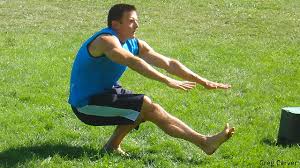
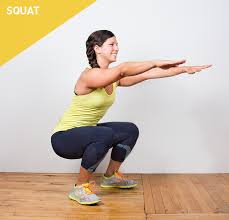
When do you know that enough is enough? What do you think of the fitness enthusiasts below displaying their ability to squat with pride because they feel that edge big time?

images-12

The man, back and shoulders rounding forward to not fall backwards, is overstretching his back and compressing the back of his neck as he is pushing his edge to stand on one foot while squatting. The woman has the ball of her feet partly off the ground because her weight mainly situated over her heels is not evenly distributed above her whole two feet. It means that to not fall backwards, she is compensating by overdoing in her leg muscles building unnecessary tension while building up strength.

Both are also stressing ankles, knees and hip joints which are constricted by the excessive muscular tension required in their legs to keep some sort of balance. Is it worth it to push your edge in a way that creates these issues?

images-13

Is there a holistic way to push your edge that allows you to stretch and strengthen all the same yet does not translate into building compressed joints and muscle stiffness on or off the mat?

For starters, think children and tribal cultures! Look at the individuals below. Notice how their head neck and torso relationship works perfectly as their weight is balanced above their well grounded feet: some of their body weight past their toes, some of it behind their heels. A good example of what to be respectful of while you are exercising so you do not hurt yourself while you are trying to be good to yourself.

images-14 images-16 images-10

In many cultures more connected to the natural way to handle daily movements, it is actually common to see men and women of all ages squat with ease or carry heavy loads on their heads gracefully. Since such flexible strength and ease is possible among some humans, it must be accessible to all, including you!

images-18 Natural-Posture-rock-2

In the animal kingdom as well, you see creatures who can display powerful and precise flexible strength without building any excess muscular tension so they are totally relaxed when not in action. If they stretch, it is a whole body happening done usually once.

These examples are all about efficiency and it is precisely that efficiency that allows them to push their edge safely. Excess tension is seductive but misleading. It makes you feel like you are being productive when in fact it decreases your efficiency and creates stiffness that will backfire on you on or off the mat, sooner or later.

images-19 cheetah images-20

How can you still push your edge and develop efficient flexible strength?


1) “Flexible Strength” is the opposite of “Stiff Strength”. So stop focusing on holding and tightening (a mind need to control), and instead release into your support and allow yourself to expand into your space (trusting mind). As you engage in your pose, stay in it even when it is demanding as long as you can still release into your support. If there is no room to release all the way into your support, you are already overdoing because your pose stopped to be integrated from head to toes.

2) “Flexible Strength” is “Integrated Strength”. You are still challenging yourself and building strength when you release into your support, only you then do it in an integrated fashion that benefits your whole body and connects you to its innate wisdom. Even if some muscles are being challenged more than others, they won’t be pushed past their safe limit because you are respecting the integrated synergy of your body.

3) “Pushing Your Edge” the “Holistic Way”:  When you brace yourself grasping your skeleton to keep it in a specific pose no matter what, you are actually interfering with the best functioning of your body because your joints are locked and your muscles tensed unnecessarily. On the other end, staying in the pose and constantly releasing and expanding through it despite this being challenging is how you push your edge in a holistic way! 

CONCLUSION & IMPORTANT DISTINCTIONS

Necessary Muscular Tension can grow into “Flexible Strength” when challenged to do so during physical activities while connected to your support in a released way. Unnecessary Muscle Tension only grows into “Body Stiffness”. Since your unconscious daily habitual patterns tend to show up on the yoga mat, your poses may include habitual skeletal misuse or habitual muscle overuse  (often a compensation for skeletal misuse). It makes it harder and sometimes impossible to do a pose in a safe way.  With unnecessary muscle tension, you may feel like your body is a battle ground and you cannot find peace within it or you blank out the tension till it catches up with you.

Also, when you are mistaking the “Feeling of Muscle Tension” for the “Feeling of Strength”, you keep pushing muscularly when you ought to be letting go and releasing into expansion. Hence the stiffness lingering in your muscles and joints over time on and off the yoga mat and the constant need to stretch recurring or chronic tension.

To be safe, you must cultivate awareness of how what you do affects every part of your body as you do it. Otherwise you run the risk to create muscle tension while you are working to build up strength.

Developing an awareness of functioning in an integrated fashion is your safety net. It allows you to keep your “Postural Mechanism” fully functioning as it is its job to secure balance, coordination and fluid movements within your integrated self. It is your “Inner Teacher”, always there to guide you, and all you need to do to activate it is to release into expansion. The best way I know to develop such awareness is the Alexander Technique. If you have not yet explored it, don’t wait. Treat yourself! You will be happy you did too.

The next workshop for yoga practitioners of all levels is on December 13, 2014.
To sign up go to https://offthematyogablog.com/.
Be well! And Happy Holidays!
Cecile