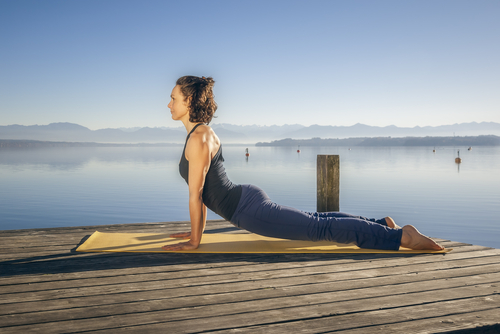
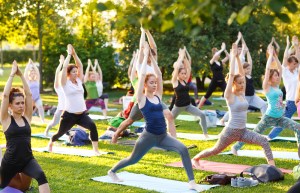
HOW SAFE IS YOGA?

Standard

I want to share a video that I just watch on YouTube on the safety of practicing yoga.
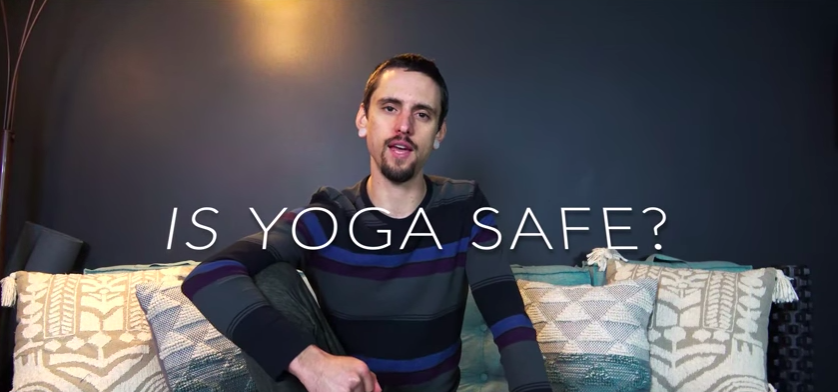
Anthony Davis

And OMG! I love this yoga teacher! He is addressing the elephant in the yoga community room and says it like it is: practicing Ashtanga yoga and Iyengar yoga to the letter can and will eventually hurt your body! In this first video, he focuses on the common issues regarding flexibility, hypermobility, and joints.

We all know teachers and committed teachers who have badly strained their body or who had to have surgery at some point. The danger is that younger yogis may think they are not affected because often, damages happen slowly and progressively till it is too late and crisis strike.

The truth is that we need more teachers sharing those truths to prevent new yoga teachers and new students to injure themselves at some point or another. Teachers in training and yoga students need to be educated about the fact that being comfortable with the uncomfortable is totally a misunderstanding of yoga when it comes to asana practice.

Although we come from a different perspective, what Anthony says in his video goes right along with what I teach to the teachers and yoga students in my free masterclass or local and online courses. Namely, always remember the yoga principle of Ahimsa: do no harm to yourself or others. And to respect that, you better know that strain is delayed pain!

What he says in this video aligns with what I write about in my book The Wise Way to Yoga where I offer a new and very practical way to prevent injury and enhance performance. This approach supports the healthy evolution of modern yoga, away from the misunderstandings and misconceptions that currently permeate modern yoga teaching.

I reached out to him as I sense we could do great work together, along with other like-minded teachers and mind/body practitioners. We all have an important piece of the puzzle and together we can do more than each on our own. This is called forward thinking. It is called a win/win scenario. And I am all for it!

My piece of this puzzle is my awareness and expertise with the postural mechanism, an unknown aspect in the mind of most yoga teachers or fitness trainer. And yet, we all agree how good posture is so critical for enjoying efficient movement on and off the mat (or gym).

Let’s yoga practice be safe once and for all by being aware of some not spoken about truths. Kudos to him for starting this video series. Will be checking the following ones!:)

Cecile Raynor has been teaching the Alexander Technique for over 25 years out of which came her Body Intelligence Activation Process™ (B.I.A. Process) to assist yogis in enhancing their practice towards best performance with optimal safety. She is also a Thai Yoga Massage Therapist and a Reiki Practitioner. Faculty at Akasha Yoga Teacher Training, she runs a 12 months Mastermind for Yoga Teachers with a Vision, and a 90 Day Live Online Program for trainees, new teachers and committed yoga practitioners interested in using their body more efficiently on and off the mat in a way not taught in regular training courses. She is also the author of a June 2018 publication called THE WISE WAY TO YOGA which is available on Amazon or from Cecile if you are local to Boston!

Can Fitness Goals On the Mat Decrease Wellness Benefits Off the Mat?

Standard
Your fitness goals affect how you go about a pose
and how you feel once you are off the mat.

Fitness is defined as the condition of being physically fit and healthy. However, is it still the case when fitness is more about appearances than wellness? How does this fitness goal affect yogis and yoga teachers on and off the mat?

Let’s look at your experience!

Do you think that being fit means having a firm and defined body shape? Does it mean you can do challenging poses worthy of being posted on Instagram?

Do you push yourself as much as you can to reach these goals?
Or do you want more than that from your yoga practice?

In either case, how do you know that your fitness goals are not robbing you from your optimal wellness?
 

Simple!

When your practice keeps you feeling tension free off the mat and allow you to enjoy good posture even when you don’t think about your posture, you’re doing great!

When, despite a committed practice, you experience daily excess tension urging you to stretch your muscles or joints throughout your day.
When you feel muscular aches or pain lingering in your daily activities. 
Or when you experience slouching and poor posture
repeatedly and unavoidably while off the mat.

Then, you know you have been sacrificing part of your wellness in the name of fitness.

The truth is that, unknowingly, you have been developing excess tension and killing your muscle tone at the very same time that you have been strengthening and stretching…. which is why muscles or joints tension shows up in your daily life.

And yet, puzzled, you’re not quite sure
why you experience so much tension or poor posture
when you are so very committed to your practice?

Know that, if you are suffering from this common cycle,
you are not alone! And it’s not really your fault!
You are just a product of the evolution
of popular fitness and modern yoga since the 19th century.

The good thing is that, it is never too late
to approach your practice differently and avoid this cycle.

Becoming aware that you’re stuck in a cycle is the first step towards improvement since you can’t change something you’re not aware of.

It’s never too late to approach daily movements and posture in a more holistic way.  You just need to discover the unconscious habits that are keeping you in this cycle and learn how to unlearn them.

Such a discovery process anyone willing and ready can learn.

And if you’re a yoga teacher, new or experienced, this process will enhance your teaching skills to a higher level adding clarity and simplicity to your teaching process!

If that resonates with you.
If you’re open and ready to change, let me know.

I’d be happy to answer any question you have about what’s keeping you away from your natural good posture and optimal well-being. As a result, you’ll feel better in your body whether you are on or off the mat!

Cecile Raynor has been teaching the Alexander Technique for over 25 years out of which came her Body Intelligence Activation Process™ (B.I.A. Process) to assist yogis in enhancing their practice towards best performance with optimal safety. She is also a Thai Yoga Massage Therapist and a Reiki Practitioner. Faculty at Akasha Yoga Teacher Training, she runs a 12 months Mastermind for Yoga Teachers with a Vision, and a 90 Day Live Online Program for trainees, new teachers and committed yoga practitioners interested in using their body more efficiently on and off the mat in a way not taught in regular training courses. She is also the author of a June 2018 publication called THE WISE WAY TO YOGA which is available on Amazon or from Cecile if you are local to Boston!

YOGIS & THEIR POSTURE OFF THE MAT!

Standard
A wonderful teacher off-duty enjoying a cup of tea!:)

We all know how important good posture is for our well-being. And at the same time, poor posture is a rampant concern for so many people. In fact, there is a booming industry of gadgets to straighten out poor posture and an endless number of yoga classes focusing on proper alignment as a way to help you improve your posture. However, as a yoga teacher and a practitioner, do you find yourself able to display good posture when on the mat (or in public) and twisted in a pretzel or slouched into yourself when sitting at your laptop for instance or drinking a cup of tea?

Although it is not your fault that you inherited an incomplete approach to “good posture”, it is now time to face this reality because it is impacting both teachers and students.

STOP IGNORING THIS DOUBLE STANDARD!

It is quite significant. It reveals a missing dimension in your understanding about good posture which is so fundamental in yoga and for your well-being.

I know you’ve been told that “good posture” is SOMETHING YOU DO and naturally that seems like the way to go. You are convinced that good posture is an effort,  something you must think about it if you are to improve it, hence all those posture reminder gadgets.

And this way has to do with positioning your shoulders back, squeezing your shoulder blades some, lifting your chin and chest up.

Then you’re told to hold and relax at the same time. How do these instructions work for YOU? Are they sustainable off the mat?

Or do you collapse into a SLOUCH WITHIN SECONDS the minute you stop watching?

Maybe you go from holding up to compressing your body down. And you still experience nagging tension in your neck, shoulders, and back. Maybe you have digestive issues or depressive moments due to this compression in your torso for so many hours a day and you don’t connect the dots. All this because you are CAUGHT IN THIS CYCLE which never feels comfortable for very long if at all!

Why this discomfort? Because, as with children, good posture is not meant to be work, GOOD POSTURE just IS.

It is the expression of your body functioning at its best. An indication that your body functions in an integrated way.

And this means that your body parts are working together harmoniously FROM THE INSIDE OUT!

Positioning may feel good in the moment (or not), depending on where you are at with your posture.

The truth is that THERE IS A BETTER WAY that never fails to improve your posture. It works without the need for muscle control. And it always feels great too!

As a teacher, it is an amazing expertise to claim as it enhances your TEACHING SKILLS to a high level without the need for yet one more tip to memorize. It is equally helpful for any yogi to learn this.

If you want to know more about this better way, just email me and we’ll take it from there. If I think I can help you, I’ll offer you a FREE BREAKTHROUGH SESSION.

If not, I’ll share some helpful insights all the same! 🙂

Cecile Raynor has been teaching the Alexander Technique for over 25 years out of which came her Body Intelligence Activation Process™ (B.I.A. Process) to assist yogis in enhancing their practice towards best performance with optimal safety. She is also a Thai Yoga Massage Therapist and a Reiki Practitioner. Faculty at Akasha Yoga Teacher Training, she runs a 12 months Mastermind for Yoga Teachers with a Vision, and a 90 Day Live Online Program for trainees, new teachers and committed yoga practitioners interested in using their body more efficiently on and off the mat in a way not taught in regular training courses. She is also the author of a June 2018 publication called THE WISE WAY TO YOGA which is available on Amazon or from Cecile if you are local to Boston!

HANDS-ON ASSISTS Versus ADJUSTMENTS

Standard
Assist in Mountain Pose

Hands-on work by yoga teachers during yoga classes is a hot topic at the moment! Teachers touching students (with no training to do so) can be a problem and it has created all sorts of challenges, including injuries.

As a matter of fact, it has been a serious problem for enough students that some studios now have consent cards so each student can let their teacher know how they feel. Not a widespread practice yet. And because they often place their teacher on a pedestal, or at least assume they know best, students tend to disregard their own body cues or won’t dare speak up in a class environment.

So injuries have happened. 
Students with a trauma history have been triggered. 
Many students have experienced discomfort under the adjusting hands of their yoga teacher.
And new yoga students have been turned away from yoga all together!

TEACHING YOGA IS A BIG RESPONSIBILITY!

Hands-on adjustments are not the only way students can be hurt by teachers. The cuing language has a lot to do with it! For instance, assuming that every student enjoys and can relax while in Child Pose is not being aware that different bodies have different needs. “Straighten those legs” when in a Downward Dog can be damaging to some students also. It is an invitation to adjust one’s body to fit the form of the pose instead of letting the pose be an opportunity for the student to stay connected to her body.

THE PERFECTION OF A POSE NEEDS TO BE A GUIDE NOT AN END IN ITSELF!

Hands-on adjustments were meant as a solution to yogis getting injured but the focus remained on the perfection of the form as a goal. It was assumed that injured yogis were not doing the pose correctly so adjustments would correct the body to fit the pose. And it certainly has helped many students. It also became obvious it was hurting many others in the process as the pose are there to help the yogis not for the yogi to be a slave to the pose.

Some teachers came up with the concept of hands-on assists, which is more gentle and helpful because the intention is to help and cooperate with the student’s body needs. This led to a wave of massaging hands and aromatherapy being used in the yoga class, making these classes very popular.

However, we are left with yet a couple unaddressed dimensions.

First, does massage belong in a yoga class? Are students coming to practice yoga or to receive massaging hands? Don’t get me wrong, those are wonderful to experience and fit a purpose. However, maybe such classes could be named differently?

Second, and more importantly, what is totally overlooked is what the teacher passes on to the student despite herself. I mean that when we touch others we pass on to them something about how we use our own body. And I have seen one yoga teacher after the other, rounding their back or craning their necks, or twisting their body to help a student lengthen his back?!

Yoga teachers know a lot about the poses and some know about yoga principles. However, they are taught to think in body parts. Teachers are not taught how to use their own body in an integrated way.

ADDRESSING THE TEACHERS UNCONSCIOUS WAYS OF USING THEIR BODY IS A MISSING DIMENSION IN YOGA TRAINING.

What they’re taught is to control their body by positioning its parts. That’s not the same thing nor is it sustainable. That’s why you can find many yoga teachers in the privacy of their own life, slouching into a pretzel when they forget about themselves. Yet good posture is the expression of a well-integrated body.

If you’d like to learn more about how to avoid these challenges as a yoga teacher, be it hurting students unknowingly or holding back from fear of hurting them. Be it holding yourself in “good posture” then finding yourself in an unavoidable slouch.

Join me on my next free webinar for yoga teachers called: Five Breakthrough Realizations to Transform your Yoga practice & Teaching. Hope to see you there!:)

Cecile Raynor has been teaching the Alexander Technique for over 25 years out of which came her Body Intelligence Activation Process™ (B.I.A. Process) to assist yogis in enhancing their practice towards best performance with optimal safety. She is also a Thai Yoga Massage Therapist and a Reiki Practitioner. Faculty at Akasha Yoga Teacher Training, she runs a 12 months Mastermind for Yoga Teachers with a Vision, and a 90 Day Live Online Program for trainees, new teachers and committed yoga practitioners interested in using their body more efficiently on and off the mat in a way not taught in regular training courses. She is also the author of a June 2018 publication called THE WISE WAY TO YOGA which is available on Amazon or from Cecile if you are local to Boston!

IS YOUR YOGA PRACTICE KEEPING YOU & YOUR STUDENTS TENSION FREE & POISED OFF THE MAT?

Standard

This blog post is for yoga teachers who want deep transformation for themselves and their students.

Asana practice is meant to create ease and flow in your life both on and off the mat. As a teacher, it is meant to do the same for your students. Is it? Do most of you feel tension-free and poised off the mat?

Integrated Cobra Pose

If you (or they) find that the feelings of wellbeing and good posture don’t seem to last very long after you step off your mat, it’s because you’ve fallen prey to modern yoga’s addiction with “results” and “control”. As a result, you must make progress at all costs on the mat even when your body is giving you clear signals off the mat that this way is not necessarily working for you.

If you feel a constant urge to stretch, if your muscles or joints ache in some ways, or if you find that you go right back to slouching after making an effort to be upright, it means that your idea about strengthening, stretching or good posture is not complete. It is missing an important dimension.

How to be sure when enough is enough beyond the subjective experience of feeling good? How to stay poised without holding your body upright consciously?

Could it be that you are unknowingly overdoing? Could assessing how much is enough come from a deeper place in you than how your muscles feel on the surface of your awareness?

How can you build a trusting relationship with your body if you’re misinterpreting or ignoring its signs? You may blame your tension on the stress of life or on sitting too many hours in the front of the computer but is it the whole truth?

Intrigued by these questions at the core of your practice and teaching? I would be happy to talk to you. Just email me or sign-up below for my next webinar which addresses these questions more extensively.

https://offthematyoga.lpages.co/free-live-interactive-webinar-for-yoga-teachers/

Till then,
Namaste

Cecile Raynor has been teaching the Alexander Technique for over 25 years out of which came her Body Intelligence Activation Process™ (B.I.A. Process) to assist yogis in enhancing their practice towards best performance with optimal safety. She is also a Thai Yoga Massage Therapist and a Reiki Practitioner. Faculty at Akasha Yoga Teacher Training, she runs a 12 months Mastermind for Yoga Teachers with a Vision, and a 90 Day Live Online Program for trainees, new teachers and committed yoga practitioners interested in using their body more efficiently on and off the mat in a way not taught in regular training courses. She is also the author of a June 2018 publication called THE WISE WAY TO YOGA which is available on Amazon or from Cecile if you are local to Boston!

Yoga Teachers & Burnout!

Standard

I have been teaching yoga teachers as a faculty member in a yoga teacher training course and have asked yoga teachers on FB pages what was it they struggled the most with personally.

It seems that feeling burned out and having no time for their personal practice was a common response.

Newer teachers tend to commute a lot from one studio to another which adds to their feeling drained. Teachers who have been teaching longer and may have a more steady situation still experience the burn out in their own way. Either their body starts giving out and they need surgery (hip or knee). Or they feel they cannot do what they could do before.

So here are my two cents worth on the topic.

1) First, it is not their fault if they feel this way. Their experience has so much to do with the way modern yoga has evolved in our society since the 19th century under the influence of the bodybuilders which started the personal fitness movement.

2) Also, teachers and their teachers have tended to focus on the perfection of a pose form when for safety and maximum benefit, it is only meant to be a goal. And then, the yoga industry (and those who buy into it) magnified that for their own benefit by making us believe yoga is all about appearances.

3) Yoga has a body part focus which often does not agree with our whole-body intelligence and the needs of our body. Yet we push, even if gently because we think it is the way to get results. But results do not come from ignoring your body intelligence cues.

Yoga is such an amazing practice that even when we do not practice using our body in an integrated way, we still can get results which makes us keep going.

However, the time has come to explore unexplored dimensions which can help yoga teachers and their students get the best from their practice regardless of their yoga style, body type, and fitness level.

And this exploration starts by understanding that our muscles are not truly the foundation for our yogic strength, our bones and expanded awareness are. Letting our whole-body intelligence in the driver’s seat is. And it is also key to realizing that this intelligence guides the body yet, it is a higher level of awareness than our body’s sensations of “feeling good and safe” or not.

When these distinctions are part of your kinesthetic experience, you are not so likely to foster burn out, pain or injury over time when you practice yoga or when you teach yoga. They will also help you make different decisions both on and off the mat!

The trick is to know how to allow our whole-body intelligence in the driver’s seat? How to access this higher level of awareness in our body if “feeling good and safe” is not enough to do so?

And that is where knowing how to activate your postural mechanism is so crucial. It is an ambassador for your whole-body intelligence when it comes to balance, coordination and posture. Be curious about it. You won’t regret it! It can transform your practice and even the quality of your daily life. For more information, click the following link and join my FREE LIVE WEBINAR this Saturday. And if you can’t make it, sign up anyway and enjoy the recording!:)

Cecile Raynor has been teaching the Alexander Technique for over 25 years out of which came her Body Intelligence Activation Process™ (B.I.A. Process) to assist yogis in enhancing their practice towards best performance with optimal safety. She is also a Thai Yoga Massage Therapist and a Reiki Practitioner. Faculty at Akasha Yoga Teacher Training, she runs a 12 months Mastermind for Yoga Teachers with a Vision, and a 90 Day Live Online Program for trainees, new teachers and committed yoga practitioners interested in using their body more efficiently on and off the mat in a way not taught in regular training courses. She is also the author of a June 2018 publication called THE WISE WAY TO YOGA which is available on AMAZON or from Cecile if you are local to Boston!

Are You a Yoga Teacher with a Vision?

Standard

Do you teach yoga in a way that brings yoga practice back to its essence? Of course, there are different ways to approach this. However, it is important to have an expanded awareness of specific and crucial facts first.

Teachers have to realize that Western Hatha yoga is still evolving and in transition. Teachers must also realize that the way poses are taught still needs to evolve to avoid fostering pain and injury, and I am not talking about micro-managing body parts further.

Teachers and committed practitioners must be aware that it is possible to unknowingly overdo when stretching and strengthening, hence yoga injuries happening even when yogis thought they were being careful.

And they must remain open-minded and curious about new ways of thinking about movement. Otherwise, they are just promoting old ways of practicing that no longer serve us even when we already get some benefits from our practice.

Iyengar is known for his sense of pose perfection. However, he himself said referring to Hatha yoga or posture yoga:

“Science evolves, Art evolves, and Yoga must evolve too”.

And for this to happen, we need to learn how to practice any kind of yoga the WISE WAY!

We need to understand that the Hard Way and the Gentle Way still need to integrate more wisdom to be practiced safely. Pushing too hard is not the only way a yogi can get hurt. Focusing on the perfection of a pose, even in a gentle yoga class can also be damaging even if the damage happens more progressively. Why? Because students disconnect from their whole-body intelligence to fit their idea of a pose when the pose is meant to be practiced to serve them.

I am sharing this because…..

I am offering “The Wise Way to Yoga Online Course” to Yoga Teachers and Committed Yoga Practitioners who want to be a part of this evolution. 

As a faculty member in a Teacher Training Course, I have helped countless trainees, teachers and committed practitioners approach yoga from a unique perspective that promoted their best performance with optimal safety, regardless of yoga style, body type or fitness level.

Wise Yoga teachers appreciate learning this unexplored approach to activating one’s whole-body intelligence. They love that they can use it on and off the mat for improved posture and increased efficiency of movement.

This course can help you revitalize and enhance your personal and teaching yoga practice. It builds confidence not related to appearances but stemming from the inside out. It guides you and your students to the best expression of any pose in a way appropriate to each yogi.

As a result, yogis of any level can enjoy their best yoga practice ever without any reason to worry about strain, pain or injury down the line.

And, with the wise way to yoga, teachers do not need to feel they have to keep cramming more knowledge into their brain to help their students or to avoid burnout.

Activating your whole-body intelligence is SIMPLE and EFFICIENT. It allows you to feel the lightness of being ON DEMAND even as you are engaged in a challenging pose! It goes deeper than listening to your body sensations as your main guide!

If this is you or someone you know who might be the right fit, please share this blog with them and connect us.

We’ll set up a time to connect over the phone and explore to see if working together is a mutual fit. I’m committed to making sure we both feel 100% aligned and excited about moving forward.

Your wins will be my wins and your NEW GAINED CLARITY will fuel your making the world a better place as you promote the evolution of Hatha yoga in a constructive way.

Again, I’m only looking for teachers who are ready to take action for their own benefits as well as the benefit of all.

I’m all about making a positive impact and working with yoga teachers and committed yoga practitioners who are doing good in the world.

I am looking forward to talking soon,

Cecile 🙂

Cecile Raynor has been teaching the Alexander Technique for over 25 years out of which came her Body Intelligence Activation Process™ (B.I.A. Process) to assist yogis in enhancing their practice towards best performance with optimal safety. She is also a Thai Yoga Massage Therapist and a Reiki Practitioner. Faculty at Akasha Yoga Teacher Training, she runs a 12 months Mastermind for Yoga Teachers with a Vision, and a 90 Day Live Online Program for trainees, new teachers and committed yoga practitioners interested in using their body more efficiently on and off the mat in a way not taught in regular training courses. She is also the author of a June 2018 publication called THE WISE WAY TO YOGA which is available on Amazon or from Cecile if you are local to Boston!

Yoga Sequence Flow versus Inner Flow

Standard

Are you into a Bikram style of yoga where you “hold” your pose for a while? Or are you into Vinyasa and the “flow” of a sequence? Whichever one you are into, do you ever focus on the inner flow in your body? Breath flow, and as importantly, the space for excess tension to flow through the muscles so your body can function as an integrated whole?

My experience is that although breath is mentioned in classes, not every yogi knows how to breathe in a consistent manner without being reminded. How consistent is your breathing awareness?

Also, how many yogis know that there can be a flow going through their muscles even as they strengthen? Do you? Or do you think only of the flow in a sequence of movements, flow designed to make you sweat and detox like in Ashtanga yoga?

Do you flow through life or muscle your way through it? That is a good indication of how you handle your body on and off the mat.

My experience is that when I do not keep space for inner flow in my practice or in my life, I am overdoing. SO when I do a Tree Pose or a Chair Pose, I don’t focus on controlling every body part till I feel stiff as a rock or till my muscles scream. Like in a good Tai Chi practice, I stay in the pose as long as I can release over and over through my whole-body, enlisting the support of the earth and the two way dynamic between the earth and my body. I allow for this inner flow going down my muscles and up my skeleton, over and over, till my whole-body intelligence says it’s time to move on to another pose! Have you ever tried to practice this way?

If you like this post and you think it can help others, please share it!:)

For more on how to practice any yoga style without causing yourself or your students some pain or injury, Sign up for this Thursday FREE WEBINAR by clicking on the following link: www.cecileraynor.com

Cecile Raynor has been teaching the Alexander Technique for over 25 years out of which came her Body Intelligence Activation Process™ (B.I.A. Process) to assist yogis in enhancing their practice towards best performance with optimal safety. She is also a Thai Yoga Massage Therapist and a Reiki Practitioner. Faculty at Akasha Yoga Teacher Training, she runs a 12 months Mastermind for Yoga Teachers with a Vision, and a 90 Day Live Online Program for trainees, new teachers and committed yoga practitioners interested in using their body more efficiently on and off the mat in a way not taught in regular training courses. She is also the author of a June 2018 publication called THE WISE WAY TO YOGA which is available on Amazon or from Cecile if you are local to Boston!

Straining versus Challenging Yourself!

Standard

Do you believe that you can’t challenge yourself unless you strain your body up to a certain point? And perhaps, you think that as long as it does not hurt, you’re good. Does this way of thinking sound familiar?

Know that IT IS NOT YOUR FAULT if, even with your yoga practice, you’ve been feeling some recurring tension and a constant need to stretch or strengthen in the hope to feel better. It is partly the result of the widespread “No Pain, No Gain” approach that permeates yoga and fitness since the Hatha yoga revival and the birth of Personal Fitness in the 19th century. And although more and more people agree that “No Pain, No Gain” is no longer the way to go; still many abide by “No Strain, No Gain” which I see as the toned down version of the old saying. Does this make sense to you?

Personally, I see a big difference between straining and challenging myself. I believe that “Strain is Delayed Pain” whereas challenging yourself can safely strengthen all of who you are.


She is challenging herself yet she is straining herself in the process
How worth is it for her head to touch her foot if she compresses the back of her neck in the process?

STRAINING is your Stress Mode activating itself when you are treading in dangerous waters. The strain is a sign that you are working against the integrated functioning of your body. Your whole-body intelligence is telling you that you need to reevaluate what you are doing at that moment if you do not want to injure the muscle or joint that is straining.

Now you may wonder how can you challenge yourself without straining even a bit?

CHALLENGING YOURSELF is pushing your limits as a whole-body. It means that no muscle or joint is screaming out as if it was taking the bulk of the work. Just like a team player not cooperating with the other players is actually working against the team, when you allow one muscle or joint to scream for attention by the amount of work it is doing, that body part is working against the benefit of your whole body.

TIP OF THE DAY:
Drop the Strain, Keep the Strength!

If you want to maximize your yoga practice without fueling excess tension and injury, drop the strain and keep the strength. Drop the excess tension in any body part so your body can better work as a whole! You will experience less on the surface of your body, and benefit more in your core and whole-body.

For more on how to practice any yoga style without causing yourself or your students some pain or injury, Sign up for this Thursday FREE WEBINAR by clicking on the following link: www.cecileraynor.com

Cecile Raynor has been teaching the Alexander Technique for over 25 years out of which came her Body Intelligence Activation Process™ (B.I.A. Process) to assist yogis in enhancing their practice towards best performance with optimal safety. She is also a Thai Yoga Massage Therapist and a Reiki Practitioner. Faculty at Akasha Yoga Teacher Training, she runs a 12 months Mastermind for Yoga Teachers with a Vision, and a 90 Day Live Online Program for trainees, new teachers and committed yoga practitioners interested in using their body more efficiently on and off the mat in a way not taught in regular training courses. She is also the author of a June 2018 publication called THE WISE WAY TO YOGA which is available on Amazon or from Cecile if you are local to Boston!

The Wise Way to Yoga On Kindle & Other News!

Standard

THE WISE WAY TO YOGA is now Available on Kindle, in color no less!:)
Get a special when you get the combo paper book and kindle.

I started receiving amazing feedback from people who read this book and got to the end already. Would love to hear from others who also read the book. So please don’t hesitate to share your experience of the book.

Soon, there will be a YouTube Channel for me to share the Wise Way to Yoga in 2 minutes slices! I will keep you posted. For those who signed up to my Free Webinar and could not make it, not only will I offer them again but a recording will be available for those who can’t make it. Still, those who make it will get a special offer at the end!:)

Yoga has become a widespread activity to help you handle your health and fitness. And you gain your best results when you practice yoga regularly, in a “Wise Way”. So far, you are all familiar with the “Hard Way” and the “Gentle Way” to practice.
However, the “Wise Way” to yoga is a new approach that enhances your practice and guides you to your best performance with optimal safety. It can be applied to all styles of yoga regardless of body type or fitness level.
The Wise Way to Yoga is the Yoga of the Future! It started the Movement of the Wise Yogi that has been long overdue! Be a part of it! If you resonate with this, go to the following link and ask for the Manifesto of the Wise Yogi Free Scroll!
Till we connect again,

Namaste!
https://offthematyogablog.com/the-wise-way-to-yoga/

Cecile Raynor has been teaching the Alexander Technique for over 25 years out of which came her Body Intelligence Activation Process™ (B.I.A. Process) to assist yogis in enhancing their practice towards best performance with optimal safety. She is also a Thai Yoga Massage Therapist and a Reiki Practitioner. Faculty at Akasha Yoga Teacher Training, she runs a 12 months Mastermind for Yoga Teachers with a Vision, and a 90 Day Live Online Program for trainees, new teachers and committed yoga practitioners interested in using their body more efficiently on and off the mat in a way not taught in regular training courses. She is also the author of a June 2018 publication called THE WISE WAY TO YOGA which is available on Amazon or from Cecile if you are local to Boston!